OCR · GCSE · Biology
Course version: J247 · Version from Sept 2018
Describe the difference between embryonic and adult stem cells in animals
Full specification wording
Supplying the cell: describe the difference between embryonic and adult stem cells in animals
Embryonic and adult animal stem cells differ fundamentally in their differentiation potency, tissue origin, and therapeutic implications.
- Point 7 of 7
- 4 key terms
Study notes
From the teaching notes for this specification point.
The idea
Embryonic and adult animal stem cells differ fundamentally in their differentiation potency, tissue origin, and therapeutic implications. Embryonic stem cells, isolated from early blastocysts, are pluripotent: they possess the capacity to differentiate into virtually any specialized cell type in the organism. In contrast, adult stem cells, such as those in bone marrow, are multipotent: their differentiation is restricted to a limited range of cell types related to their tissue of origin (e.g. blood cell types). Adult stem cells present fewer ethical objections and carry lower risks of rejection if harvested from the patient.
What earns the marks
- Explaining embryonic stem cells are pluripotent and can differentiate into almost any cell type.
- Explaining adult stem cells are multipotent and can differentiate into only a limited range of cell types.
- Contrasting origins: embryonic from early embryos/blastocysts, adult from mature tissues like bone marrow.
- Noting ethical considerations or immune rejection risks associated with embryonic stem cells.
Common mistakes and how to put them right
Claiming adult stem cells can turn into any cell in the human body, confusing multipotent with pluripotent.
Stating adult stem cells are only found in adults, forgetting they exist in children and mature tissues generally.
Exam tips
- Use the exact terms pluripotent (embryonic: can form any cell type) and multipotent (adult: limited cell types).
- If asked about ethical debates, highlight that extracting embryonic stem cells destroys an early human embryo.
Try the lesson
The start of the Supplying the cell: describe the difference between embryonic and adult stem cells in animals lesson, made from teaching notes for this specification point.
Have a go first
Which type of animal stem cell can differentiate into the widest range of cell types?
Listen
Embryonic and adult animal stem cells differ fundamentally in their differentiation potency, tissue origin, and therapeutic implications. Embryonic stem cells, isolated from early blastocysts, are pluripotent: they possess the capacity to differentiate into virtually any specialized cell type in the organism. In contrast, adult stem cells, such as those in bone marrow, are multipotent: their differentiation is restricted to a limited range of cell types related to their tissue of origin (e.g. blood cell types). Adult stem cells present fewer ethical objections and carry lower risks of rejection if harvested from the patient. A strong answer earns marks for these points. explaining embryonic stem cells are pluripotent and can differentiate into almost any cell type. explaining adult stem cells are multipotent and can differentiate into only a limited range of cell types. contrasting origins: embryonic from early embryos/blastocysts, adult from mature tissues like bone marrow. noting ethical considerations or immune rejection risks associated with embryonic stem cells. Exam tip: Use the exact terms pluripotent (embryonic: can form any cell type) and multipotent (adult: limited cell types).
See it

Key words
Say what each word means before you turn the card.
pluripotent
Try answering aloud or in your head before turning the card.
multipotent
Try answering aloud or in your head before turning the card.
embryonic stem cells
Try answering aloud or in your head before turning the card.
adult stem cells
Try answering aloud or in your head before turning the card.
See every definition
- pluripotent
- Describes embryonic stem cells, which possess the capacity to differentiate into virtually any specialized cell type in the organism.
- multipotent
- Describes adult stem cells, whose differentiation is restricted to a limited range of cell types related to their tissue of origin.
- embryonic stem cells
- Cells isolated from early blastocysts that are pluripotent and carry ethical considerations or immune rejection risks.
- adult stem cells
- Cells from mature tissues such as bone marrow that are multipotent and present fewer ethical objections and lower rejection risks if harvested from the patient.
Label the diagram
Some boxes have lost their names. Pick the right name for each number.
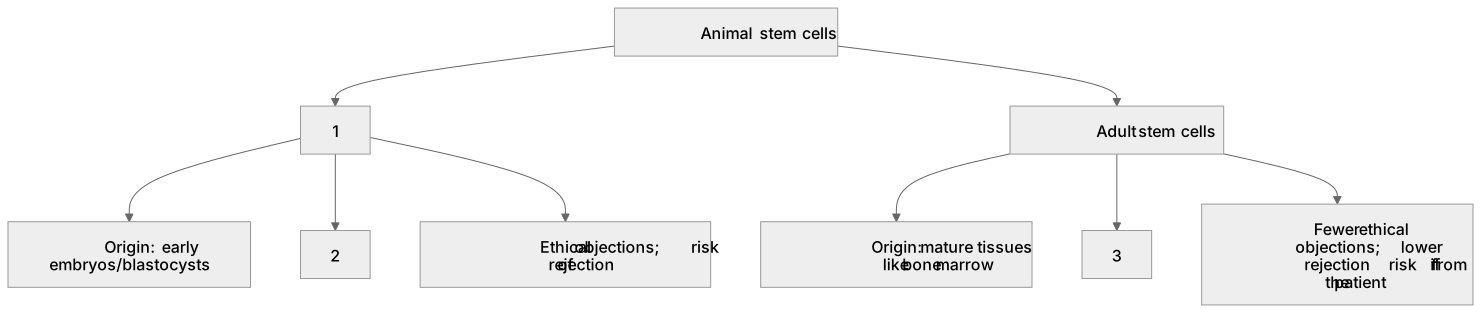
1Box 1
2Box 2
3Box 3
There is more to this lesson
The full lesson goes on to check your understanding and help you earn the marks. Create a free account to carry on, with your progress saved.
A week of Premium from your first lesson · Then the free plan continues · No card, no charge
Test your understanding of Supplying the cell: describe the difference between embryonic and adult stem cells in animals
Active recall beats re-reading. Take an instant quiz now to test what you’ve learned and lock it into long-term memory.
A week of Premium from your first lesson · Then the free plan continues · No card, no charge