OCR · GCSE · Biology
Course version: J247 · Version from Sept 2018
Describe the functions of stem cells in embryonic and adult animals, and…
Full specification wording
Supplying the cell: describe the functions of stem cells in embryonic and adult animals, and meristems in plants (to include: division to produce a range of different cell types for development, growth and repair)
Stem cells perform vital functions through controlled mitotic division and subsequent differentiation into diverse cell lineages.
- Point 6 of 7
- 4 key terms
Study notes
From the teaching notes for this specification point.
The idea
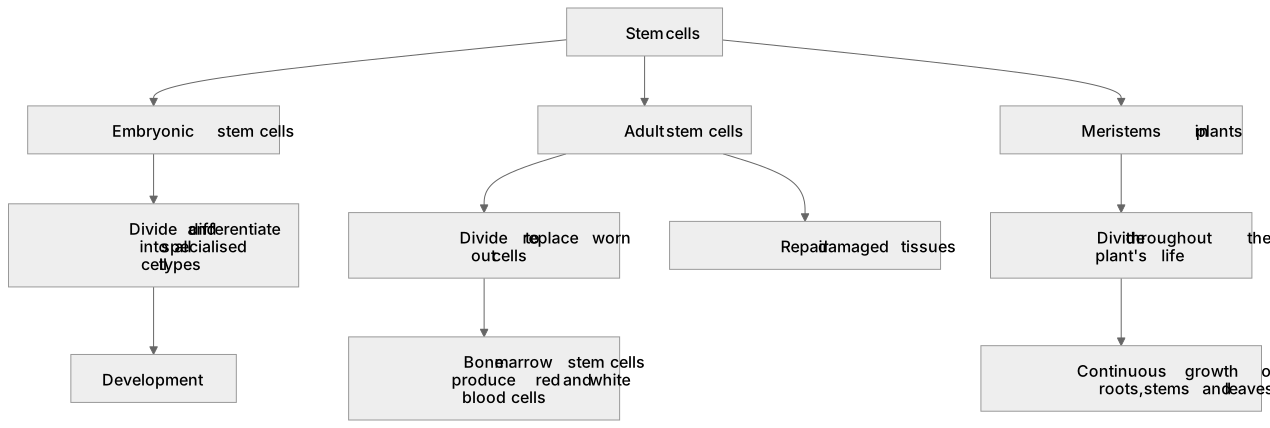
Stem cells perform vital functions through controlled mitotic division and subsequent differentiation into diverse cell lineages. In embryonic animals, pluripotent stem cells divide and differentiate into every specialized cell type, driving tissue morphogenesis and organ development from a single zygote. In adult animals, multipotent stem cells replenish dying cells and repair damaged tissues; for example, bone marrow stem cells divide continuously to generate erythrocytes and leukocytes. In plants, meristem cells divide throughout the plant lifetime to produce new tissues for continuous apical and lateral growth.
What earns the marks
- Describing embryonic stem cell division to produce all specialized cell types during development.
- Describing adult stem cell division to replace worn out cells and repair damaged tissues like blood cells.
- Describing plant meristem division allowing continuous lifelong growth of roots, stems, and leaves.
Common mistakes and how to put them right
Assuming adult stem cells can differentiate into any cell type, rather than being restricted to specific cell lineages.
Forgetting that plant meristems remain active throughout the organism entire life, unlike animal growth which slows.
Exam tips
- Use key functional terms: development for embryos, repair and replacement for adult animals, continuous growth for meristems.
- Provide specific examples, such as bone marrow stem cells producing red and white blood cells.
Try the lesson
The start of the Supplying the cell: describe the functions of stem cells in embryonic and adult animals, and meristems in plants (to include: division to produce a range of different cell types for development, growth and repair) lesson, made from teaching notes for this specification point.
Have a go first
What is the main function of stem cells in animals?
Listen
Stem cells perform vital functions through controlled mitotic division and subsequent differentiation into diverse cell lineages. In embryonic animals, pluripotent stem cells divide and differentiate into every specialized cell type, driving tissue morphogenesis and organ development from a single zygote. In adult animals, multipotent stem cells replenish dying cells and repair damaged tissues; for example, bone marrow stem cells divide continuously to generate erythrocytes and leukocytes. In plants, meristem cells divide throughout the plant lifetime to produce new tissues for continuous apical and lateral growth. A strong answer earns marks for these points. describing embryonic stem cell division to produce all specialized cell types during development. describing adult stem cell division to replace worn out cells and repair damaged tissues like blood cells. describing plant meristem division allowing continuous lifelong growth of roots, stems, and leaves. Exam tip: Use key functional terms: development for embryos, repair and replacement for adult animals, continuous growth for meristems.
See it
Key words
Say what each word means before you turn the card.
stem cell functions
Try answering aloud or in your head before turning the card.
development and growth
Try answering aloud or in your head before turning the card.
tissue repair
Try answering aloud or in your head before turning the card.
meristematic growth
Try answering aloud or in your head before turning the card.
See every definition
- stem cell functions
- Division to produce a range of different cell types for development, growth and repair.
- development and growth
- Division of embryonic stem cells to produce all specialised cell types, driving tissue morphogenesis and organ development.
- tissue repair
- Adult stem cells divide to replace worn out cells and repair damaged tissues, such as blood cells.
- meristematic growth
- Meristem cells divide throughout the plant lifetime to produce new tissues for continuous apical and lateral growth.
Label the diagram
Some boxes have lost their names. Pick the right name for each number.
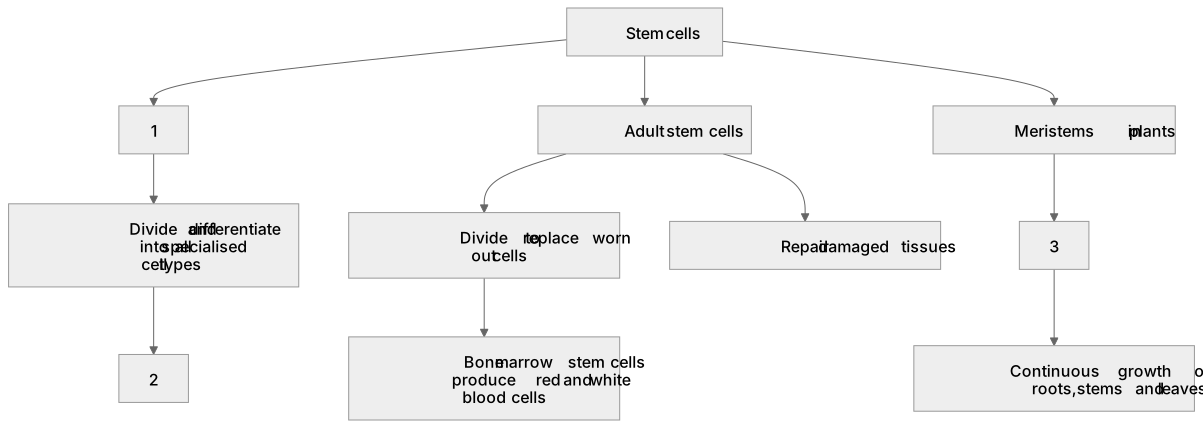
1Box 1
2Box 2
3Box 3
There is more to this lesson
The full lesson goes on to check your understanding and help you earn the marks. Create a free account to carry on, with your progress saved.
A week of Premium from your first lesson · Then the free plan continues · No card, no charge
Test your understanding of Supplying the cell: describe the functions of stem cells in embryonic and adult animals, and meristems in plants (to include: division to produce a range of different cell types for development, growth and repair)
Active recall beats re-reading. Take an instant quiz now to test what you’ve learned and lock it into long-term memory.
A week of Premium from your first lesson · Then the free plan continues · No card, no charge