OCR · GCSE · Biology
Course version: J247 · Version from Sept 2018
Describe that DNA is made from four different nucleotides; each nucleotide…
Full specification wording
What happens in cells (and what do cells need)?: describe that DNA is made from four different nucleotides; each nucleotide consisting of a common sugar and phosphate group with one of four different bases attached to the sugar (to include: the pairs of complementary bases (A-T and G-C)) (content found only in the biology separate science qualification)
Each nucleotide monomer in DNA comprises three distinct chemical components: a phosphate group, a common pentose sugar called deoxyribose, and one of four nitrogenous bases attached directly to…
- Point 5 of 9
- 4 key terms
Study notes
From the teaching notes for this specification point.
The idea
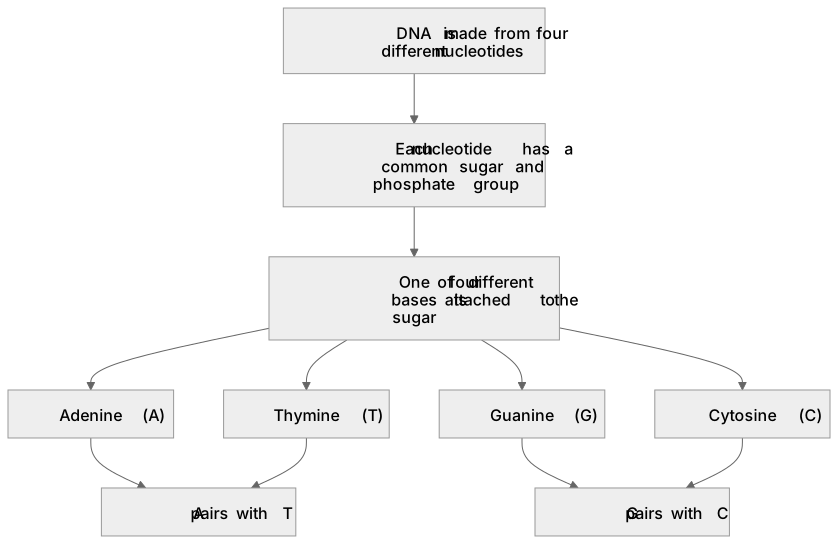
Each nucleotide monomer in DNA comprises three distinct chemical components: a phosphate group, a common pentose sugar called deoxyribose, and one of four nitrogenous bases attached directly to the sugar. The four bases are adenine (A), thymine (T), guanine (G), and cytosine (C). Across the double helix, bases pair according to strict complementary base pairing rules governed by chemical structure: adenine pairs exclusively with thymine (A-T) forming two hydrogen bonds, and guanine pairs exclusively with cytosine (G-C) forming three hydrogen bonds, ensuring identical diameter throughout the helix.
What earns the marks
- Naming the three components of a nucleotide: phosphate group, deoxyribose sugar, and nitrogenous base.
- Identifying the four bases as adenine, thymine, cytosine, and guanine.
- Stating the complementary base pairs: adenine pairs with thymine (A-T) and guanine pairs with cytosine (G-C).
- Describing that bases attach to the deoxyribose sugar and pair via hydrogen bonds.
Common mistakes and how to put them right
Mismatching the base pairs, such as pairing adenine with guanine or cytosine with thymine.
Attaching the nitrogenous base to the phosphate group rather than to the deoxyribose sugar.
Exam tips
- Remember the complementary pairs: A with T, and C with G (Straight letters A/T, Curved letters C/G).
- Ensure you can sketch or label a nucleotide with the sugar in the middle between phosphate and base.
Try the lesson
The start of the What happens in cells (and what do cells need)?: describe that DNA is made from four different nucleotides; each nucleotide consisting of a common sugar and phosphate group with one of four different bases attached to the sugar (to include: the pairs of complementary bases (A-T and G-C)) (content found only in the biology separate science qualification) lesson, made from teaching notes for this specification point.
Have a go first
In DNA, which base pairs with adenine (A)?
Listen
Each nucleotide monomer in DNA comprises three distinct chemical components: a phosphate group, a common pentose sugar called deoxyribose, and one of four nitrogenous bases attached directly to the sugar. The four bases are adenine (A), thymine (T), guanine (G), and cytosine (C). Across the double helix, bases pair according to strict complementary base pairing rules governed by chemical structure: adenine pairs exclusively with thymine (A-T) forming two hydrogen bonds, and guanine pairs exclusively with cytosine (G-C) forming three hydrogen bonds, ensuring identical diameter throughout the helix. A strong answer earns marks for these points. naming the three components of a nucleotide: phosphate group, deoxyribose sugar, and nitrogenous base. identifying the four bases as adenine, thymine, cytosine, and guanine. stating the complementary base pairs: adenine pairs with thymine (A-T) and guanine pairs with cytosine (G-C). describing that bases attach to the deoxyribose sugar and pair via hydrogen bonds. Exam tip: Remember the complementary pairs: A with T, and C with G (Straight letters A/T, Curved letters C/G).
See it
Key words
Say what each word means before you turn the card.
nucleotide structure
Try answering aloud or in your head before turning the card.
complementary base pairing
Try answering aloud or in your head before turning the card.
nitrogenous bases
Try answering aloud or in your head before turning the card.
hydrogen bonding
Try answering aloud or in your head before turning the card.
See every definition
- nucleotide structure
- Each nucleotide consists of a phosphate group, a common sugar and one of four different bases attached to the sugar.
- complementary base pairing
- The pairs of complementary bases are adenine with thymine (A-T) and guanine with cytosine (G-C).
- nitrogenous bases
- The four different bases are adenine (A), thymine (T), guanine (G) and cytosine (C), attached to the sugar.
- hydrogen bonding
- Bases pair via hydrogen bonds, with adenine pairing with thymine and guanine pairing with cytosine.
Label the diagram
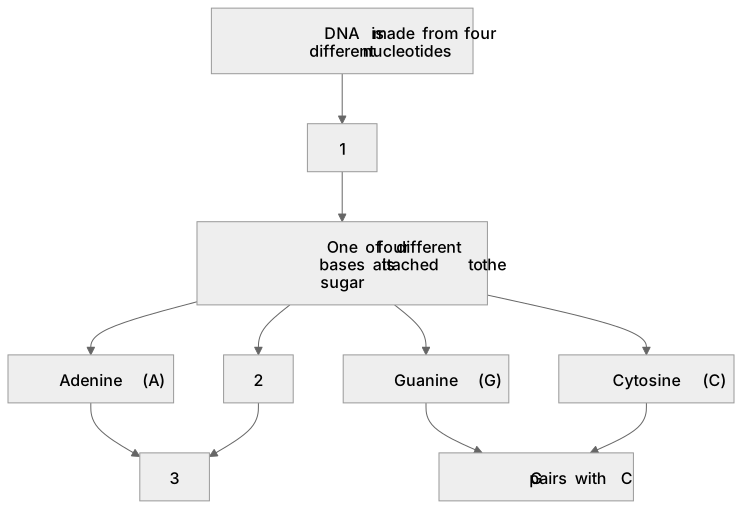
Some boxes have lost their names. Pick the right name for each number.
1Box 1
2Box 2
3Box 3
There is more to this lesson
The full lesson goes on to check your understanding and help you earn the marks. Create a free account to carry on, with your progress saved.
A week of Premium from your first lesson · Then the free plan continues · No card, no charge
Test your understanding of What happens in cells (and what do cells need)?: describe that DNA is made from four different nucleotides; each nucleotide consisting of a common sugar and phosphate group with one of four different bases attached to the sugar (to include: the pairs of complementary bases (A-T and G-C)) (content found only in the biology separate science qualification)
Active recall beats re-reading. Take an instant quiz now to test what you’ve learned and lock it into long-term memory.
A week of Premium from your first lesson · Then the free plan continues · No card, no charge