OCR · GCSE · Biology
Course version: J247 · Version from Sept 2018
Recall a simple description of protein synthesis (to include: the…
Full specification wording
What happens in cells (and what do cells need)?: recall a simple description of protein synthesis (to include: the unzipping of the DNA molecule around the gene, copying to mRNA in nucleus (transcription), (translation) of the nucleotide sequence in the cytoplasm, tRNA as the carrier of amino acids) (content found only in the biology separate science qualification) (Higher tier only)
Protein synthesis occurs in two successive stages: transcription and translation.
- Point 6 of 9
- 4 key terms
Study notes
From the teaching notes for this specification point.
The idea
Protein synthesis occurs in two successive stages: transcription and translation. During transcription inside the nucleus, the DNA double helix unzips around a specific gene as hydrogen bonds break. One strand acts as a template to form a single-stranded messenger RNA (mRNA) molecule using complementary base rules (uracil replaces thymine). The mRNA leaves the nucleus through a nuclear pore to enter the cytoplasm. During translation, the mRNA binds to a ribosome. Transfer RNA (tRNA) molecules carrying specific amino acids align complementary anticodons to mRNA codons, linking amino acids into a polypeptide.
What earns the marks
- Transcription in the nucleus where DNA unzips and a complementary mRNA strand is synthesized.
- mRNA moving from the nucleus into the cytoplasm and binding to a ribosome.
- Translation where tRNA molecules transport specific amino acids to the ribosome.
- Complementary alignment between tRNA anticodons and mRNA codons to link amino acids.
Common mistakes and how to put them right
Stating transcription occurs at ribosomes or translation occurs in the nucleus, reversing the cellular locations.
Forgetting that RNA incorporates uracil (U) instead of thymine (T) when pairing with adenine.
Exam tips
- Order the stages clearly: Transcription in the nucleus first, then Translation in the cytoplasm at the ribosome second.
- Highlight tRNA role as the adapter molecule carrying an amino acid to match the mRNA codon.
Try the lesson
The start of the What happens in cells (and what do cells need)?: recall a simple description of protein synthesis (to include: the unzipping of the DNA molecule around the gene, copying to mRNA in nucleus (transcription), (translation) of the nucleotide sequence in the cytoplasm, tRNA as the carrier of amino acids) (content found only in the biology separate science qualification) (Higher tier only) lesson, made from teaching notes for this specification point.
Have a go first
Which molecule carries amino acids to the ribosome during translation?
Listen
Protein synthesis occurs in two successive stages: transcription and translation. During transcription inside the nucleus, the DNA double helix unzips around a specific gene as hydrogen bonds break. One strand acts as a template to form a single-stranded messenger RNA (mRNA) molecule using complementary base rules (uracil replaces thymine). The mRNA leaves the nucleus through a nuclear pore to enter the cytoplasm. During translation, the mRNA binds to a ribosome. Transfer RNA (tRNA) molecules carrying specific amino acids align complementary anticodons to mRNA codons, linking amino acids into a polypeptide. A strong answer earns marks for these points. transcription in the nucleus where DNA unzips and a complementary mRNA strand is synthesized. mRNA moving from the nucleus into the cytoplasm and binding to a ribosome. translation where tRNA molecules transport specific amino acids to the ribosome. complementary alignment between tRNA anticodons and mRNA codons to link amino acids. Exam tip: Order the stages clearly: Transcription in the nucleus first, then Translation in the cytoplasm at the ribosome second.
See it
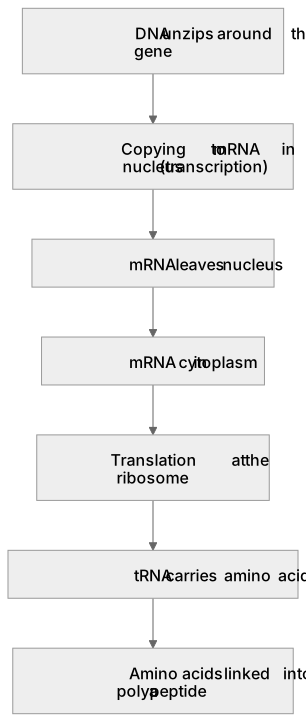
Put it in order
Put these steps in the order they happen.
- 1. Amino acids linked into a polypeptide
- 2. tRNA carries amino acids
- 3. mRNA leaves nucleus
- 4. Translation at the ribosome
- 5. DNA unzips around the gene
- 6. Copying to mRNA in nucleus (transcription)
- 7. mRNA in cytoplasm
Key words
Say what each word means before you turn the card.
transcription
Try answering aloud or in your head before turning the card.
translation
Try answering aloud or in your head before turning the card.
mRNA and tRNA
Try answering aloud or in your head before turning the card.
ribosomes
Try answering aloud or in your head before turning the card.
See every definition
- transcription
- The DNA double helix unzips around a specific gene and one strand acts as a template to form a single-stranded mRNA molecule using complementary base rules.
- translation
- The mRNA binds to a ribosome, where tRNA molecules carrying specific amino acids align complementary anticodons to mRNA codons, linking amino acids into a polypeptide.
- mRNA and tRNA
- Messenger RNA leaves the nucleus through a nuclear pore to enter the cytoplasm, while transfer RNA molecules carry specific amino acids to the ribosome.
- ribosomes
- The mRNA binds to this structure in the cytoplasm during translation, where tRNA molecules align complementary anticodons to mRNA codons.
Label the diagram
Some boxes have lost their names. Pick the right name for each number.
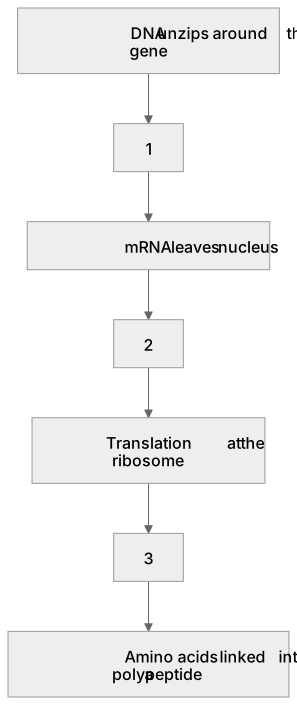
1Box 1
2Box 2
3Box 3
There is more to this lesson
The full lesson goes on to check your understanding and help you earn the marks. Create a free account to carry on, with your progress saved.
A week of Premium from your first lesson · Then the free plan continues · No card, no charge
Test your understanding of What happens in cells (and what do cells need)?: recall a simple description of protein synthesis (to include: the unzipping of the DNA molecule around the gene, copying to mRNA in nucleus (transcription), (translation) of the nucleotide sequence in the cytoplasm, tRNA as the carrier of amino acids) (content found only in the biology separate science qualification) (Higher tier only)
Active recall beats re-reading. Take an instant quiz now to test what you’ve learned and lock it into long-term memory.
A week of Premium from your first lesson · Then the free plan continues · No card, no charge