AQA · A-Level · Business
Course version: 7132 · Version from Sept 2023
Economic change: The impact of changes in the UK and the global economic…
Full specification wording
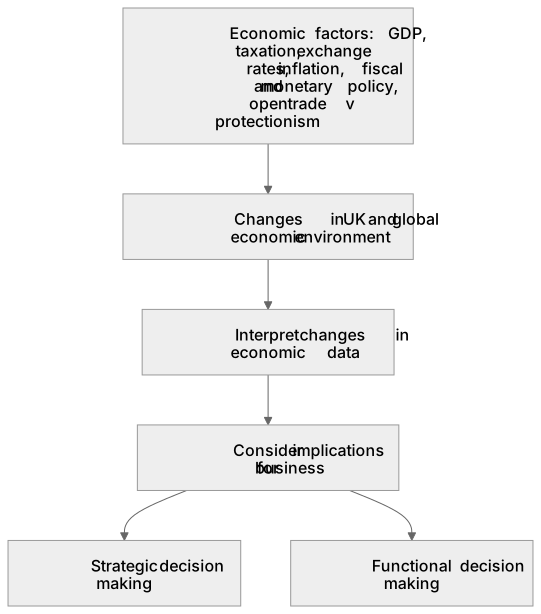
Analysing the external environment to assess opportunities and threats: economic change: The impact of changes in the UK and the global economic environment on strategic and functional decision making (to include: Economic factors to include: GDP, taxation, exchange rates, inflation, fiscal and monetary policy, more open trade v protectionism. Students should be able to understand economic data, interpret changes in economic data for the UK and globally, and consider the implications of such changes for business.)
Economic data analysis is crucial for strategic decisions.
- 4 key terms
Study notes
From the teaching notes for this specification point.
The idea
Economic data analysis is crucial for strategic decisions. GDP growth affects demand; a recession (negative growth) particularly harms firms selling products with high income elasticity. Inflation raises business costs (e.g., materials, wages) and erodes consumer purchasing power, forcing price reviews. Monetary policy, set by the central bank, uses interest rates to manage inflation; higher rates increase loan costs and can dampen investment. Fiscal policy uses government spending and taxation; for example, lower corporation tax boosts retained profit. A weaker pound (£) makes UK exports cheaper but imports dearer. Open trade reduces tariffs, expanding markets, while protectionism restricts them, affecting firms' international competitiveness and supply chains.
What earns the marks
- Interpreting economic data by quoting a figure with its unit and explaining its specific impact on a business's costs or revenues.
- Correctly applying income elasticity of demand (YED) to a change in GDP, distinguishing between normal/luxury goods (YED > 0) and inferior goods (YED < 0).
- Analysing the dual effect of an exchange rate movement on both imported input costs and export price competitiveness to determine the net impact.
- Explaining how inflation affects a business's costs (e.g., raw materials, wages), pricing decisions, and the real incomes of its customers.
Common mistakes and how to put them right
Confusing a fall in the rate of GDP growth with a fall in GDP.
Put it right: Slower positive growth means the economy is still expanding, just at a reduced pace.
Reversing the effect of an exchange rate change.
Put it right: A weaker pound (e.g., £1:$1.20 -> £1:$1.10) means it buys less foreign currency, making imports more expensive and exports cheaper.
Assuming inflation affects all businesses negatively.
Put it right: While rising costs are a challenge, firms with price inelastic demand may be able to raise prices by more than their costs, increasing profit margins.
Exam tips
- When presented with economic data in a chart or table, always quote a specific figure to support your analysis. Avoid simply describing the trend.
- In an evaluation question, prioritise the economic factors. Argue which variable (e.g., exchange rates for an exporter, interest rates for a highly geared firm) poses the biggest threat or opportunity, and justify your choice.
Try the lesson
The start of the Analysing the external environment to assess opportunities and threats: economic change: The impact of changes in the UK and the global economic environment on strategic and functional decision making (to include: Economic factors to include: GDP, taxation, exchange rates, inflation, fiscal and monetary policy, more open trade v protectionism. Students should be able to understand economic data, interpret changes in economic data for the UK and globally, and consider the implications of such changes for business.) lesson, made from teaching notes for this specification point.
Have a go first
Which one of the following is a direct tax that a UK business must pay on the profits it earns?
Listen
Economic data analysis is crucial for strategic decisions. GDP growth affects demand; a recession (negative growth) particularly harms firms selling products with high income elasticity. Inflation raises business costs (e.g., materials, wages) and erodes consumer purchasing power, forcing price reviews. Monetary policy, set by the central bank, uses interest rates to manage inflation; higher rates increase loan costs and can dampen investment. Fiscal policy uses government spending and taxation; for example, lower corporation tax boosts retained profit. A weaker pound (£) makes UK exports cheaper but imports dearer. Open trade reduces tariffs, expanding markets, while protectionism restricts them, affecting firms' international competitiveness and supply chains. A strong answer earns marks for these points. Interpreting economic data by quoting a figure with its unit and explaining its specific impact on a business's costs or revenues. Correctly applying income elasticity of demand (YED) to a change in GDP, distinguishing between normal/luxury goods (YED > 0) and inferior goods (YED < 0). Analysing the dual effect of an exchange rate movement on both imported input costs and export price competitiveness to determine the net impact. Explaining how inflation affects a business's costs (e.g., raw materials, wages), pricing decisions, and the real incomes of its customers. Exam tip: When presented with economic data in a chart or table, always quote a specific figure to support your analysis. Avoid simply describing the trend.
See it
Key words
Say what each word means before you turn the card.
GDP
Try answering aloud or in your head before turning the card.
Inflation
Try answering aloud or in your head before turning the card.
Monetary policy
Try answering aloud or in your head before turning the card.
Fiscal policy
Try answering aloud or in your head before turning the card.
See every definition
- GDP
- Its growth affects demand, while negative growth is a recession that particularly harms firms selling products with high income elasticity.
- Inflation
- It raises business costs such as materials and wages and erodes consumer purchasing power, forcing price reviews.
- Monetary policy
- Set by the central bank, it uses interest rates to manage inflation, and higher rates increase loan costs and can dampen investment.
- Fiscal policy
- It uses government spending and taxation, so for example lower corporation tax boosts retained profit.
Label the diagram
Some boxes have lost their names. Pick the right name for each number.
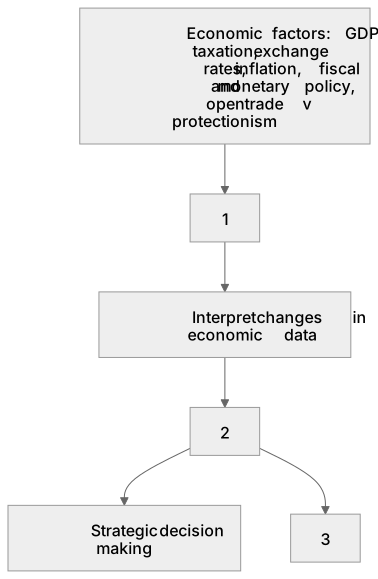
1Box 1
2Box 2
3Box 3
There is more to this lesson
The full lesson goes on to check your understanding and help you earn the marks. Create a free account to carry on, with your progress saved.
A week of Premium from your first lesson · Then the free plan continues · No card, no charge
Test your understanding of Analysing the external environment to assess opportunities and threats: economic change: The impact of changes in the UK and the global economic environment on strategic and functional decision making (to include: Economic factors to include: GDP, taxation, exchange rates, inflation, fiscal and monetary policy, more open trade v protectionism. Students should be able to understand economic data, interpret changes in economic data for the UK and globally, and consider the implications of such changes for business.)
Active recall beats re-reading. Take an instant quiz now to test what you’ve learned and lock it into long-term memory.
A week of Premium from your first lesson · Then the free plan continues · No card, no charge