AQA · A-Level · Business
Course version: 7132 · Version from Sept 2023
The value of setting operational objectives (to include: Operational…
Full specification wording
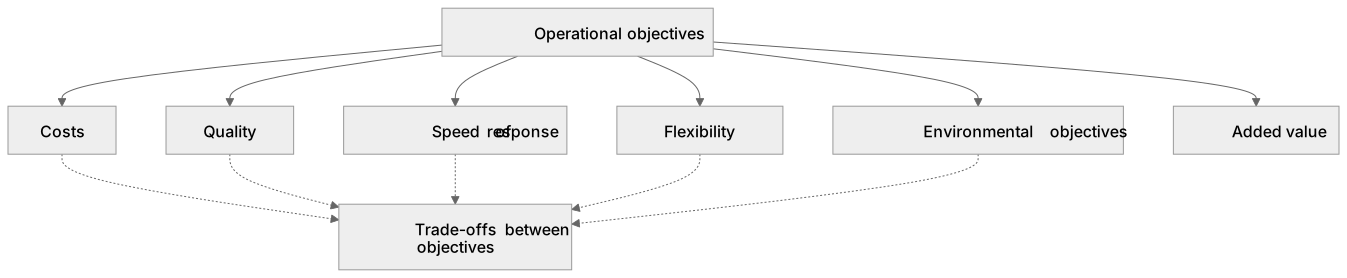
Setting operational objectives: The value of setting operational objectives (to include: Operational objectives include: costs, quality, speed of response, flexibility, environmental objectives, added value.)
Operational objectives are specific, measurable targets for the operations function, derived from corporate aims.
- 3 key terms
Study notes
From the teaching notes for this specification point.
The idea
Operational objectives are specific, measurable targets for the operations function, derived from corporate aims. They must include a number and a date (e.g., cut unit costs by 5% in one year). Their value lies in providing focus, enabling performance measurement, and ensuring accountability. The main objectives—costs, quality, speed, and flexibility—often conflict. For example, increasing speed may require more stock, raising costs. Environmental objectives, such as reducing waste or carbon emissions, are increasingly important. These can create trade-offs (e.g., sustainable materials may increase initial costs) but can also lead to efficiencies and enhance brand reputation. Added value, the difference between output price and input costs, is a key summary measure, as it can be increased by cutting waste or by improving quality to justify a higher price.
What earns the marks
- Expressing an objective in measurable terms with a target and a deadline, because an objective without a number cannot be judged as met or missed.
- Explaining a trade-off between two objectives, such as how pursuing an environmental target to reduce waste might impact production costs or speed.
- Linking an operational target back to the corporate objective it serves, for example a cost target supporting a low-price strategy.
- Defining added value as the difference between the value of the output and the cost of bought-in materials and services, and using it to show that a firm can improve by raising worth as well as by cutting cost.
Common mistakes and how to put them right
Confusing an objective (the 'what', e.g., reduce defects) with a strategy (the 'how', e.g., buy new machinery).
Treating added value as the same as profit, when it is calculated before deducting internal costs like labour and overheads.
Ignoring the trade-offs, for instance assuming that adopting sustainable processes has no impact on costs or flexibility.
Exam tips
- The bracketed list is the examinable set, so when asked for two operational objectives, take them from it rather than offering something like 'increasing sales', which belongs to marketing.
- Questions often ask you to assess the value of setting objectives at all, so have the case against ready: they can be based on out-of-date forecasts and can make a firm too rigid when conditions change.
- Expect to have to recommend which objective a named firm should prioritise; justify it from the market the firm is in and end by saying what would change your mind.
Try the lesson
The start of the Setting operational objectives: The value of setting operational objectives (to include: Operational objectives include: costs, quality, speed of response, flexibility, environmental objectives, added value.) lesson, made from teaching notes for this specification point.
Have a go first
Which one of the following is an operational objective that focuses on how quickly a business can respond to customer demand?
Listen
Operational objectives are specific, measurable targets for the operations function, derived from corporate aims. They must include a number and a date (e.g., cut unit costs by 5% in one year). Their value lies in providing focus, enabling performance measurement, and ensuring accountability. The main objectives—costs, quality, speed, and flexibility—often conflict. For example, increasing speed may require more stock, raising costs. Environmental objectives, such as reducing waste or carbon emissions, are increasingly important. These can create trade-offs (e.g., sustainable materials may increase initial costs) but can also lead to efficiencies and enhance brand reputation. Added value, the difference between output price and input costs, is a key summary measure, as it can be increased by cutting waste or by improving quality to justify a higher price. A strong answer earns marks for these points. Expressing an objective in measurable terms with a target and a deadline, because an objective without a number cannot be judged as met or missed. Explaining a trade-off between two objectives, such as how pursuing an environmental target to reduce waste might impact production costs or speed. Linking an operational target back to the corporate objective it serves, for example a cost target supporting a low-price strategy. Defining added value as the difference between the value of the output and the cost of bought-in materials and services, and using it to show that a firm can improve by raising worth as well as by cutting cost. Exam tip: The bracketed list is the examinable set, so when asked for two operational objectives, take them from it rather than offering something like 'increasing sales', which belongs to marketing.
See it
Key words
Say what each word means before you turn the card.
cost, quality, speed and flexibility
Try answering aloud or in your head before turning the card.
added value
Try answering aloud or in your head before turning the card.
environmental objectives
Try answering aloud or in your head before turning the card.
See every definition
- cost, quality, speed and flexibility
- Main operational objectives that often conflict, for example increasing speed may require more stock, raising costs.
- added value
- The difference between output price and input costs, which can be increased by cutting waste or by improving quality to justify a higher price.
- environmental objectives
- Objectives such as reducing waste or carbon emissions, which are increasingly important and can create trade-offs but can also lead to efficiencies and enhance brand reputation.
Label the diagram
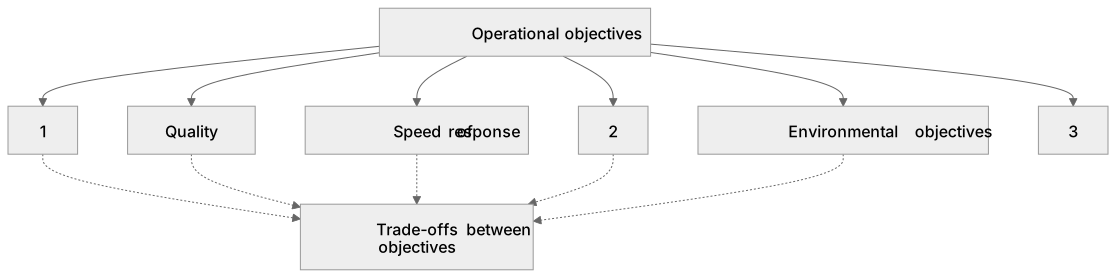
Some boxes have lost their names. Pick the right name for each number.
1Box 1
2Box 2
3Box 3
There is more to this lesson
The full lesson goes on to check your understanding and help you earn the marks. Create a free account to carry on, with your progress saved.
A week of Premium from your first lesson · Then the free plan continues · No card, no charge
Test your understanding of Setting operational objectives: The value of setting operational objectives (to include: Operational objectives include: costs, quality, speed of response, flexibility, environmental objectives, added value.)
Active recall beats re-reading. Take an instant quiz now to test what you’ve learned and lock it into long-term memory.
A week of Premium from your first lesson · Then the free plan continues · No card, no charge