AQA · A-Level · Business
Course version: 7132 · Version from Sept 2023
The impact on stakeholders of functional decisions and their response to…
Full specification wording
Subject content: the impact on stakeholders of functional decisions and their response to such decisions
Stakeholders are the groups that can affect the firm or be affected by it, and the useful question is never who is affected but who can do something about it.
- Point 8 of 9
- 3 key terms
Study notes
From the teaching notes for this specification point.
The idea
Stakeholders are the groups that can affect the firm or be affected by it, and the useful question is never who is affected but who can do something about it. Map each group by the power it holds and the interest it takes: a supplier with one customer is hurt but powerless, while a skilled workforce in a tight labour market can answer a pay freeze by walking out of the door. That reply is measurable, since labour turnover is the number of staff leaving in a year divided by the average number employed times one hundred, and every replacement carries recruitment and training cost. Customers switch, lenders reprice credit, communities and pressure groups campaign. The trade-off is a certain saving now against a delayed, uncertain and sometimes far larger cost.
What earns the marks
- Ranking the groups by power and interest for this firm instead of listing every stakeholder in turn.
- Stating the reaction as an action with a consequence, such as the best staff leaving first and taking customer relationships with them.
- Quantifying that reaction where the data allows, using labour turnover, lost sales or the cost of replacing an employee.
- Recognising where two stakeholder interests genuinely conflict and saying whose claim the firm should meet and why.
Common mistakes and how to put them right
Giving every group equal weight, so a community objection is treated as seriously as the bank that holds the loan covenant.
Saying employees will be demotivated and stopping there, with no link to productivity, quality, turnover or cost.
Presenting stakeholder and shareholder interests as always opposed, when better pay or lower emissions can raise returns over the long run.
Exam tips
- A case study usually plants a quotation from one stakeholder, and it is there to be used as evidence rather than as scene setting.
- For a recommend question, deal with the most powerful group first and handle the rest briefly.
- Keep the time frame explicit, because most stakeholder damage appears after the period the appendix covers.
Try the lesson
The start of the Subject content: the impact on stakeholders of functional decisions and their response to such decisions lesson, made from teaching notes for this specification point.
Have a go first
A business decides to close one of its factories and move production overseas. Which group is most directly affected as internal stakeholders?
Listen
Stakeholders are the groups that can affect the firm or be affected by it, and the useful question is never who is affected but who can do something about it. Map each group by the power it holds and the interest it takes: a supplier with one customer is hurt but powerless, while a skilled workforce in a tight labour market can answer a pay freeze by walking out of the door. That reply is measurable, since labour turnover is the number of staff leaving in a year divided by the average number employed times one hundred, and every replacement carries recruitment and training cost. Customers switch, lenders reprice credit, communities and pressure groups campaign. The trade-off is a certain saving now against a delayed, uncertain and sometimes far larger cost. A strong answer earns marks for these points. Ranking the groups by power and interest for this firm instead of listing every stakeholder in turn. Stating the reaction as an action with a consequence, such as the best staff leaving first and taking customer relationships with them. Quantifying that reaction where the data allows, using labour turnover, lost sales or the cost of replacing an employee. Recognising where two stakeholder interests genuinely conflict and saying whose claim the firm should meet and why. Exam tip: A case study usually plants a quotation from one stakeholder, and it is there to be used as evidence rather than as scene setting.
See it
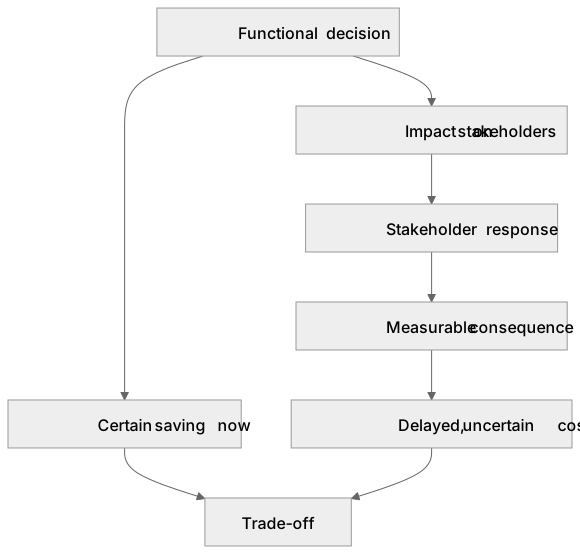
Key words
Say what each word means before you turn the card.
power and interest
Try answering aloud or in your head before turning the card.
stakeholder reaction
Try answering aloud or in your head before turning the card.
labour turnover
Try answering aloud or in your head before turning the card.
See every definition
- power and interest
- Mapping each group by the power it holds and the interest it takes, so the useful question is who can do something about it.
- stakeholder reaction
- The response of groups that can affect the firm or be affected by it, stated as an action with a consequence.
- labour turnover
- The number of staff leaving in a year divided by the average number employed times one hundred.
Label the diagram
Some boxes have lost their names. Pick the right name for each number.
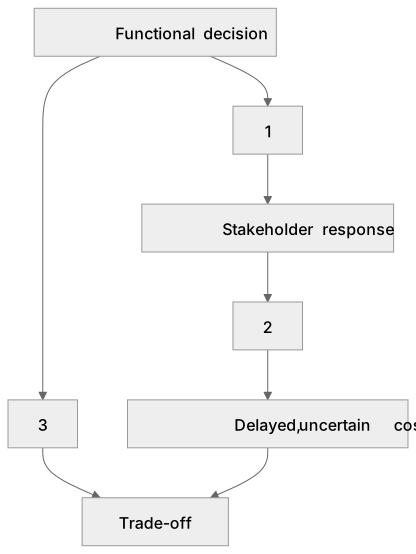
1Box 1
2Box 2
3Box 3
There is more to this lesson
The full lesson goes on to check your understanding and help you earn the marks. Create a free account to carry on, with your progress saved.
A week of Premium from your first lesson · Then the free plan continues · No card, no charge
Test your understanding of Subject content: the impact on stakeholders of functional decisions and their response to such decisions
Active recall beats re-reading. Take an instant quiz now to test what you’ve learned and lock it into long-term memory.
A week of Premium from your first lesson · Then the free plan continues · No card, no charge