OCR · A-Level · Chemistry
Course version: H432 · Version from Sept 2017
(iii) removal of toxic waste products, e.g. removal of HCl formed during…
Full specification wording
Alkenes: (iii) removal of toxic waste products, e.g. removal of HCl formed during disposal by combustion of halogenated plastics (e.g. PVC)
When halogenated plastics such as PVC are disposed of by combustion, the halogen they contain is released as a toxic hydrogen halide; for PVC this is hydrogen chloride, HCl.
- Point 26 of 27
- 4 key terms
Study notes
From the teaching notes for this specification point.
The idea
When halogenated plastics such as PVC are disposed of by combustion, the halogen they contain is released as a toxic hydrogen halide; for PVC this is hydrogen chloride, HCl. Because HCl is harmful, waste gases must be treated to remove it before release. A common method is to pass the gases through an alkaline scrubber, where the HCl is neutralised, for example by reaction with calcium hydroxide or sodium hydroxide, forming a salt and water. The wider principle is that the halogen content of a plastic determines which toxic waste product forms on burning, and that this product must be captured rather than emitted. Recognising the halogen in the polymer lets you predict the hydrogen halide produced and choose a suitable removal method.
What earns the marks
- States that combustion of PVC releases hydrogen chloride, HCl, as a toxic product.
- Explains that the halogen in the plastic becomes a hydrogen halide on burning.
- Describes removal of the HCl by reaction with an alkali such as calcium hydroxide or sodium hydroxide.
- Links the halogen content of the plastic to the identity of the toxic waste product formed.
Common mistakes and how to put them right
Claims PVC combustion releases chlorine gas rather than hydrogen chloride.
Put it right by stating that the halogen leaves as HCl.
Suggests the HCl can simply be released.
Put it right by explaining that it must be removed, for example by alkaline scrubbing.
Ignores the halogen content when predicting the waste product.
Put it right by using the halogen present to identify the hydrogen halide formed.
Exam tips
- Name the specific toxic product, HCl, rather than saying only 'toxic gases'.
- Give a named alkali and the neutralisation reaction when describing removal.
- Connect the halogen in the polymer to the hydrogen halide produced on combustion.
Try the lesson
The start of the Alkenes: (iii) removal of toxic waste products, e.g. removal of HCl formed during disposal by combustion of halogenated plastics (e.g. PVC) lesson, made from teaching notes for this specification point.
Listen
When halogenated plastics such as PVC are disposed of by combustion, the halogen they contain is released as a toxic hydrogen halide; for PVC this is hydrogen chloride, HCl. Because HCl is harmful, waste gases must be treated to remove it before release. A common method is to pass the gases through an alkaline scrubber, where the HCl is neutralised, for example by reaction with calcium hydroxide or sodium hydroxide, forming a salt and water. The wider principle is that the halogen content of a plastic determines which toxic waste product forms on burning, and that this product must be captured rather than emitted. Recognising the halogen in the polymer lets you predict the hydrogen halide produced and choose a suitable removal method. A strong answer earns marks for these points. States that combustion of PVC releases hydrogen chloride, HCl, as a toxic product. Explains that the halogen in the plastic becomes a hydrogen halide on burning. Describes removal of the HCl by reaction with an alkali such as calcium hydroxide or sodium hydroxide. Links the halogen content of the plastic to the identity of the toxic waste product formed. A common slip: Claims PVC combustion releases chlorine gas rather than hydrogen chloride. Instead, stating that the halogen leaves as HCl. Exam tip: Name the specific toxic product, HCl, rather than saying only 'toxic gases'.
See it
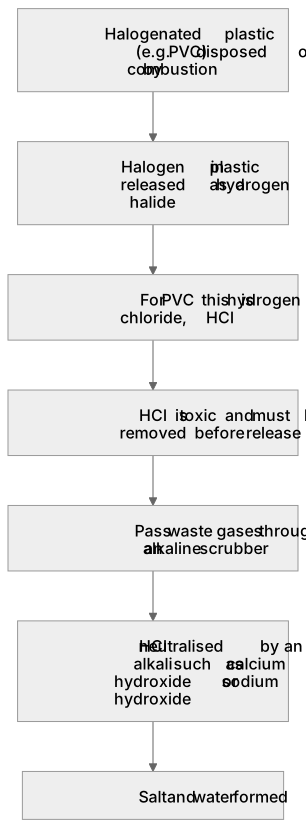
Put it in order
Put these steps in the order they happen.
- 1. Salt and water formed
- 2. HCl neutralised by an alkali such as calcium hydroxide or sodium hydroxide
- 3. For PVC this is hydrogen chloride, HCl
- 4. Pass waste gases through an alkaline scrubber
- 5. Halogenated plastic (e.g. PVC) disposed of by combustion
- 6. Halogen in plastic released as a hydrogen halide
- 7. HCl is toxic and must be removed before release
Key words
Say what each word means before you turn the card.
Combustion of halogenated plastics
Try answering aloud or in your head before turning the card.
Toxic waste products and their removal
Try answering aloud or in your head before turning the card.
Neutralisation reactions
Try answering aloud or in your head before turning the card.
Environmental consequences of polymer disposal
Try answering aloud or in your head before turning the card.
See every definition
- Combustion of halogenated plastics
- Disposal by burning of plastics containing a halogen, which releases that halogen as a toxic hydrogen halide.
- Toxic waste products and their removal
- Harmful products such as HCl must be treated before release, for example by passing the gases through an alkaline scrubber where the HCl is neutralised.
- Neutralisation reactions
- Reaction of HCl with an alkali such as calcium hydroxide or sodium hydroxide, forming a salt and water.
- Environmental consequences of polymer disposal
- The halogen content of a plastic determines which toxic waste product forms on burning, and this product must be captured rather than emitted.
Label the diagram
Some boxes have lost their names. Pick the right name for each number.
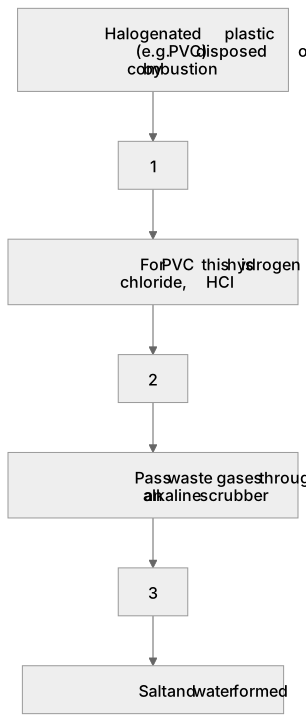
1Box 1
2Box 2
3Box 3
There is more to this lesson
The full lesson goes on to check your understanding and help you earn the marks. Create a free account to carry on, with your progress saved.
A week of Premium from your first lesson · Then the free plan continues · No card, no charge
Test your understanding of Alkenes: (iii) removal of toxic waste products, e.g. removal of HCl formed during disposal by combustion of halogenated plastics (e.g. PVC)
Active recall beats re-reading. Take an instant quiz now to test what you’ve learned and lock it into long-term memory.
A week of Premium from your first lesson · Then the free plan continues · No card, no charge