OCR · A-Level · Chemistry
Course version: H432 · Version from Sept 2017
Chromatography and qualitative analysis: (i) retention times
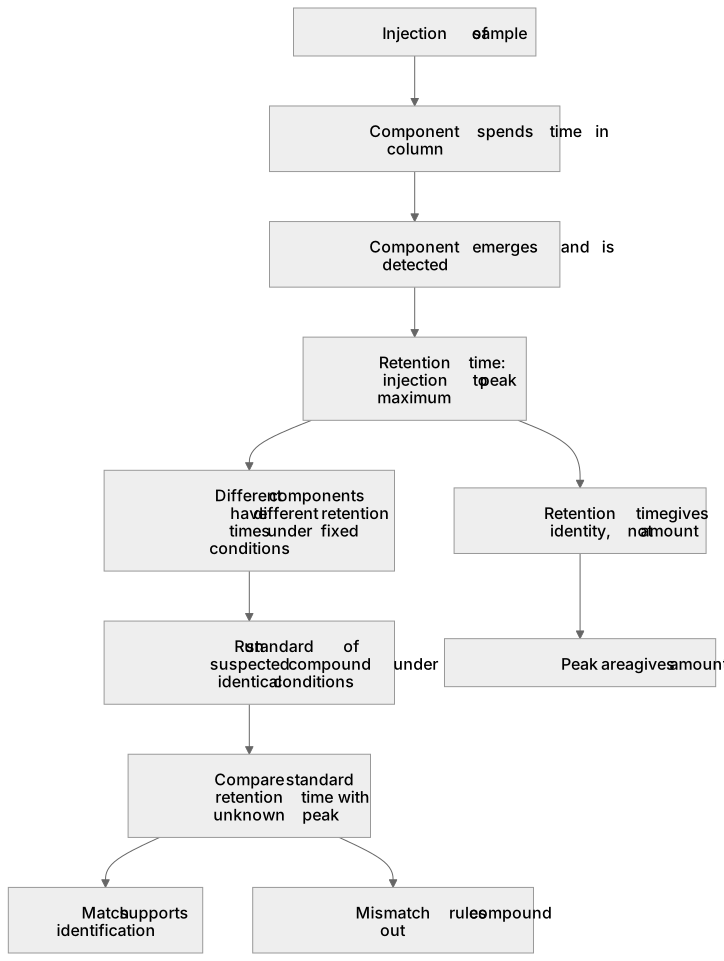
Retention time is the time a component spends in the column before it emerges and is detected, measured from injection to the peak maximum on the chromatogram.
- Point 4 of 14
- 4 key terms
Study notes
From the teaching notes for this specification point.
The idea
Retention time is the time a component spends in the column before it emerges and is detected, measured from injection to the peak maximum on the chromatogram. Different components have different retention times under fixed conditions, so retention time is used for qualitative identification. To identify an unknown, you run a standard of the suspected compound under identical conditions (same column, carrier gas flow and temperature) and compare its retention time with that of the unknown peak. A match supports identification; a mismatch rules the compound out. Retention time depends on conditions, so comparisons are only valid when conditions are kept the same. Retention time does not by itself give the amount; peak area does that.
What earns the marks
- Defines retention time as the time from injection to detection of a component's peak maximum.
- States that different components have characteristic retention times under fixed conditions.
- Compares the retention time of an unknown peak with that of a known standard to identify the component.
- Specifies that the standard must be run under identical conditions for the comparison to be valid.
- Distinguishes retention time (used for identification) from peak area (used for amount).
Common mistakes and how to put them right
Measures retention time to the start of the peak rather than to the peak maximum.
Put it right: Read the time at the peak maximum.
Compares retention times obtained under different conditions.
Put it right: Ensure the standard and unknown are run under identical conditions.
Uses retention time to quantify the amount of a component.
Put it right: Use peak area for amount and retention time for identity.
Exam tips
- Quote retention time as the time at the peak maximum, taken from the time axis.
- When identifying a component, state explicitly that the standard was run under the same conditions.
- Keep identification (retention time) and quantification (peak area) clearly separate in your answer.
Try the lesson
The start of the Chromatography and qualitative analysis: (i) retention times lesson, made from teaching notes for this specification point.
Listen
Retention time is the time a component spends in the column before it emerges and is detected, measured from injection to the peak maximum on the chromatogram. Different components have different retention times under fixed conditions, so retention time is used for qualitative identification. To identify an unknown, you run a standard of the suspected compound under identical conditions (same column, carrier gas flow and temperature) and compare its retention time with that of the unknown peak. A match supports identification; a mismatch rules the compound out. Retention time depends on conditions, so comparisons are only valid when conditions are kept the same. Retention time does not by itself give the amount; peak area does that. A strong answer earns marks for these points. Defines retention time as the time from injection to detection of a component's peak maximum. States that different components have characteristic retention times under fixed conditions. Compares the retention time of an unknown peak with that of a known standard to identify the component. Specifies that the standard must be run under identical conditions for the comparison to be valid. Exam tip: Quote retention time as the time at the peak maximum, taken from the time axis.
See it
Key words
Say what each word means before you turn the card.
Retention time
Try answering aloud or in your head before turning the card.
Characteristic retention time under fixed conditions
Try answering aloud or in your head before turning the card.
Identification by comparison with a standard
Try answering aloud or in your head before turning the card.
Identical conditions required for valid comparison
Try answering aloud or in your head before turning the card.
See every definition
- Retention time
- The time a component spends in the column before it emerges and is detected, measured from injection to the peak maximum on the chromatogram.
- Characteristic retention time under fixed conditions
- Different components have different retention times under fixed conditions, so retention time is used for qualitative identification.
- Identification by comparison with a standard
- Running a standard of the suspected compound and comparing its retention time with that of the unknown peak; a match supports identification and a mismatch rules the compound out.
- Identical conditions required for valid comparison
- Retention time depends on conditions, so comparisons are only valid when conditions are kept the same, such as the same column, carrier gas flow and temperature.
Label the diagram
Some boxes have lost their names. Pick the right name for each number.
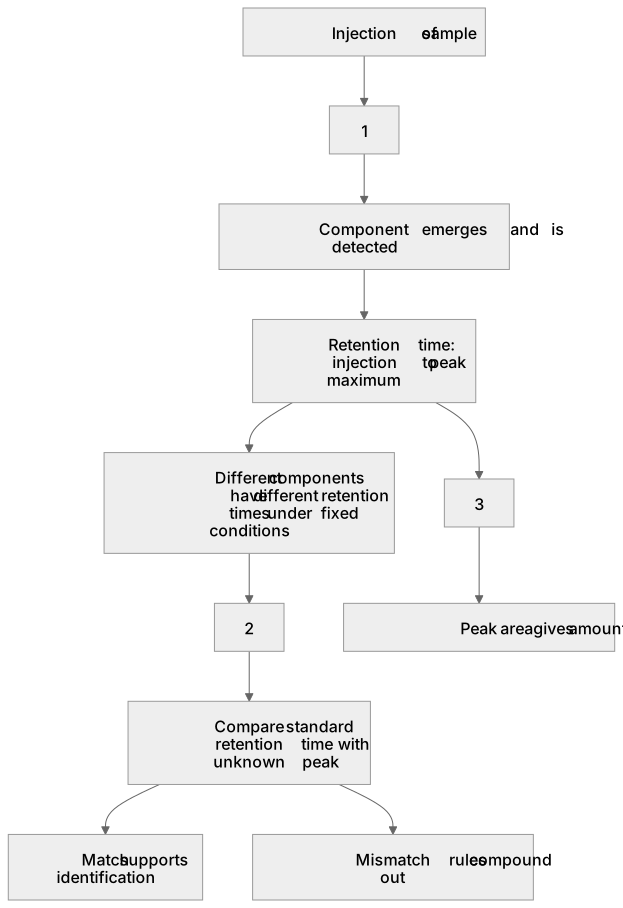
1Box 1
2Box 2
3Box 3
There is more to this lesson
The full lesson goes on to check your understanding and help you earn the marks. Create a free account to carry on, with your progress saved.
A week of Premium from your first lesson · Then the free plan continues · No card, no charge
Test your understanding of Chromatography and qualitative analysis: (i) retention times
Active recall beats re-reading. Take an instant quiz now to test what you’ve learned and lock it into long-term memory.
A week of Premium from your first lesson · Then the free plan continues · No card, no charge