OCR · A-Level · Chemistry
Course version: H432 · Version from Sept 2017
(c) first ionisation energy (removal of 1 mol of electrons from 1 mol of…
Full specification wording
Periodicity: (c) first ionisation energy (removal of 1 mol of electrons from 1 mol of gaseous atoms) and successive ionisation energy, and:
First ionisation energy is the energy needed to remove 1 mol of electrons from 1 mol of gaseous atoms, forming 1 mol of gaseous 1⁺ ions.
- Point 6 of 11
- 4 key terms
Study notes
From the teaching notes for this specification point.
The idea
First ionisation energy is the energy needed to remove 1 mol of electrons from 1 mol of gaseous atoms, forming 1 mol of gaseous 1⁺ ions. The definition requires gaseous atoms and gaseous ions, so a solid or liquid sample would give a different value. Successive ionisation energies measure removal of the second, third and later electrons from the same gaseous species, each step costing more because the remaining ion holds the electrons more tightly. Large jumps between successive values reveal the number of electrons in the outer shell, so a jump after the second value indicates two outer electrons. Trends across periods and down groups follow from nuclear charge, shielding and atomic radius.
What earns the marks
- Defines first ionisation energy as removal of 1 mol of electrons from 1 mol of gaseous atoms.
- Specifies that the products are 1 mol of gaseous 1⁺ ions.
- Explains that successive ionisation energies increase because the ion becomes more positively charged.
- Identifies a large jump in successive ionisation energies as evidence of a completed shell.
- Relates ionisation energy trends to nuclear charge, shielding and atomic radius.
Common mistakes and how to put them right
Omits the gaseous state for atoms or ions.
Put it right: State both as gaseous in the definition.
Describes removal of one electron from one atom rather than 1 mol from 1 mol.
Put it right: Use the molar quantities.
Treats successive ionisation energies as constant.
Put it right: Explain the increase from the growing positive charge.
Ignores the large jump when counting outer electrons.
Put it right: Use the jump position to identify shell occupancy.
Exam tips
- Quote the definition with all three features: 1 mol of gaseous atoms, 1 mol of electrons removed, gaseous 1⁺ ions formed.
- When interpreting a graph of successive ionisation energies, mark the largest jump and count electrons before it.
- Link each trend to a named factor such as nuclear charge or shielding rather than saying 'it increases'.
Try the lesson
The start of the Periodicity: (c) first ionisation energy (removal of 1 mol of electrons from 1 mol of gaseous atoms) and successive ionisation energy, and: lesson, made from teaching notes for this specification point.
Listen
First ionisation energy is the energy needed to remove 1 mol of electrons from 1 mol of gaseous atoms, forming 1 mol of gaseous 1⁺ ions. The definition requires gaseous atoms and gaseous ions, so a solid or liquid sample would give a different value. Successive ionisation energies measure removal of the second, third and later electrons from the same gaseous species, each step costing more because the remaining ion holds the electrons more tightly. Large jumps between successive values reveal the number of electrons in the outer shell, so a jump after the second value indicates two outer electrons. Trends across periods and down groups follow from nuclear charge, shielding and atomic radius. A strong answer earns marks for these points. Defines first ionisation energy as removal of 1 mol of electrons from 1 mol of gaseous atoms. Specifies that the products are 1 mol of gaseous 1⁺ ions. Explains that successive ionisation energies increase because the ion becomes more positively charged. Identifies a large jump in successive ionisation energies as evidence of a completed shell. Exam tip: Quote the definition with all three features: 1 mol of gaseous atoms, 1 mol of electrons removed, gaseous 1⁺ ions formed.
See it
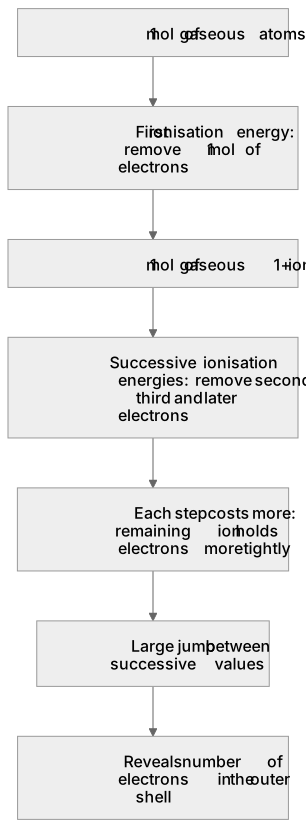
Put it in order
Put these steps in the order they happen.
- 1. Reveals number of electrons in the outer shell
- 2. Large jump between successive values
- 3. 1 mol of gaseous 1+ ions
- 4. Each step costs more: remaining ion holds electrons more tightly
- 5. 1 mol of gaseous atoms
- 6. First ionisation energy: remove 1 mol of electrons
- 7. Successive ionisation energies: remove second, third and later electrons
Key words
Say what each word means before you turn the card.
First ionisation energy
Try answering aloud or in your head before turning the card.
Successive ionisation energies
Try answering aloud or in your head before turning the card.
Large jumps in successive ionisation energies
Try answering aloud or in your head before turning the card.
Trends in ionisation energy
Try answering aloud or in your head before turning the card.
See every definition
- First ionisation energy
- The energy needed to remove 1 mol of electrons from 1 mol of gaseous atoms, forming 1 mol of gaseous 1⁺ ions.
- Successive ionisation energies
- These measure removal of the second, third and later electrons from the same gaseous species, each step costing more because the remaining ion holds the electrons more tightly.
- Large jumps in successive ionisation energies
- These reveal the number of electrons in the outer shell, so a jump after the second value indicates two outer electrons.
- Trends in ionisation energy
- Trends across periods and down groups follow from nuclear charge, shielding and atomic radius.
Label the diagram
Some boxes have lost their names. Pick the right name for each number.
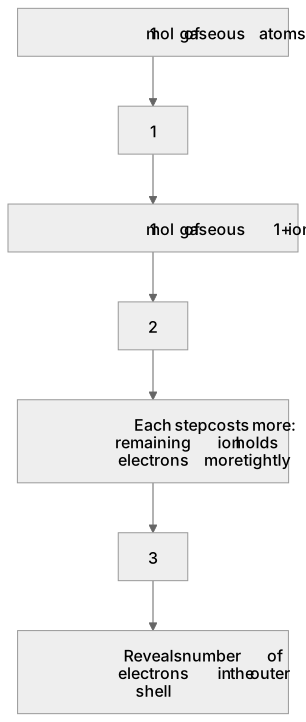
1Box 1
2Box 2
3Box 3
There is more to this lesson
The full lesson goes on to check your understanding and help you earn the marks. Create a free account to carry on, with your progress saved.
A week of Premium from your first lesson · Then the free plan continues · No card, no charge
Test your understanding of Periodicity: (c) first ionisation energy (removal of 1 mol of electrons from 1 mol of gaseous atoms) and successive ionisation energy, and:
Active recall beats re-reading. Take an instant quiz now to test what you’ve learned and lock it into long-term memory.
A week of Premium from your first lesson · Then the free plan continues · No card, no charge