OCR · A-Level · Chemistry
Course version: H432 · Version from Sept 2017
(b) use of a water bath or electric heater or sand bath for heating
Full specification wording
Use of apparatus and techniques: (b) use of a water bath or electric heater or sand bath for heating
This practical technique covers indirect heating of a reaction mixture using a water bath, an electric heater or a sand bath, rather than a naked Bunsen flame.
- Point 2 of 17
- 4 key terms
Study notes
From the teaching notes for this specification point.
The idea
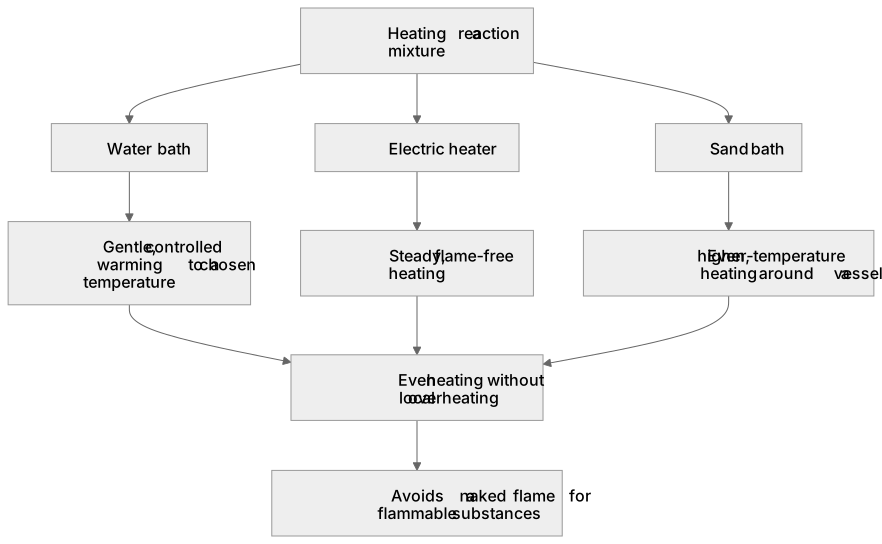
This practical technique covers indirect heating of a reaction mixture using a water bath, an electric heater or a sand bath, rather than a naked Bunsen flame. A water bath suits gentle, controlled warming of a flask or test tube to a chosen temperature, for example heating an alcohol with a carboxylic acid and acid catalyst under reflux so the mixture warms evenly without local overheating. An electric heater such as a heating mantle fits a round-bottomed flask and gives steady, flame-free heating. A sand bath spreads heat around a vessel for higher, more even temperatures. The choice depends on the required temperature, the flammability of the substance and the need for even, controllable heating. Assessment asks you to select the appropriate method for a described situation and to justify the choice by reference to control, safety and evenness of heating.
What earns the marks
- Selects a water bath when a moderate, controlled temperature is needed and the substance is best warmed gently and evenly.
- Chooses an electric heater such as a heating mantle for a round-bottomed flask when steady flame-free heating is required.
- Identifies a sand bath as suitable for providing even, higher-temperature heating around a vessel.
- Justifies the choice of indirect heating by reference to even heat distribution and reduced risk of local overheating.
- Links the choice of method to the flammability of the substance and the avoidance of a naked flame.
Common mistakes and how to put them right
Uses a naked Bunsen flame for a flammable liquid.
Put it right: Select a water bath, electric heater or sand bath instead.
Assumes a water bath can reach any temperature.
Put it right: Recognise that it is limited by the boiling point of water.
Treats the three methods as interchangeable without justification.
Put it right: Match the method to the temperature, vessel and safety needs.
Exam tips
- Read the scenario for the required temperature and the flammability of the substance before choosing a method.
- Name the specific apparatus (water bath, electric heater or sand bath) rather than saying only 'heat it'.
- Give a reason that links the method to even heating or safety, not just a label.
Try the lesson
The start of the Use of apparatus and techniques: (b) use of a water bath or electric heater or sand bath for heating lesson, made from teaching notes for this specification point.
Listen
This practical technique covers indirect heating of a reaction mixture using a water bath, an electric heater or a sand bath, rather than a naked Bunsen flame. A water bath suits gentle, controlled warming of a flask or test tube to a chosen temperature, for example heating an alcohol with a carboxylic acid and acid catalyst under reflux so the mixture warms evenly without local overheating. An electric heater such as a heating mantle fits a round-bottomed flask and gives steady, flame-free heating. A sand bath spreads heat around a vessel for higher, more even temperatures. The choice depends on the required temperature, the flammability of the substance and the need for even, controllable heating. Assessment asks you to select the appropriate method for a described situation and to justify the choice by reference to control, safety and evenness of heating. A strong answer earns marks for these points. Selects a water bath when a moderate, controlled temperature is needed and the substance is best warmed gently and evenly. Chooses an electric heater such as a heating mantle for a round-bottomed flask when steady flame-free heating is required. Identifies a sand bath as suitable for providing even, higher-temperature heating around a vessel. Justifies the choice of indirect heating by reference to even heat distribution and reduced risk of local overheating. Exam tip: Read the scenario for the required temperature and the flammability of the substance before choosing a method.
See it
Key words
Say what each word means before you turn the card.
Indirect heating methods
Try answering aloud or in your head before turning the card.
Temperature control
Try answering aloud or in your head before turning the card.
Even heat distribution
Try answering aloud or in your head before turning the card.
Laboratory safety with flammable substances
Try answering aloud or in your head before turning the card.
See every definition
- Indirect heating methods
- Heating a reaction mixture using a water bath, an electric heater or a sand bath rather than a naked Bunsen flame.
- Temperature control
- Warming a flask or test tube to a chosen temperature so the mixture warms evenly without local overheating.
- Even heat distribution
- Spreading heat around a vessel for higher, more even temperatures, as a sand bath does.
- Laboratory safety with flammable substances
- Choosing a method by reference to the flammability of the substance and the avoidance of a naked flame.
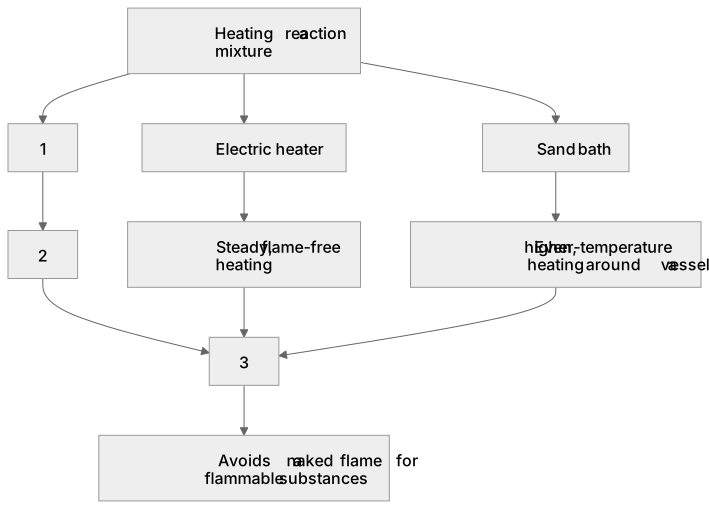
Label the diagram
Some boxes have lost their names. Pick the right name for each number.
1Box 1
2Box 2
3Box 3
There is more to this lesson
The full lesson goes on to check your understanding and help you earn the marks. Create a free account to carry on, with your progress saved.
A week of Premium from your first lesson · Then the free plan continues · No card, no charge
Test your understanding of Use of apparatus and techniques: (b) use of a water bath or electric heater or sand bath for heating
Active recall beats re-reading. Take an instant quiz now to test what you’ve learned and lock it into long-term memory.
A week of Premium from your first lesson · Then the free plan continues · No card, no charge