OCR · A-Level · Chemistry
Course version: H432 · Version from Sept 2017
(j) setting up of electrochemical cells and measuring voltages
Full specification wording
Use of apparatus and techniques: (j) setting up of electrochemical cells and measuring voltages
This practical technique requires you to build a working electrochemical cell from two half-cells and measure its voltage with a voltmeter.
- Point 14 of 17
- 4 key terms
Study notes
From the teaching notes for this specification point.
The idea
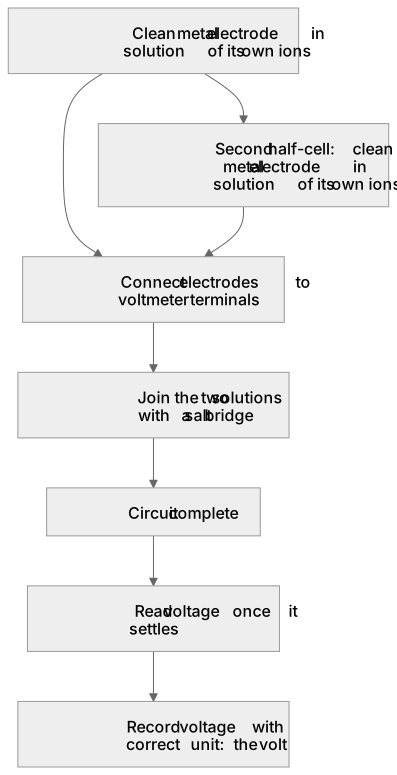
This practical technique requires you to build a working electrochemical cell from two half-cells and measure its voltage with a voltmeter. Prepare each half-cell by dipping a clean metal electrode into a solution of its own ions, for example a copper electrode in copper(II) sulfate solution and a zinc electrode in zinc sulfate solution. Connect the two electrodes to the voltmeter terminals, then join the two solutions with a salt bridge, such as filter paper soaked in potassium nitrate solution, so the circuit is complete. Read the voltage once it settles and record it with the correct unit, the volt. Keep electrodes clean and avoid mixing solutions, because contamination changes the measured voltage. The technique is assessed by whether you assemble the cell correctly, complete the circuit and obtain a stable, sensible reading.
What earns the marks
- Assembles two half-cells by placing each metal electrode in a solution of its own ions.
- Completes the circuit with a salt bridge connecting the two solutions and a voltmeter across the electrodes.
- Records the measured voltage with the correct unit and a sensible value for the cell.
- Keeps electrodes clean and solutions separate to avoid contamination affecting the reading.
Common mistakes and how to put them right
Connects the electrodes directly to each other without a voltmeter.
Put it right: Place the voltmeter across the two electrodes instead.
Omits the salt bridge so no complete circuit exists.
Put it right: Add a salt bridge such as potassium nitrate solution to complete the cell.
Places both electrodes in the same solution.
Put it right: Use a separate solution of each metal's own ions for each half-cell.
Exam tips
- State clearly that a salt bridge completes the circuit and allows ion movement between half-cells.
- Name the unit of voltage as the volt and give readings to a sensible precision.
- Explain that a high-resistance voltmeter is used so negligible current flows and the cell voltage is measured near its maximum.
- Describe cleaning the electrodes before use to remove oxide layers that would alter the reading.
Try the lesson
The start of the Use of apparatus and techniques: (j) setting up of electrochemical cells and measuring voltages lesson, made from teaching notes for this specification point.
Listen
This practical technique requires you to build a working electrochemical cell from two half-cells and measure its voltage with a voltmeter. Prepare each half-cell by dipping a clean metal electrode into a solution of its own ions, for example a copper electrode in copper(II) sulfate solution and a zinc electrode in zinc sulfate solution. Connect the two electrodes to the voltmeter terminals, then join the two solutions with a salt bridge, such as filter paper soaked in potassium nitrate solution, so the circuit is complete. Read the voltage once it settles and record it with the correct unit, the volt. Keep electrodes clean and avoid mixing solutions, because contamination changes the measured voltage. The technique is assessed by whether you assemble the cell correctly, complete the circuit and obtain a stable, sensible reading. A strong answer earns marks for these points. Assembles two half-cells by placing each metal electrode in a solution of its own ions. Completes the circuit with a salt bridge connecting the two solutions and a voltmeter across the electrodes. Records the measured voltage with the correct unit and a sensible value for the cell. Keeps electrodes clean and solutions separate to avoid contamination affecting the reading. Exam tip: State clearly that a salt bridge completes the circuit and allows ion movement between half-cells.
See it
Key words
Say what each word means before you turn the card.
Electrochemical cells
Try answering aloud or in your head before turning the card.
Half-cells and electrodes
Try answering aloud or in your head before turning the card.
Salt bridge and complete circuit
Try answering aloud or in your head before turning the card.
Voltage measurement and units
Try answering aloud or in your head before turning the card.
See every definition
- Electrochemical cells
- Built from two half-cells, each made by dipping a clean metal electrode into a solution of its own ions, and joined so the circuit is complete.
- Half-cells and electrodes
- Each half-cell is prepared by dipping a clean metal electrode into a solution of its own ions, for example a copper electrode in copper(II) sulfate solution.
- Salt bridge and complete circuit
- A salt bridge, such as filter paper soaked in potassium nitrate solution, joins the two solutions so the circuit is complete.
- Voltage measurement and units
- The two electrodes are connected to the voltmeter terminals and the voltage is read once it settles and recorded with the correct unit, the volt.
Label the diagram
Some boxes have lost their names. Pick the right name for each number.
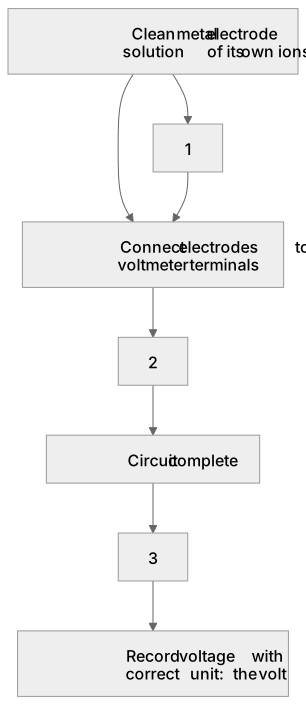
1Box 1
2Box 2
3Box 3
There is more to this lesson
The full lesson goes on to check your understanding and help you earn the marks. Create a free account to carry on, with your progress saved.
A week of Premium from your first lesson · Then the free plan continues · No card, no charge
Test your understanding of Use of apparatus and techniques: (j) setting up of electrochemical cells and measuring voltages
Active recall beats re-reading. Take an instant quiz now to test what you’ve learned and lock it into long-term memory.
A week of Premium from your first lesson · Then the free plan continues · No card, no charge