OCR · A-Level · Chemistry
Course version: H432 · Version from Sept 2017
(k) safely and carefully handling solids and liquids, including corrosive,…
Full specification wording
Use of apparatus and techniques: (k) safely and carefully handling solids and liquids, including corrosive, irritant, flammable and toxic substances
This practical technique covers handling solids and liquids safely and carefully, with specific attention to corrosive, irritant, flammable and toxic substances.
- Point 15 of 17
- 4 key terms
Study notes
From the teaching notes for this specification point.
The idea
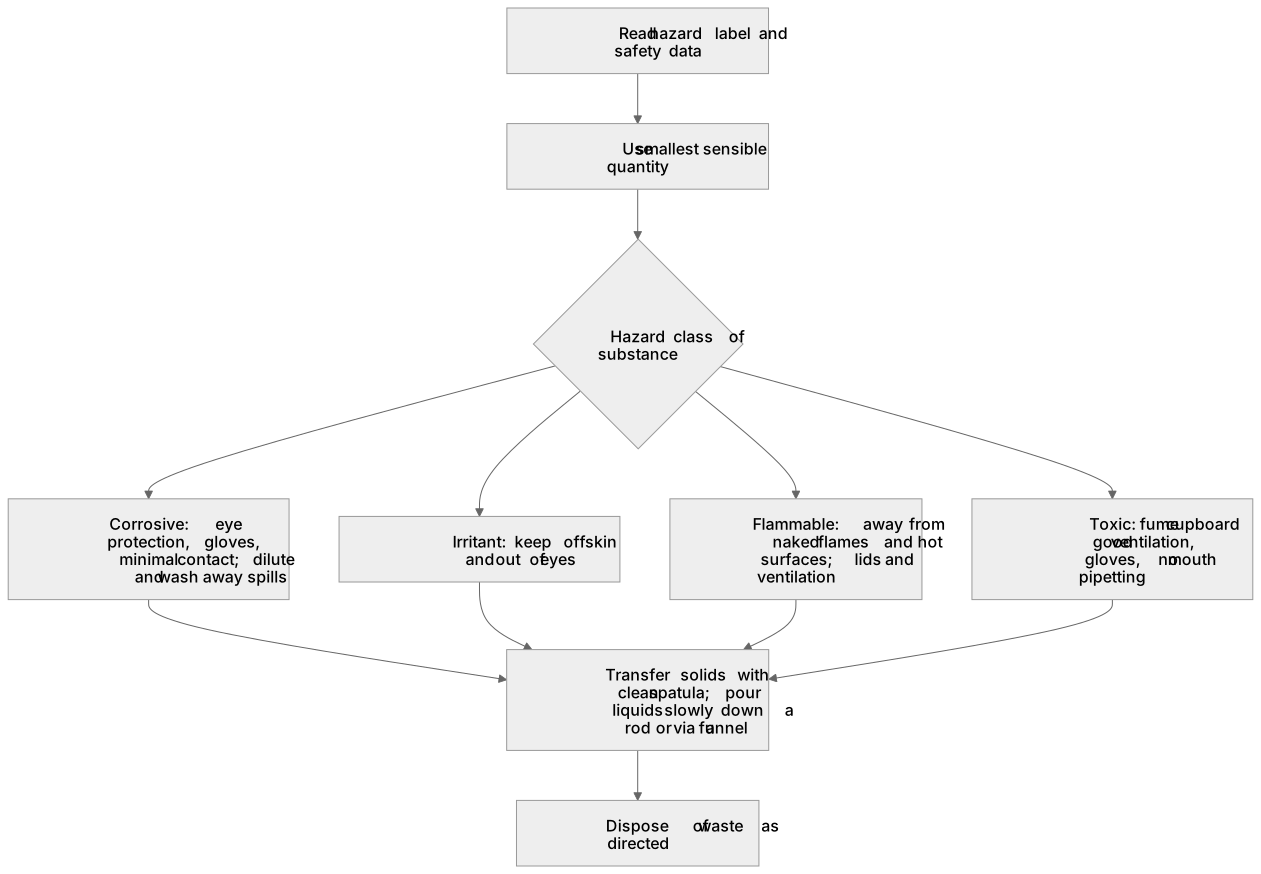
This practical technique covers handling solids and liquids safely and carefully, with specific attention to corrosive, irritant, flammable and toxic substances. For each hazard class, the learner selects controls that match the risk: corrosive substances are handled with eye protection, gloves and minimal contact, and spills are diluted and washed away; irritants are kept off skin and out of eyes; flammable liquids are kept away from naked flames and hot surfaces, with lids on containers and good ventilation; toxic substances are used in a fume cupboard or well-ventilated space with gloves and no mouth pipetting. Solids are transferred with a clean spatula or scoop, liquids poured slowly down a rod or via a funnel. The learner reads the hazard label and safety data before starting, uses the smallest sensible quantity, and disposes of waste as directed.
What earns the marks
- Matches the control to the named hazard class, for example eye protection and gloves for corrosive substances.
- Keeps flammable liquids away from naked flames and hot surfaces and uses lids and ventilation.
- Uses a fume cupboard or good ventilation and gloves for toxic substances and avoids mouth pipetting.
- Transfers solids with a clean spatula and pours liquids slowly to avoid splashing and contact.
- Reads the hazard label and safety data and uses the smallest sensible quantity before starting.
Common mistakes and how to put them right
Applies one generic precaution to every hazard class.
Put it right: Select a control that matches the named hazard, such as ventilation for a toxic vapour.
Treats irritant and corrosive substances as identical.
Put it right: Distinguish the stronger tissue damage of corrosives and apply stricter controls.
Ignores the flammability of a liquid near a heat source.
Put it right: Keep flammable liquids away from flames and hot surfaces.
Exam tips
- Read the hazard class named in the question before choosing a control, because the correct precaution depends on it.
- Link each control to the route of exposure, such as inhalation, skin contact or eye contact.
- Reject options that describe unsafe practice such as mouth pipetting or heating a flammable liquid over a naked flame.
Try the lesson
The start of the Use of apparatus and techniques: (k) safely and carefully handling solids and liquids, including corrosive, irritant, flammable and toxic substances lesson, made from teaching notes for this specification point.
Listen
This practical technique covers handling solids and liquids safely and carefully, with specific attention to corrosive, irritant, flammable and toxic substances. For each hazard class, the learner selects controls that match the risk: corrosive substances are handled with eye protection, gloves and minimal contact, and spills are diluted and washed away; irritants are kept off skin and out of eyes; flammable liquids are kept away from naked flames and hot surfaces, with lids on containers and good ventilation; toxic substances are used in a fume cupboard or well-ventilated space with gloves and no mouth pipetting. Solids are transferred with a clean spatula or scoop, liquids poured slowly down a rod or via a funnel. The learner reads the hazard label and safety data before starting, uses the smallest sensible quantity, and disposes of waste as directed. A strong answer earns marks for these points. Matches the control to the named hazard class, for example eye protection and gloves for corrosive substances. Keeps flammable liquids away from naked flames and hot surfaces and uses lids and ventilation. Uses a fume cupboard or good ventilation and gloves for toxic substances and avoids mouth pipetting. Transfers solids with a clean spatula and pours liquids slowly to avoid splashing and contact. Exam tip: Read the hazard class named in the question before choosing a control, because the correct precaution depends on it.
See it
Key words
Say what each word means before you turn the card.
Corrosive substances
Try answering aloud or in your head before turning the card.
Irritant substances
Try answering aloud or in your head before turning the card.
Flammable liquids
Try answering aloud or in your head before turning the card.
Toxic substances
Try answering aloud or in your head before turning the card.
See every definition
- Corrosive substances
- Substances handled with eye protection, gloves and minimal contact, and spills are diluted and washed away.
- Irritant substances
- Substances kept off skin and out of eyes when solids and liquids are handled.
- Flammable liquids
- Liquids kept away from naked flames and hot surfaces, with lids on containers and good ventilation.
- Toxic substances
- Substances used in a fume cupboard or well-ventilated space with gloves and no mouth pipetting.
Label the diagram
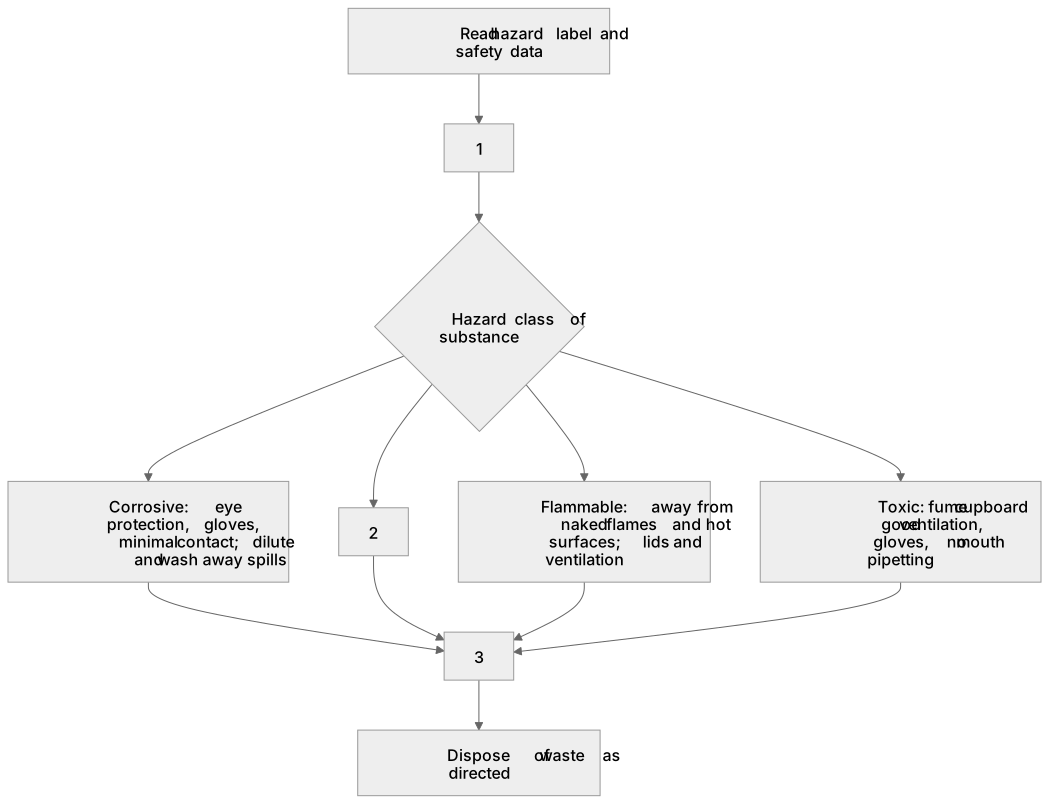
Some boxes have lost their names. Pick the right name for each number.
1Box 1
2Box 2
3Box 3
There is more to this lesson
The full lesson goes on to check your understanding and help you earn the marks. Create a free account to carry on, with your progress saved.
A week of Premium from your first lesson · Then the free plan continues · No card, no charge
Test your understanding of Use of apparatus and techniques: (k) safely and carefully handling solids and liquids, including corrosive, irritant, flammable and toxic substances
Active recall beats re-reading. Take an instant quiz now to test what you’ve learned and lock it into long-term memory.
A week of Premium from your first lesson · Then the free plan continues · No card, no charge