OCR · GCSE · French
Structuring sentences and paragraphs
This study guide focuses on mastering sentence and paragraph structure for the OCR GCSE French writing exam (J720). It provides a detailed breakdown of how to use complex grammatical structures, manipulate time frames, and use idiomatic language to achieve top marks in the 90-word and 150-word tasks.
- 3 min read
- 3 worked examples
- 5 practice questions
- 6 key terms
Study Notes

Overview
This guide is designed to equip candidates with the skills to excel in the OCR GCSE French Writing component (J720), which is weighted at 100% for Assessment Objective 4 (AO4): Quality of language. Examiners are looking for candidates who can demonstrate a confident manipulation of grammar and syntax to produce clear, coherent, and complex written French. This involves moving beyond simple sentence structures to incorporate a variety of tenses, complex clauses, and idiomatic expressions. Mastery in this area is the key to unlocking the top mark bands in both the 90-word and 150-word tasks.
Key Grammatical Concepts
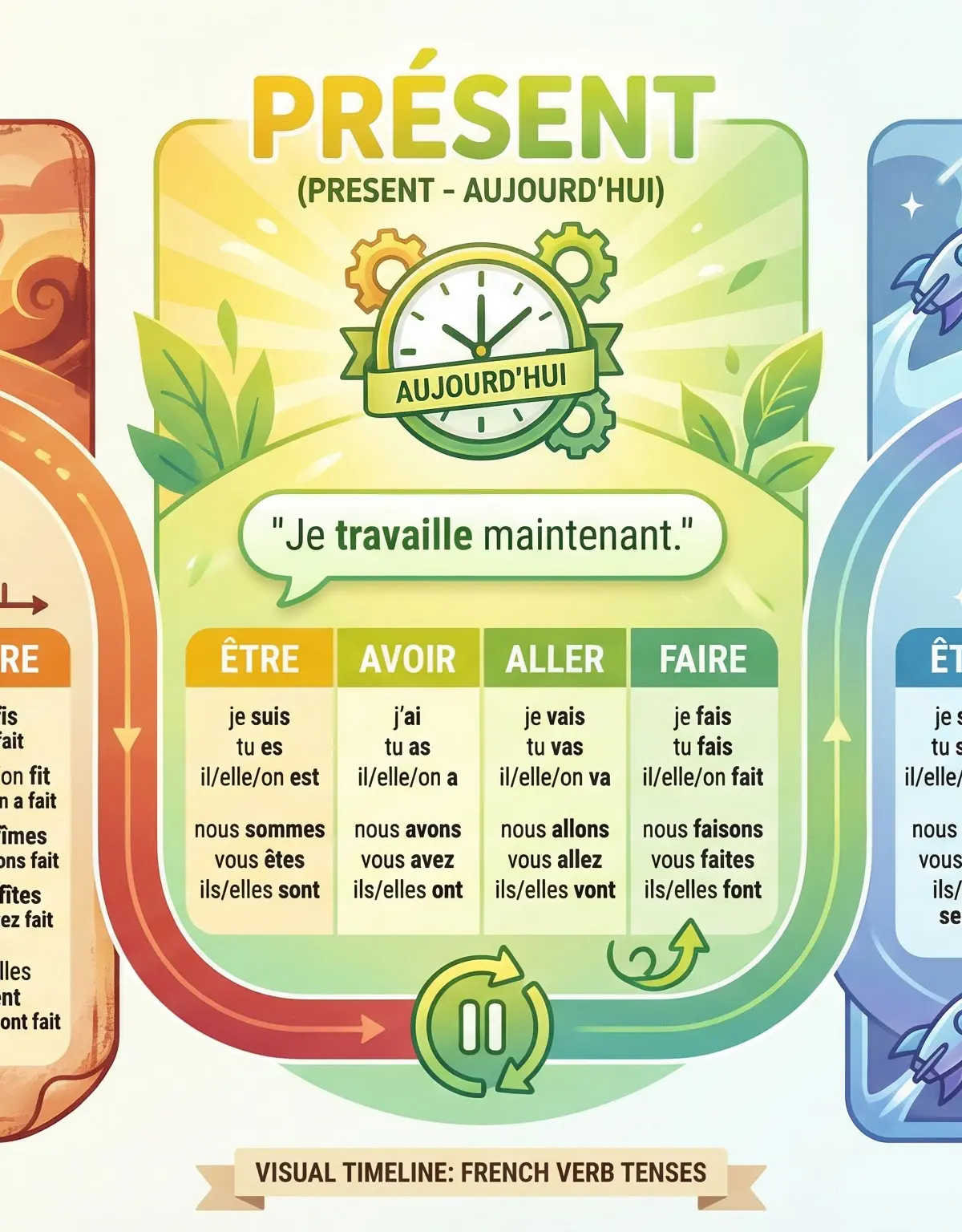
The Tick-Tock Method: Mastering Time Frames
To demonstrate linguistic range, candidates MUST show they can write accurately in the past, present, and future. This is a non-negotiable requirement for higher marks.
What to do: Ensure your written work contains at least one clear example of each time frame.
Why it matters: It shows the examiner you can control verb conjugations across different temporal contexts, a core component of AO4.
Building Complexity: Beyond Simple Sentences
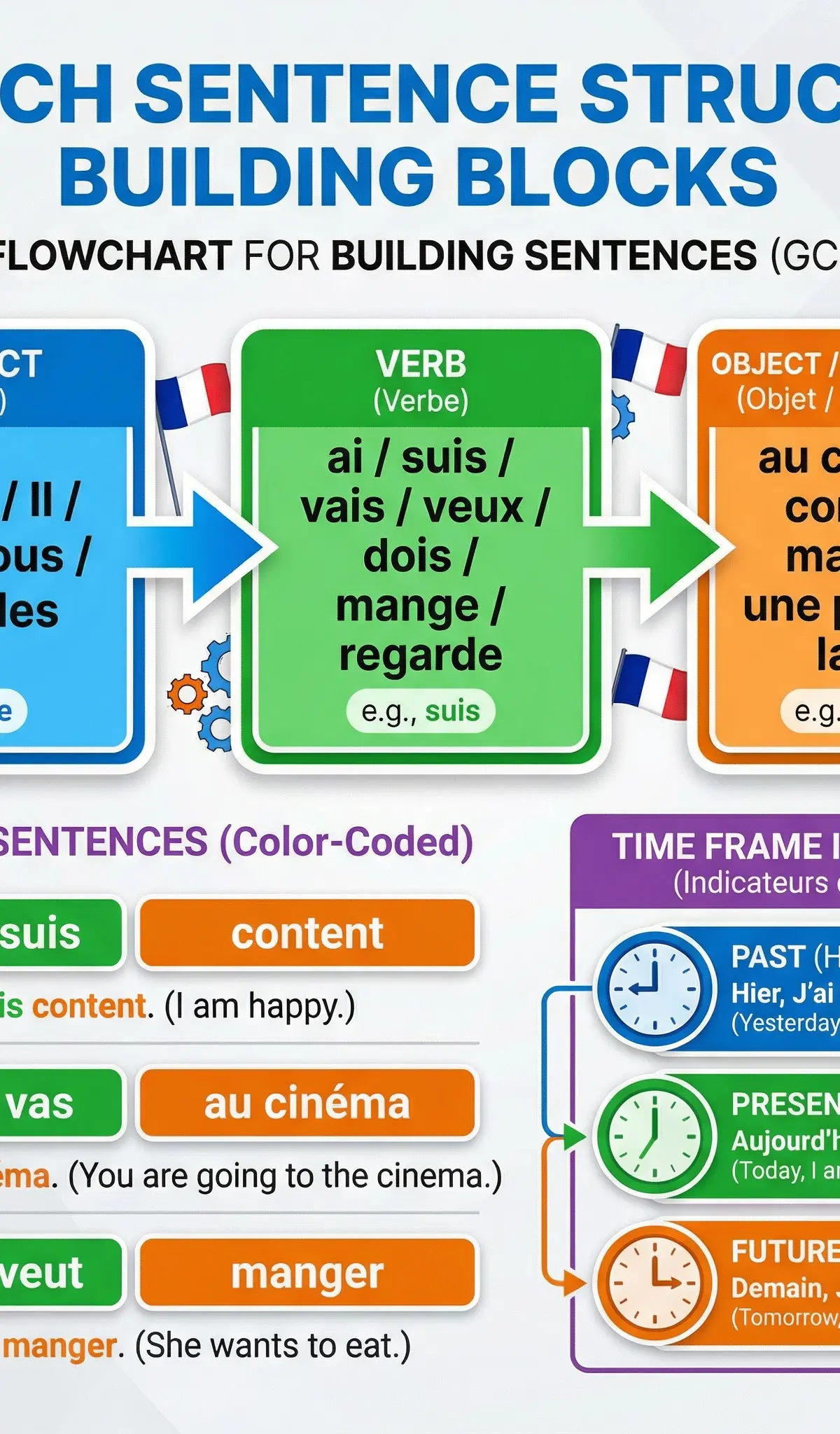
Credit is given for using structures that show a higher level of linguistic competence. These are your tools for adding flair and sophistication.
Key Structures:
avant de+ infinitive: e.g., Avant de sortir, j'ai fini mes devoirs. (Before going out, I finished my homework.)siclauses: e.g., Si j'ai le temps, je visiterai le musée. (If I have time, I will visit the museum.)- Relative Pronouns (
qui,que): e.g., J'ai un ami qui habite à Lyon. (I have a friend who lives in Lyon.)
Key Individuals: The Irregular Verbs
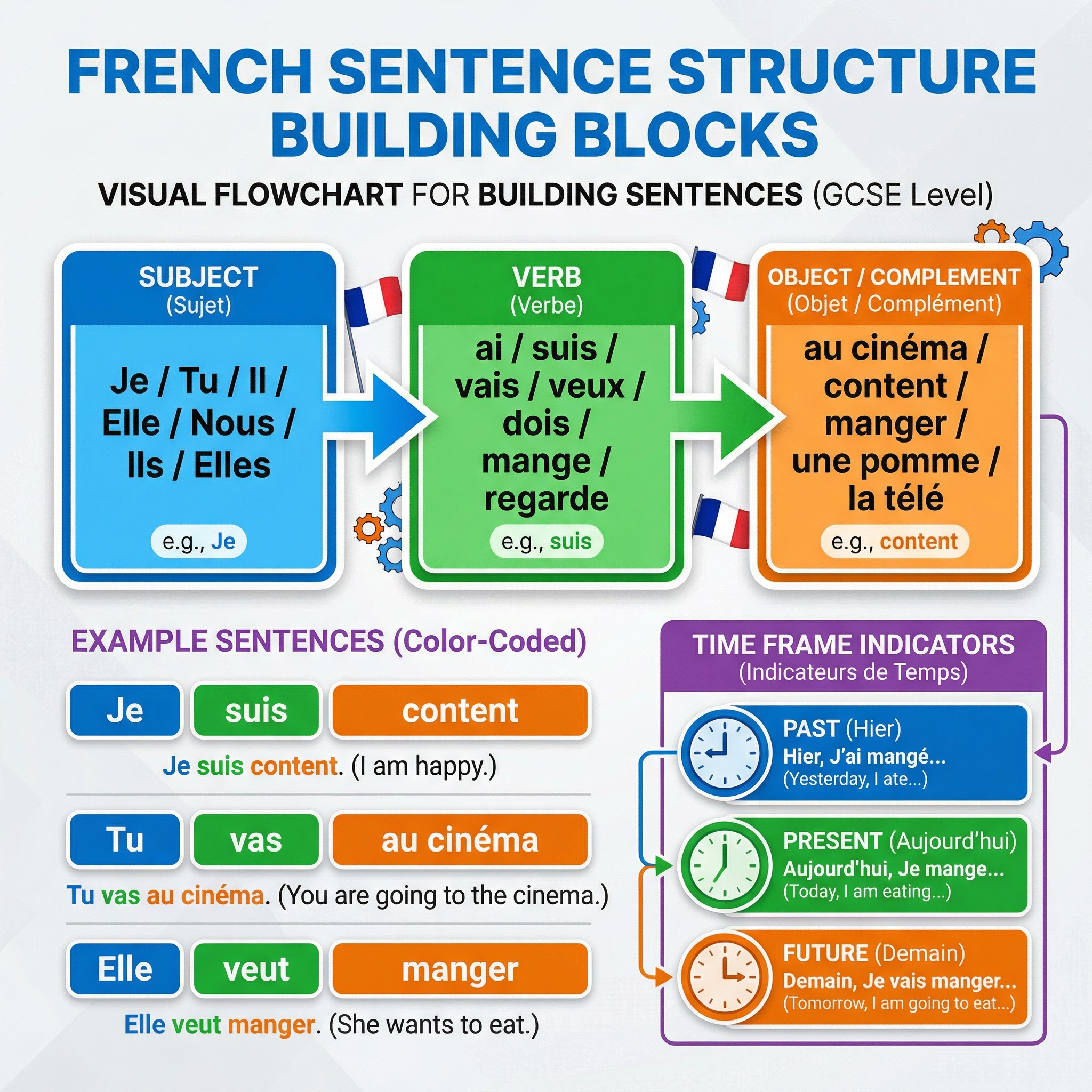
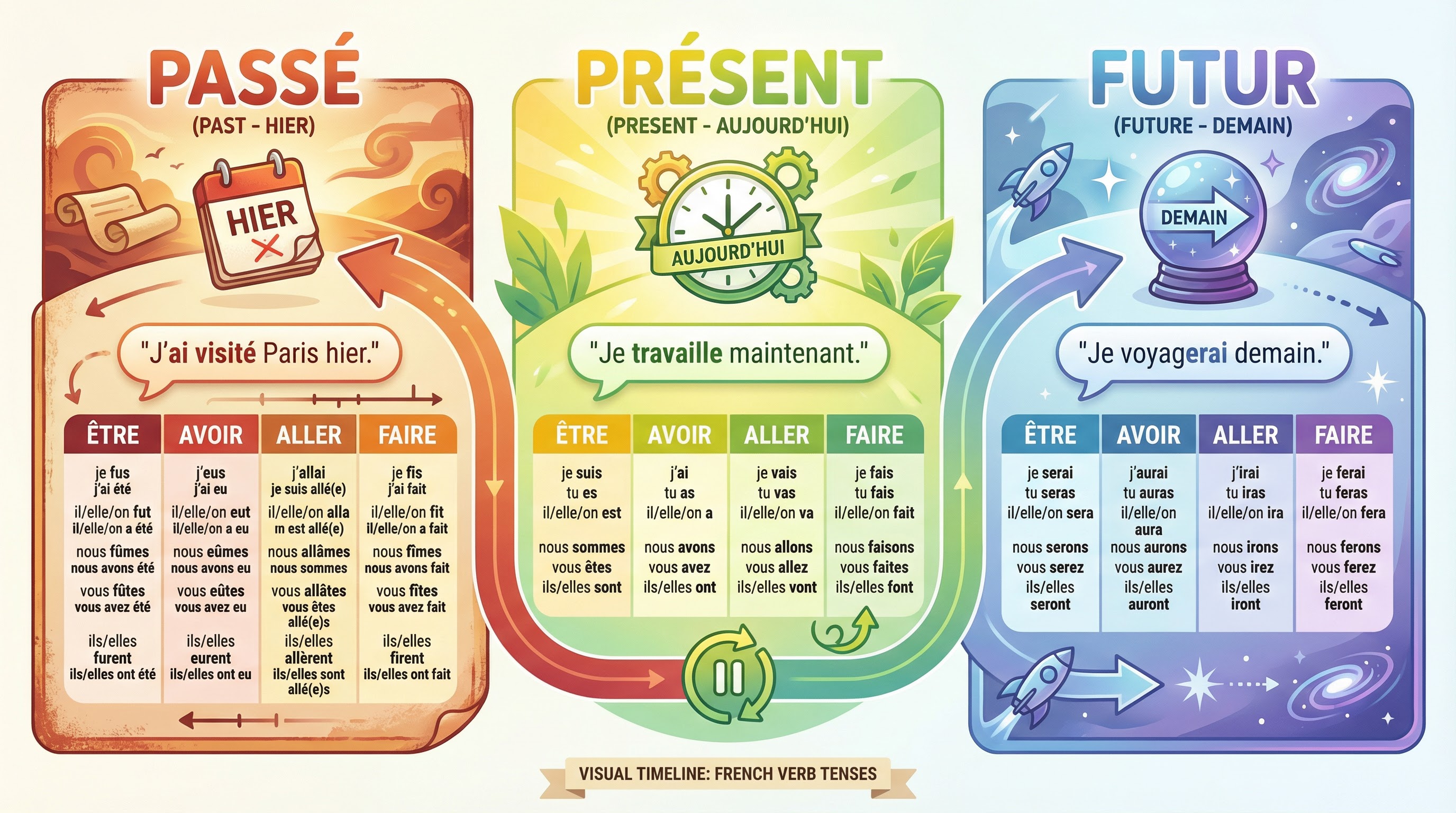
Aller, Avoir, Être, Faire
Role: These are the most common and most important irregular verbs in French.
Key Actions: Candidates must be able to conjugate them accurately in the present, perfect, and near future tenses.
Impact: Failure to conjugate these correctly is a major red flag for examiners and will cap your mark. Conversely, accurate use is a strong indicator of competence.
Visual Resources
2 diagrams and illustrations
Interactive Diagrams
1 interactive diagram to visualise key concepts
Conceptual Flow Outline
Flowchart for Achieving Top Marks in Writing
Worked Examples
3 worked examples — open one to explore the question and available guidance.
Practice Questions
Test your understanding — click to reveal model answers
Votre ami français va visiter votre région. Qu'est-ce qu'il y a à faire? (90 mots)
Hint: Remember to use the Tick-Tock method and include an opinion.
Parlez-moi de votre week-end idéal. (90 mots)
Hint: Use the conditional tense (`je voudrais`, `j'aimerais`) to talk about your ideal weekend.
L'importance de parler une langue étrangère. Discutez. (150 mots)
Hint: Structure your answer with clear paragraphs: introduction, advantages for travel, advantages for work, conclusion.
Comment était votre vie quand vous étiez plus jeune? (90 mots)
Hint: This question requires the imperfect tense to describe past habits and states. Contrast it with the present.
Les problèmes de l'environnement. Que peut-on faire? (150 mots)
Hint: Use impersonal structures like 'il faut' and 'on peut' to suggest solutions.