OCR · GCSE · French
Using a range of vocabulary
This guide provides a comprehensive overview of how to master vocabulary for the OCR GCSE French exam. It focuses on practical, exam-focused techniques to move beyond basic word lists and access the top mark bands in both the Writing and Speaking papers."
- 3 min read
- 3 worked examples
- 5 practice questions
Study Notes
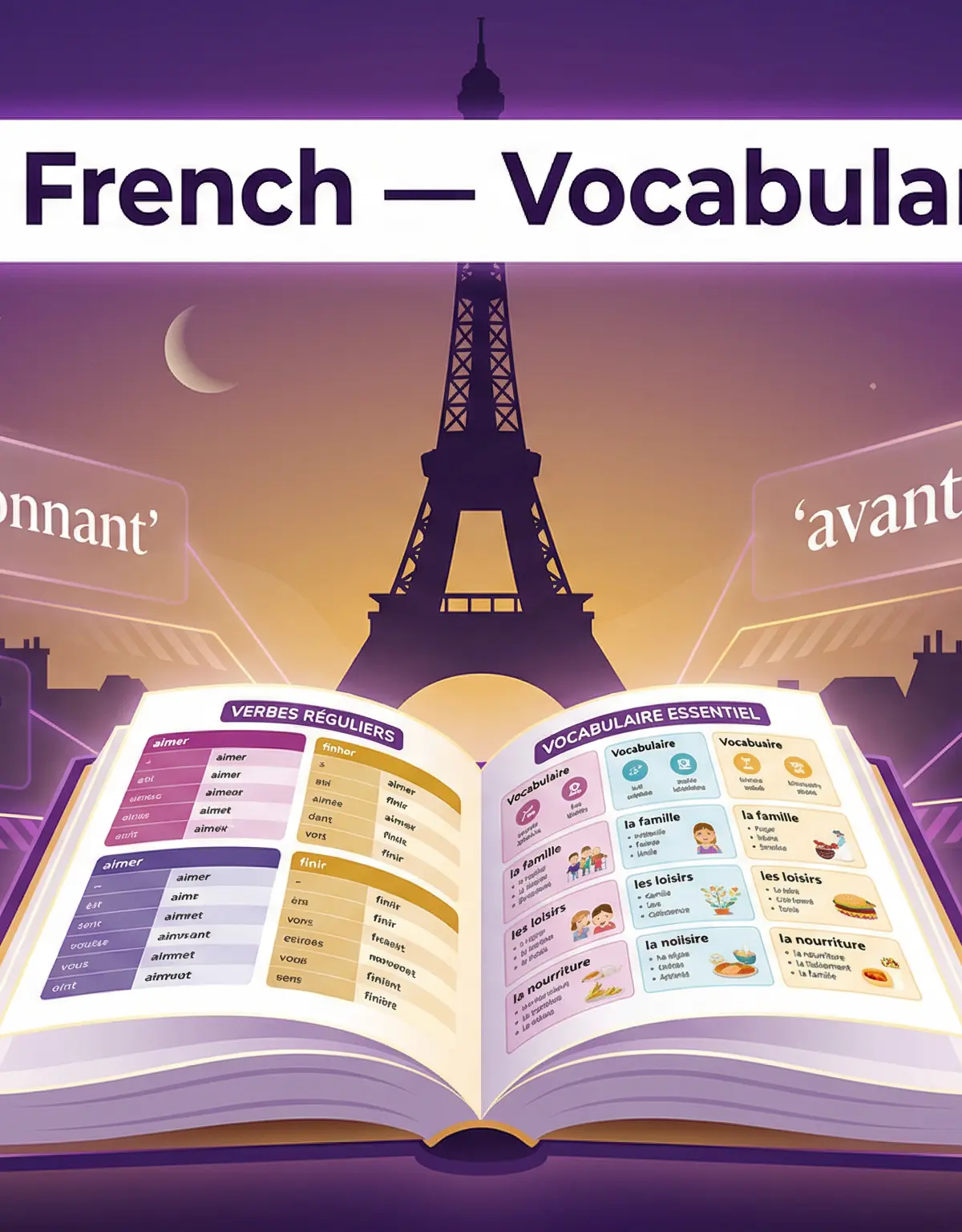
Overview
Welcome to your deep dive into OCR GCSE French vocabulary. For specification J720, lexical range is not just a bonus – it is a core assessment criterion that can define your final grade. Examiners are trained to look for candidates who can manipulate language with confidence, moving beyond simple, repetitive words to use ambitious, precise, and idiomatic French. This guide will equip you with the strategies to build that range, focusing on the three pillars of vocabulary mastery: variety, precision, and complexity. We will cover how to upgrade your word choices, integrate sophisticated grammatical structures, and confidently deploy vocabulary across the three essential time frames (past, present, and future) to meet the demands of AO4 (Writing) and AO2 (Speaking).

Key Principles for Vocabulary Mastery
1. The Vocabulary Upgrade
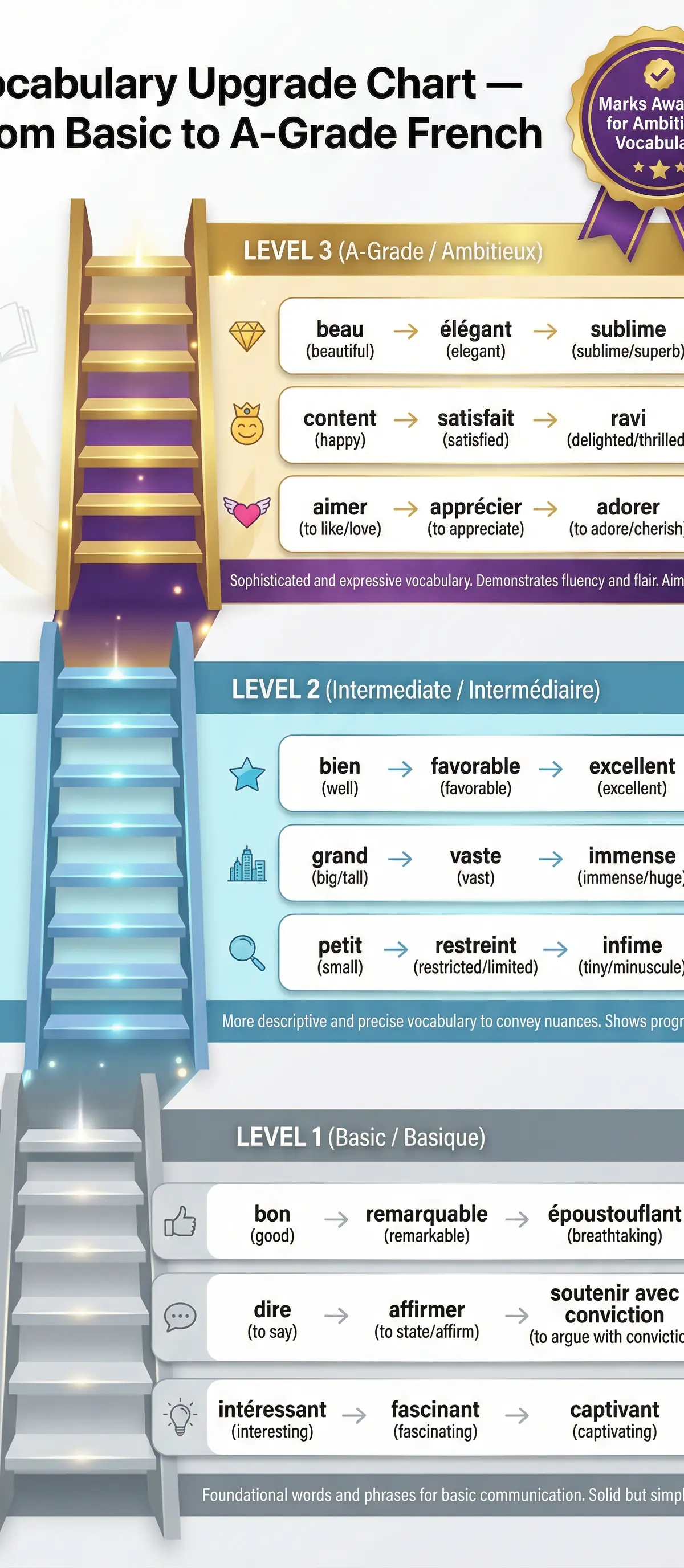
Examiners reward ambition. Simply replacing a common word with a more sophisticated synonym can immediately elevate your work. Credit is given for the attempt, even if minor errors in agreement occur. Focus on building a bank of high-impact alternatives.
What to do: For every common adjective or verb, learn two more impressive synonyms. For example, instead of just using
'bon' (good), try 'excellent', 'remarquable' (remarkable), or 'impressionnant' (impressive). Instead of 'dire' (to say), use 'affirmer' (to state), 'expliquer' (to explain), or 'soutenir' (to argue/maintain).
2. Mastering the Three Time Frames
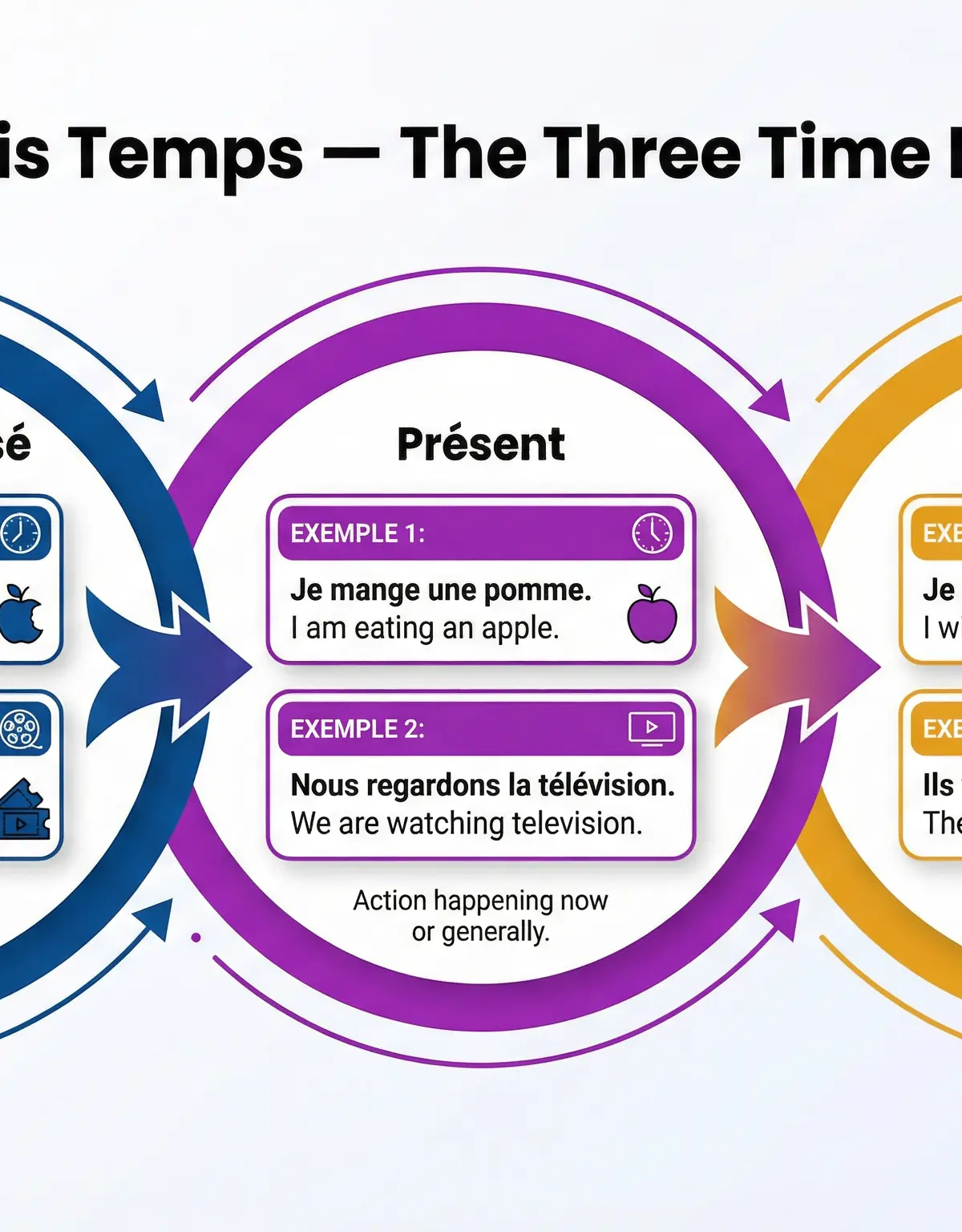
To access the highest marks, candidates must demonstrate the ability to write and speak confidently in the past, present, and future. A response that stays only in the present tense cannot achieve a top grade.
What to do: For any given topic, practice writing a short paragraph that incorporates all three. Use clear time indicators: 'L'année dernière...' (Past), 'Actuellement...' (Present), 'À l'avenir...' (Future).
3. Integrating Complex Structures
Complex structures are specific grammatical constructions that the mark scheme explicitly rewards. They show the examiner that you can manipulate language beyond simple sentences.
What to do: Memorise 3-5 of these structures and practice inserting them into your work. Examples include 'avant de' + infinitive ('avant de partir...'), 'si' clauses ('si j'avais le choix...'), and using a range of pronouns ('y', 'en')."
Worked Examples
3 worked examples — open one to explore the question and available guidance.
Practice Questions
Test your understanding — click to reveal model answers
Racontez vos dernières vacances. Où êtes-vous allé et qu'est-ce que vous avez fait? (90 mots)
Hint: Remember to use the passé composé and include at least two different opinions with justifications.
Comment serait votre maison idéale? (Speaking question)
Hint: Use the conditional tense ('serait', 'j'aimerais', 'il y aurait') to describe your ideal house.
Translate into English: 'Bien qu'il pleuve, nous allons sortir. Avant de partir, je vais prendre mon parapluie.'
Hint: Pay attention to the two complex structures: 'Bien que' and 'Avant de'.
Les réseaux sociaux sont-ils une bonne ou une mauvaise chose pour les jeunes? (150 mots)
Hint: Present a balanced argument. Use one paragraph for the positives and one for the negatives. Use sophisticated link words ('cependant', 'en revanche').
Décrivez votre routine scolaire. (90 mots)
Hint: Use reflexive verbs (je me lève, je me douche) and give opinions on your subjects.