OCR · GCSE · Physical Education
Evaluation of Performance (Justification and Improvement)
This guide provides a comprehensive breakdown of how to evaluate sporting performance for OCR GCSE PE. It focuses on identifying weaknesses, designing justified improvement plans using key theoretical principles, and mastering the exam technique required to achieve top marks."
- 8 min read
- 3 worked examples
- 4 practice questions
Study Notes
Overview
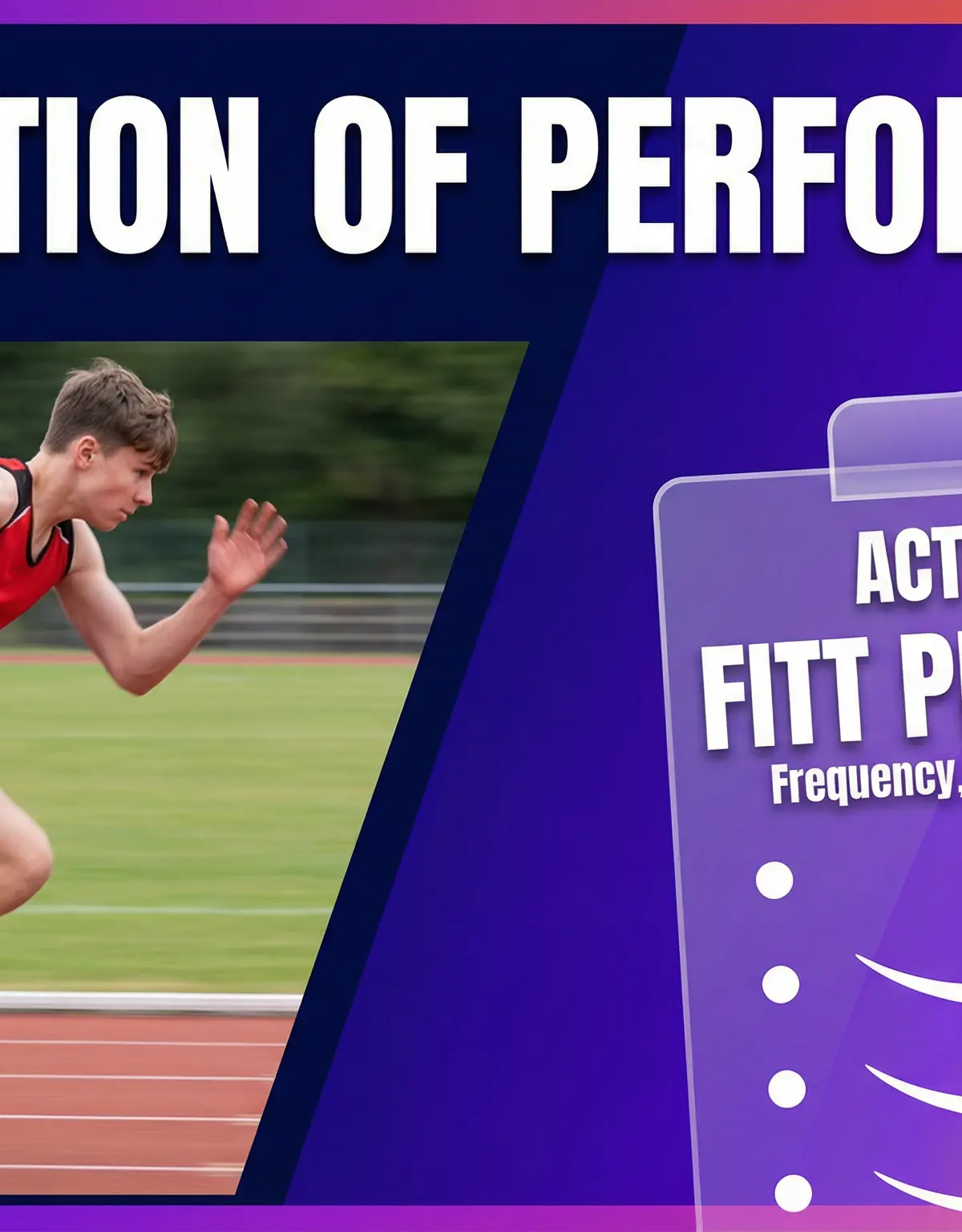
Topic 7.5, Evaluation of Performance, is a cornerstone of the OCR GCSE PE specification. It assesses your ability to act like a real sports scientist or elite coach. You are required to critically analyse a performance (often your own), pinpoint a significant weakness, and then design a detailed, evidence-based action plan to improve it. This topic carries a heavy weighting for Assessment Objective 3 (AO3), which is all about analysis and evaluation, making it crucial for achieving higher grades. Mastering this area demonstrates that you can apply the theoretical knowledge from the entire course to a practical, real-world context.

Key Knowledge & Theory
Core Concepts
To excel in this topic, candidates must have a firm grasp of several interconnected theoretical concepts. Your evaluation is not just an opinion; it must be grounded in the scientific and strategic principles of physical education.
1. Categorising Weaknesses: Your first task is to identify a major weakness and correctly categorise it. Marks are awarded for precision here.
- Skill-Based Weakness: A deficiency in a specific action or technique (e.g., inaccurate shooting in netball, poor tumble turn in swimming). This often relates to coordination, balance, or technique execution.
- Fitness-Based Weakness: A lack of a specific component of physical fitness (e.g., insufficient cardiovascular endurance, lack of explosive power). You must name the exact component.
- Tactical Weakness: Poor decision-making or strategic awareness within a game context (e.g., failing to track back in football, poor shot selection in cricket).
2. Principles of Training (SPOR): These principles are the foundation of any effective training programme. You must explicitly reference them when justifying your action plan.
- Specificity: The training must be specifically tailored to the chosen sport, muscle groups, and fitness component being developed.
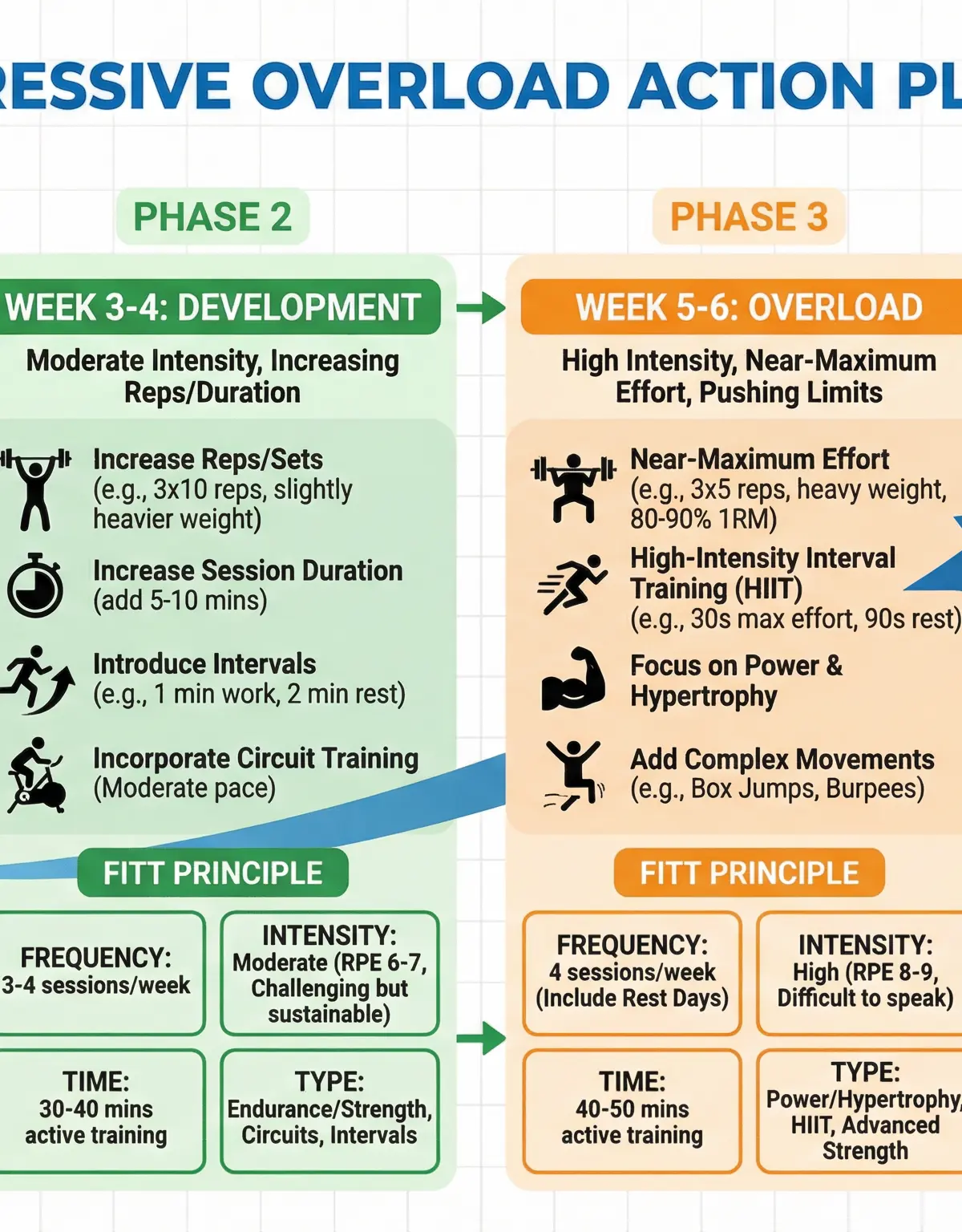
- Progressive Overload: To improve, the body must be stressed beyond its normal limits. This means gradually increasing the difficulty of the training over time.
- Reversibility: If training stops, the physiological adaptations gained will be lost. This is often referred to as detraining.
- (Tedium): While not always in the main acronym, avoiding boredom by varying the training is key to maintaining motivation and adherence to the plan.
3. FITT Principles: These provide the structure for designing individual training sessions and the overall programme. You must detail each of these for your plan.
- Frequency: How often you train (e.g., '3 sessions per week').
- Intensity: How hard you train (e.g., 'working at 80% of max heart rate', or using the Borg RPE scale).
- Time: How long each session lasts (e.g., '45 minutes including warm-up and cool-down').
- Type: The specific method of training used (e.g., 'continuous training', 'plyometrics', 'HIIT').
4. Physiological Adaptations: This is top-level knowledge. Explaining how the body changes in response to training is what separates good answers from excellent ones. Examples include:
- Cardiovascular: Cardiac hypertrophy, increased stroke volume, bradycardia (lower resting heart rate).
- Muscular: Muscular hypertrophy, increased recruitment of fast-twitch fibres, increased lactate tolerance.
- Skeletal: Increased bone density (from weight-bearing exercise).
Key Practitioners/Artists/Composers
While PE doesn't have 'artists' in the traditional sense, we can look to influential coaches and sports scientists whose work embodies these principles.
| Name | Period/Style | Key Works | Relevance |
|---|---|---|---|
| Sir Dave Brailsford | 2003-Present | 'Marginal Gains' Philosophy | His approach with British Cycling and Team Sky, focusing on making 1% improvements in numerous areas, is a perfect example of detailed performance evaluation and improvement. |
| Tudor Bompa | 1960s-Present | Periodisation Theory | Known as the father of modern periodisation, his models for structuring training into phases (macro, meso, microcycles) are the basis for elite action plans. |
| Dr. Gunther Bosch | 1980s | Coach to Boris Becker | Famous for developing Becker's raw power and serve-and-volley game, demonstrating how to build a strategy around a key strength while mitigating weaknesses. |
Technical Vocabulary
Using precise terminology is non-negotiable. Examiners are looking for words like: Cardiac Hypertrophy, Muscular Endurance, VO2 Max, Lactate Threshold, Neuromuscular Adaptation, Stretch-Shortening Cycle, Periodisation, Energy Systems (ATP-PC, Glycolytic, Aerobic).
Practical Skills
Techniques & Processes
1. Performance Analysis:
- Quantitative Analysis: Using data and numbers (e.g., counting successful passes, measuring sprint times, using GPS trackers for distance covered).
- Qualitative Analysis: Assessing the quality of movement or decisions (e.g., observing technique, using a skills checklist, getting coach feedback). A good evaluation often combines both.
2. Designing the Action Plan:
- Phase 1: Baseline Testing (Week 1): Conduct fitness tests or performance analysis to get a starting measure of your weakness (e.g., Illinois Agility Test, 12-minute Cooper Run).
- Phase 2: Training Block (Weeks 2-7): Implement your 6-week training programme, applying FITT and SPOR. You must show how you will progressively overload the training.
- Phase 3: Re-testing (Week 8): Repeat the initial tests to measure the improvement and evaluate the success of your plan.
Materials & Equipment
Your plan must reference appropriate equipment. This shows practical understanding.
- Fitness Testing: Stopwatches, measuring tapes, cones, heart rate monitors.
- Training: Correct footwear, appropriate weights, resistance bands, agility ladders, safe training environment.
- Safety: Always include a warm-up and cool-down in your plan. Justify the inclusion of stretching (static vs. dynamic) and pulse-raising activities.
Portfolio/Coursework Guidance
This topic is primarily assessed in the written exam paper, but the principles are identical to those used in the practical performance (NEA) component where you are assessed in your sports.
Assessment Criteria
Examiners are looking for your ability to connect theory to practice. The marks are heavily weighted towards AO3 (Analysis & Evaluation).

- AO1 (15%): Know and recall the definitions of FITT, SPOR, and fitness components.
- AO2 (35%): Apply these principles to a specific sporting scenario.
- AO3 (50%): Justify why you have chosen a specific training type. Evaluate the strengths and weaknesses of your plan. Analyse the impact of the weakness on performance.
Building a Strong Response
- Structure is Key: Use the 'Identify-Define-Impact' model for your initial analysis.
- Justify Everything: Use the word "because" frequently. "I chose HIIT because it mimics the work-to-rest ratios of my sport and improves lactate tolerance."
- Be Specific with Data: Don't just say you will "increase the weight." Say "I will increase the weight from 10kg to 12.5kg in week 4."
Exam Component
Written Exam Knowledge
This entire topic is a major part of the written theory paper (Paper 1 or Paper 2, depending on OCR's structure for the year). It often appears as an extended 6 or 9-mark question.
Practical Exam Preparation
While not a direct 'practical exam', your ability to perform well in your assessed sports (NEA) is dependent on your ability to evaluate your own performance and train effectively to improve. The thought process is identical."
Worked Examples
3 worked examples — open one to explore the question and available guidance.
Practice Questions
Test your understanding — click to reveal model answers
Identify three different categories of weakness a performer might have.
Hint: Think about technique, physical attributes, and in-game decisions.
Explain the principle of Progressive Overload.
Hint: What needs to happen for the body to adapt? What happens if training stays the same?
A games player wants to improve their speed to be faster over 10 metres. Using the FITT principles, describe one training session they could use.
Hint: Make sure you address Frequency, Intensity, Time, and Type.
Evaluate the use of continuous training for a 100m sprinter.
Hint: Evaluate means you need to make a judgement. Is it suitable or not? Why? Think about specificity, muscle fibres, and energy systems.