OCR · GCSE · Physical Education
Motivation: Intrinsic and Extrinsic Motivation
This study guide provides a comprehensive overview of Intrinsic and Extrinsic Motivation for OCR GCSE Physical Education (5.2). It covers the core concepts, practical application, and exam technique required to achieve top marks."
- 6 min read
- 3 worked examples
- 4 practice questions
Study Notes
Overview

Motivation is a fundamental concept in Physical Education, representing the drive behind an athlete's actions. For the OCR GCSE exam, candidates must demonstrate a precise understanding of the different types of motivation and their impact on performance and participation. This guide will break down the key theories, provide practical examples, and equip you with the exam strategies needed to excel.
Key Knowledge & Theory
Core Concepts
Motivation is broadly categorised into two types: Intrinsic and Extrinsic. A clear understanding of this distinction is crucial for gaining marks in AO1 (Knowledge and Understanding).
-
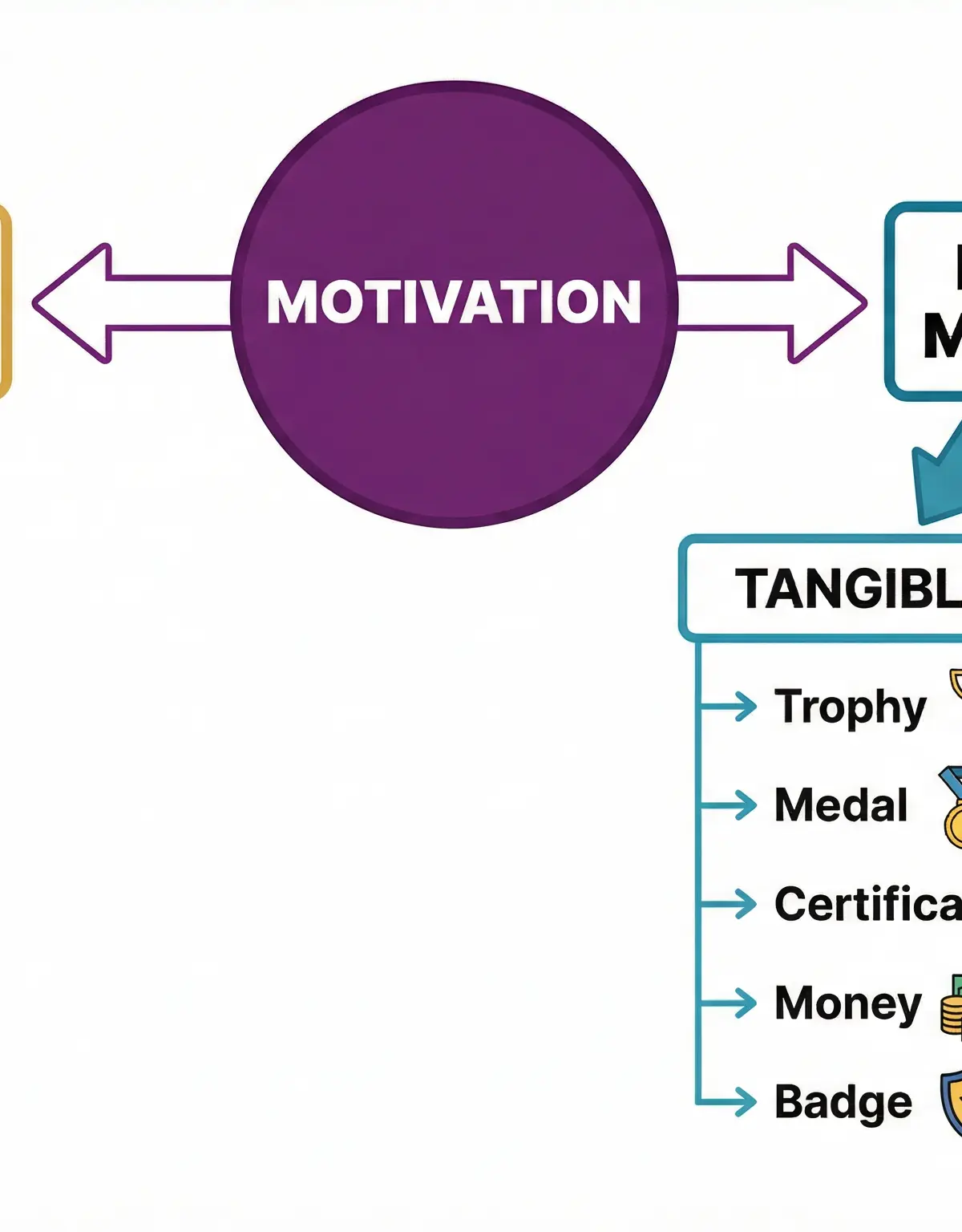
Intrinsic Motivation: This is the internal drive to perform an activity for its own sake. The reward is the activity itself. Key sources include:
- Fun and Enjoyment: The simple pleasure derived from playing the sport.
- Personal Satisfaction & Pride: The feeling of accomplishment from mastering a skill or achieving a personal goal.
- Self-Improvement: The desire to become better, faster, or stronger for one's own sake.
-
Extrinsic Motivation: This is the drive to perform an activity due to external factors. It is further divided into two crucial sub-categories that candidates must be able to distinguish:
- Tangible Rewards: Physical, touchable rewards. Examples include trophies, medals, certificates, and prize money.
- Intangible Rewards: Non-physical rewards. Examples include praise from a coach, applause from the crowd, and public recognition.
Key Practitioners/Artists/Composers
While PE doesn't have 'artists' in the traditional sense, understanding the theories of key sports psychologists is vital.
| Name | Period/Style | Key Works | Relevance |
|---|---|---|---|
| Deci & Ryan | 1985 | Self-Determination Theory (SDT) | SDT is a major theory of motivation that posits three innate psychological needs: autonomy, competence, and relatedness. It provides a framework for understanding how intrinsic and extrinsic motivation interact. |
| Atkinson | 1957 | Need Achievement Theory | This theory suggests that motivation is a balance between the need to achieve success (NACH) and the need to avoid failure (NAF). It helps explain why some athletes seek out challenges while others avoid them. |
Technical Vocabulary
Using precise terminology is essential for securing top marks. Candidates should be fluent in the following terms:
- Intrinsic Motivation: The drive from within.
- Extrinsic Motivation: The drive from external sources.
- Tangible Rewards: Physical rewards (e.g., trophies).
- Intangible Rewards: Non-physical rewards (e.g., praise).
- Undermining Effect: The potential for extrinsic rewards to reduce a performer's intrinsic motivation.
- Cognitive Stage: The beginner phase of learning, often reliant on extrinsic motivation.
- Autonomous Stage: The expert phase of learning, typically sustained by intrinsic motivation.
Practical Skills
Techniques & Processes
Applying motivational theory involves practical coaching and performance strategies:
- Goal Setting: Use SMART (Specific, Measurable, Achievable, Relevant, Time-bound) targets. Achieving these goals can be a powerful intrinsic motivator (satisfaction) and can also be linked to extrinsic rewards (certificates).
- Using Rewards Effectively: A coach should use extrinsic rewards strategically. For beginners (cognitive stage), tangible rewards like 'Player of the Week' trophies can build confidence. For elite performers (autonomous stage), the focus should be on fostering intrinsic drive, using praise to reinforce effort and mastery rather than just outcomes.
- Creating a Positive Environment: A supportive and enjoyable training environment fosters intrinsic motivation. Coaches who focus on effort, improvement, and teamwork over just winning can enhance long-term participation.
Materials & Equipment
While not 'materials' in the DT sense, the tools of motivation are varied:
- Trophies, Medals, Certificates: The physical equipment of tangible extrinsic motivation.
- Verbal Feedback: A coach's most powerful tool for intangible extrinsic motivation.
- Performance Analysis Tools: Apps and software that track progress can be a source of intrinsic motivation by highlighting personal improvement.
Portfolio/Coursework Guidance
While PE has a practical component, the 'portfolio' is your performance and your ability to analyse it. The principles of motivation are directly relevant to your Non-Exam Assessment (NEA).
Assessment Criteria
Examiners will credit candidates who can analyse and evaluate performance, linking it to psychological factors like motivation. When analysing your own or others' performance, consider:
- What motivated the performer? Was it intrinsic or extrinsic?
- How did motivation levels affect the quality of the performance?
- How could motivation be improved to enhance future performances?
Building a Strong Portfolio
In your NEA, you can demonstrate your understanding by:
- Setting Motivational Goals: Clearly state your performance goals and explain whether they are driven by intrinsic or extrinsic factors.
- Analysing Performance: In your analysis, use the correct terminology. For example, "My motivation to stick to the training plan was intrinsic, driven by my desire to beat my personal best. However, the praise from my coach after a good session was a key intangible extrinsic motivator."
Exam Component
Written Exam Knowledge
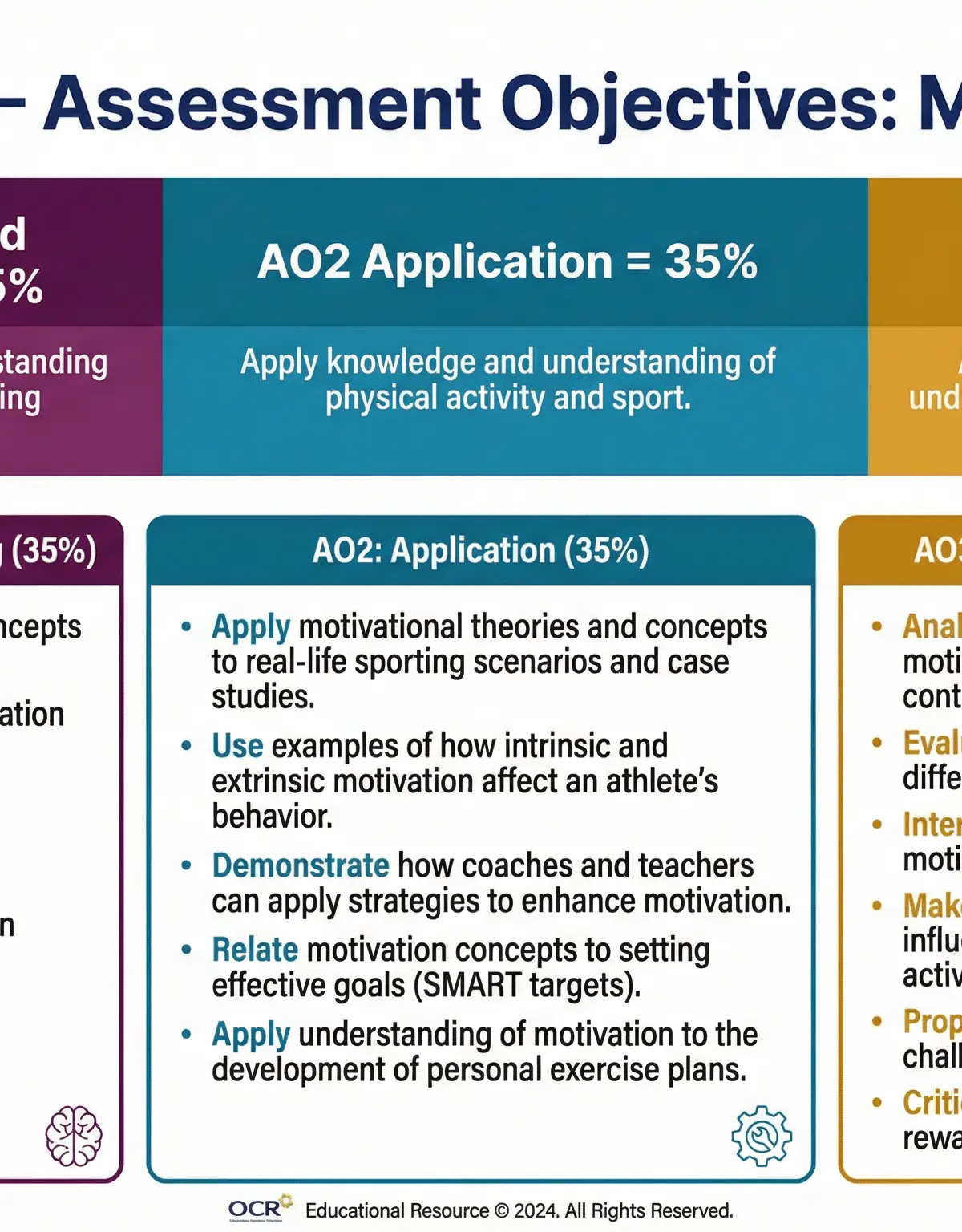
The written exam will test AO1, AO2, and AO3. You must be able to:
- AO1 (Know): Define intrinsic, extrinsic, tangible, and intangible motivation.
- AO2 (Apply): Apply these concepts to a given sporting scenario (e.g., a beginner vs. an elite athlete).
- AO3 (Evaluate): Analyse the pros and cons of different motivational strategies, especially the undermining effect of extrinsic rewards.
Practical Exam Preparation
Your level of motivation will directly impact your performance in the practical exam. High intrinsic motivation will lead to more dedicated training and better resilience on the day. Examiners look for performers who are engaged, focused, and show a desire to succeed.

Worked Examples
3 worked examples — open one to explore the question and available guidance.
Practice Questions
Test your understanding — click to reveal model answers
Identify one intrinsic motivator for an amateur long-distance runner.
Hint: Think about the internal feelings that drive someone to run.
Describe the two types of extrinsic motivation, using a sporting example for each.
Hint: Remember to use the key terms 'tangible' and 'intangible'.
Explain how a coach could use both intrinsic and extrinsic motivation to help a 14-year-old swimmer improve their performance.
Hint: Think about combining internal and external strategies.
Analyse the potential negative effects of a football academy that only uses extrinsic rewards to motivate its young players.
Hint: Consider the 'undermining effect' and the impact on long-term participation.