OCR · GCSE · Physical Education
Muscular System: Types of Muscle, Contraction, and Movement
This guide provides a comprehensive overview of the muscular system for OCR GCSE PE, focusing on muscle types, contractions, and movement analysis. It is designed to help candidates master the core knowledge required to achieve high marks in the Component 01 exam.
- 8 min read
- 3 worked examples
- 4 practice questions
- 6 key terms
Study Notes
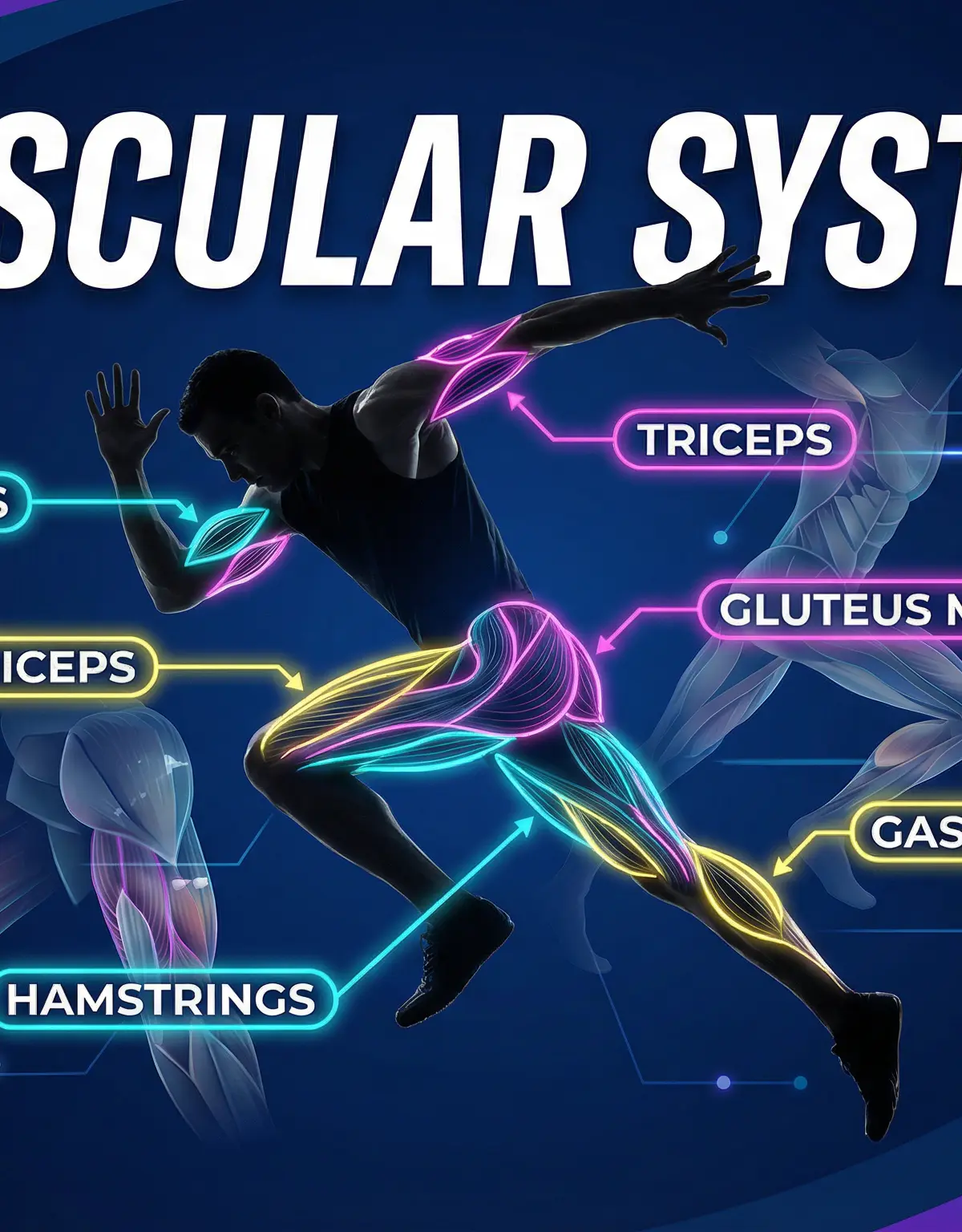
Overview
The muscular system is a fundamental topic in the OCR GCSE Physical Education specification (J587), forming a key part of Component 01: Physical Factors Affecting Performance. A thorough understanding of how muscles function is essential for analysing movement, understanding training principles, and explaining physiological responses to exercise. This guide will cover the three types of muscle, the mechanics of antagonistic pairs, and the different types of muscular contraction, providing you with the detailed knowledge and exam technique required to excel.

Key Knowledge & Theory
Core Concepts
1. Types of Muscle Tissue
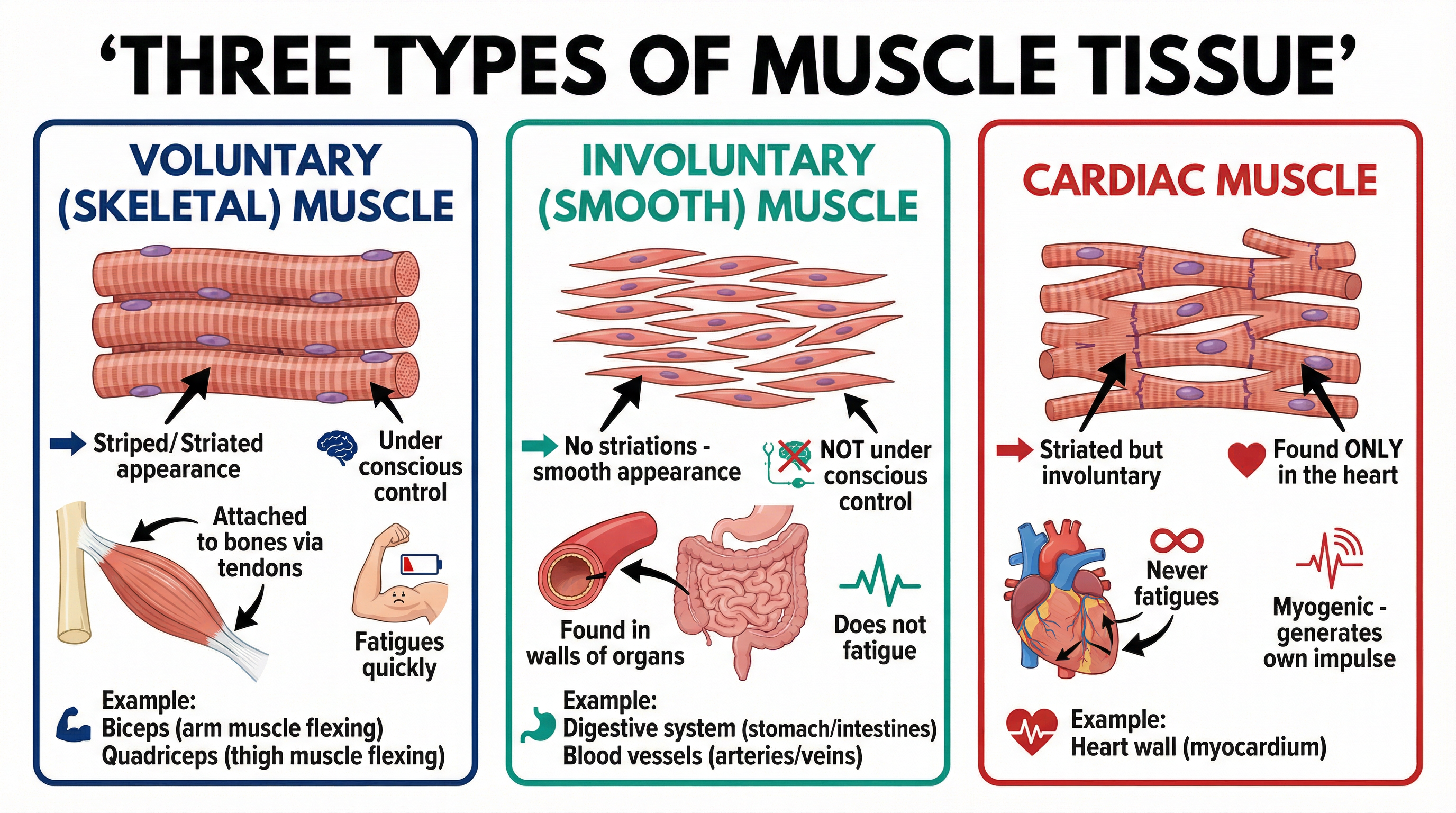
Candidates must be able to differentiate between the three types of muscle tissue based on their structure, function, and control.
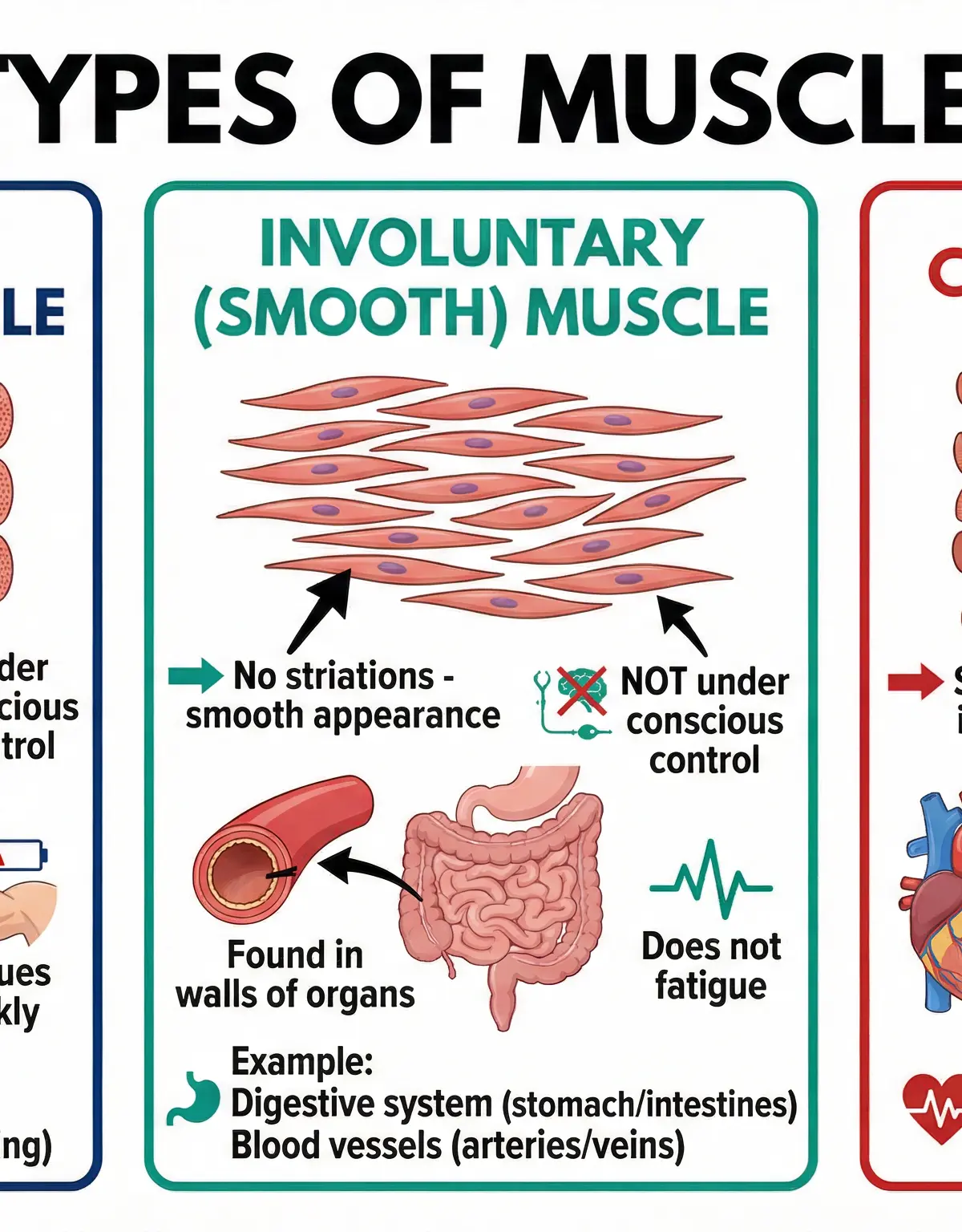
- Voluntary (Skeletal) Muscle: These are the muscles you have conscious control over. They are attached to the skeleton by tendons and are responsible for all sporting movements. They have a striped (striated) appearance and fatigue over time. Examples include the biceps, triceps, and quadriceps.
- Involuntary (Smooth) Muscle: These muscles work automatically, without conscious thought. They are found in the walls of internal organs like the digestive system and blood vessels. They are not striated and do not fatigue.
- Cardiac Muscle: This is a unique type of muscle found only in the walls of the heart. It is striated like voluntary muscle but works involuntarily. Crucially, it is myogenic (generates its own impulse) and never fatigues.
2. Antagonistic Muscle Pairs
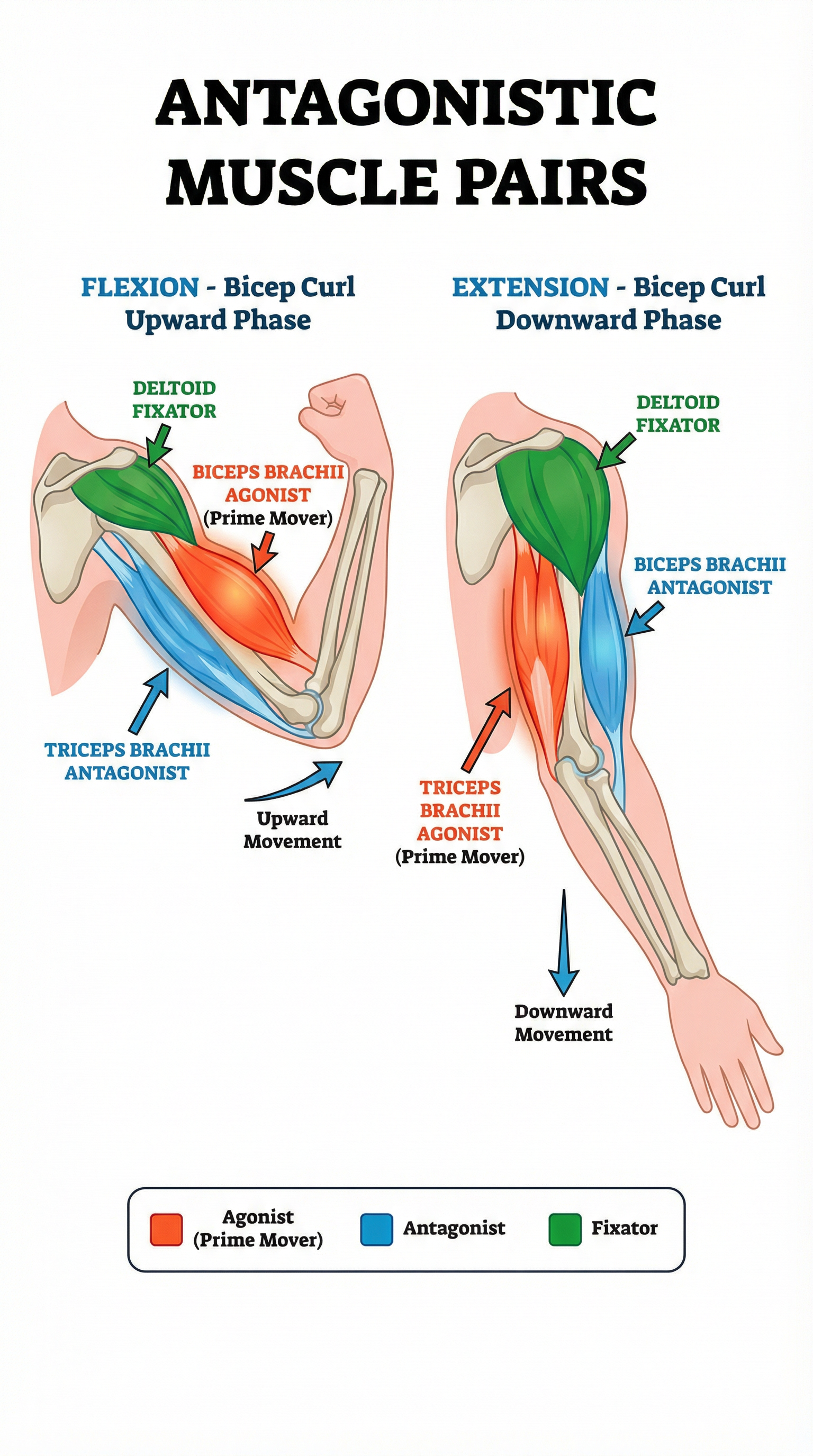
Muscles can only pull; they cannot push. Therefore, to create movement at a joint, they must work in pairs. One muscle contracts to produce the movement (the agonist) while the opposing muscle relaxes and lengthens to allow the movement to occur (the antagonist).
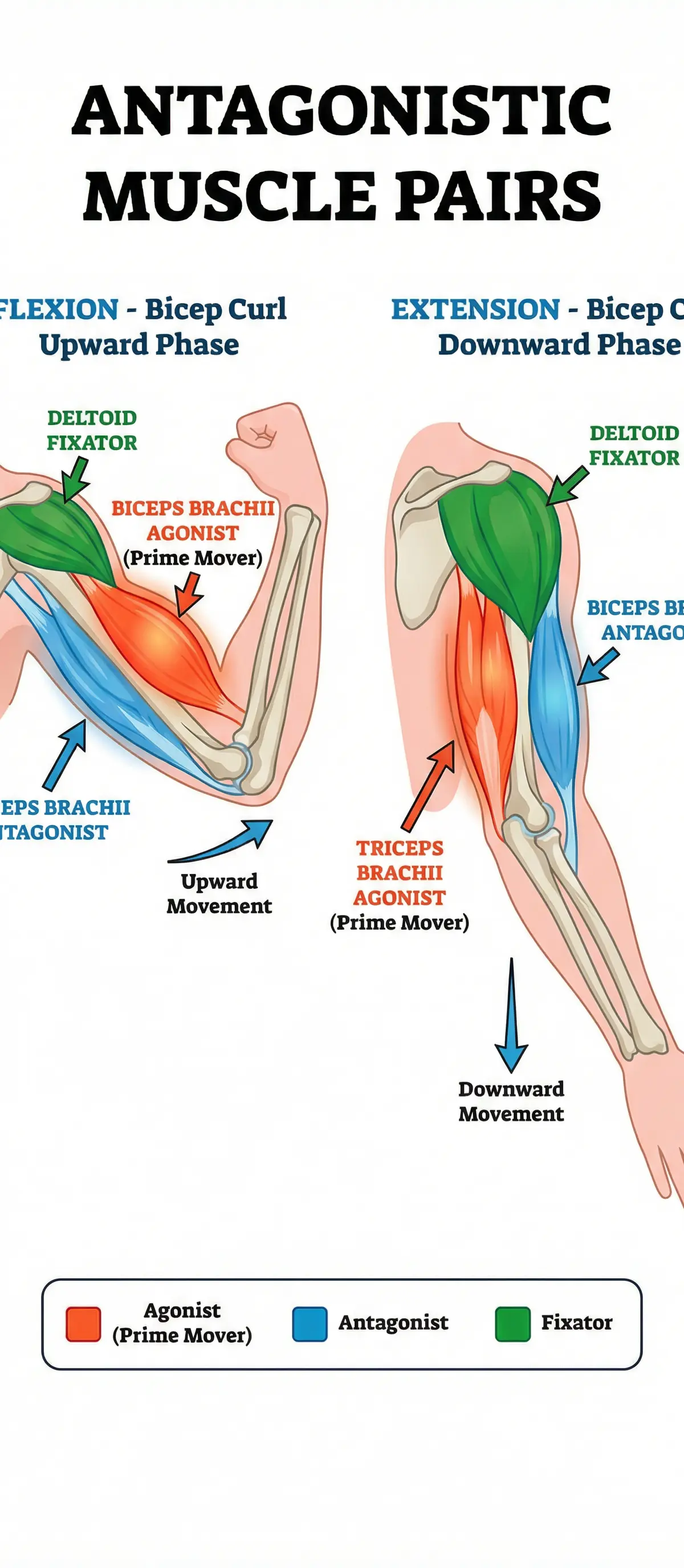
- Agonist (Prime Mover): The muscle that contracts to create the desired movement.
- Antagonist: The muscle that relaxes to allow the agonist to work. It works in opposition to the agonist.
- Fixator: A third muscle that stabilises the origin of the agonist and the joint that the movement is occurring around. This provides a stable base for the movement, making it more efficient. Forgetting the fixator is a common mistake that costs candidates marks.
3. Types of Muscular Contraction
When a muscle works, it contracts. However, the way it contracts can differ depending on the movement. Credit is given for correctly identifying the specific type of contraction in an exam.
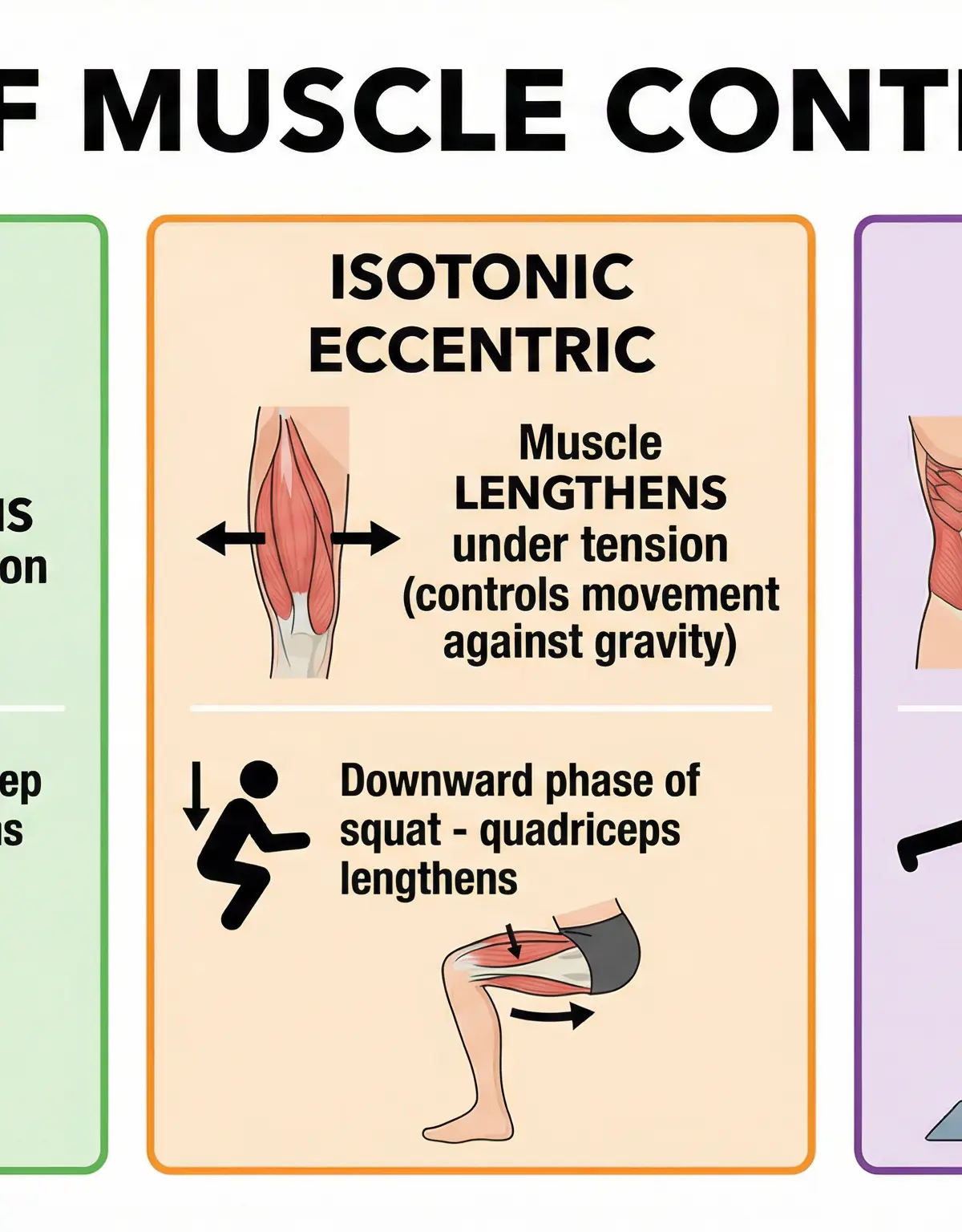
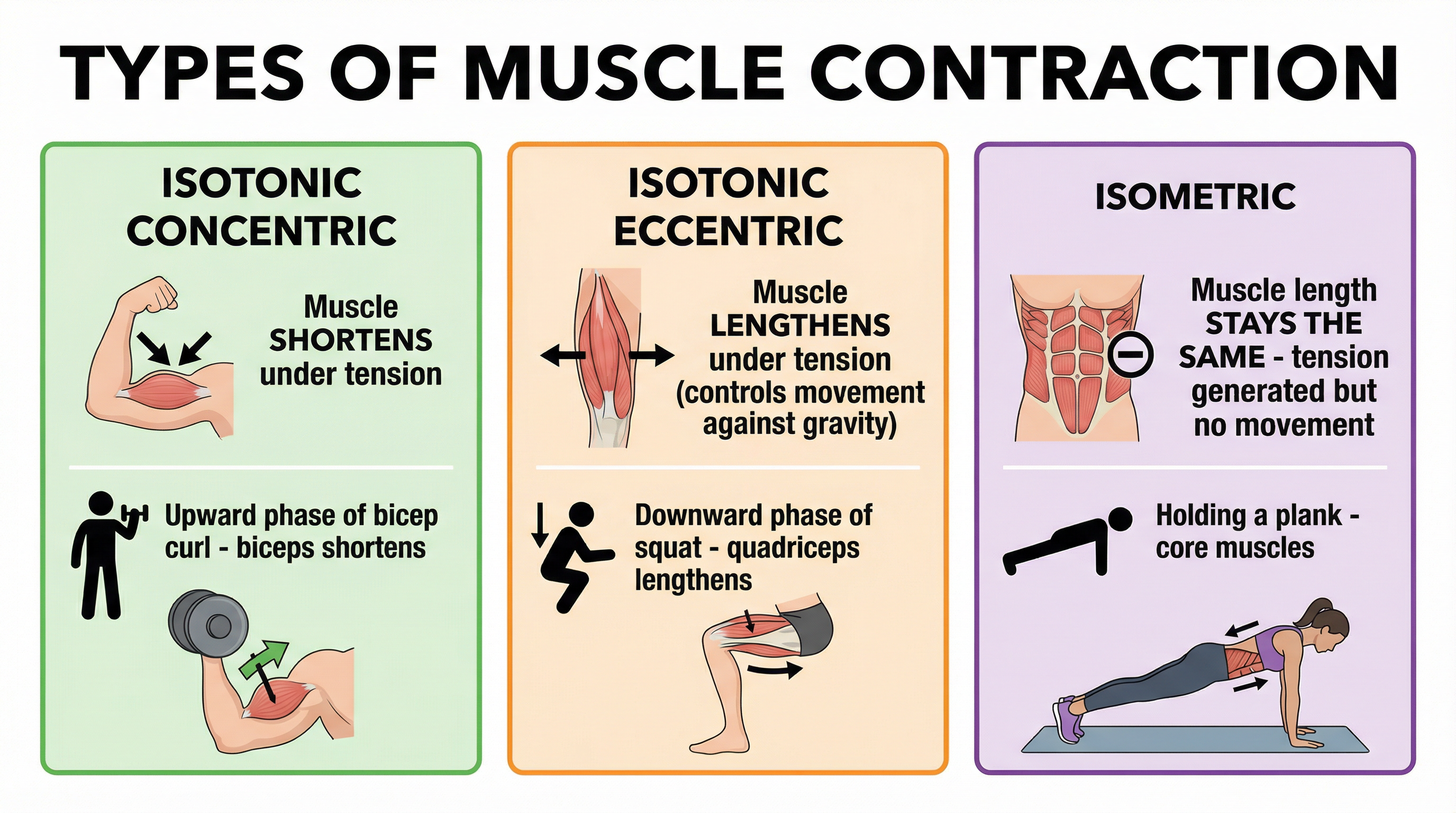
- Isotonic Contraction: The muscle changes length as it contracts. This is the most common type of contraction in sport.
- Concentric: The muscle shortens under tension (e.g., the biceps during the upward phase of a bicep curl).
- Eccentric: The muscle lengthens under tension. This often occurs when controlling a movement against gravity (e.g., the quadriceps during the downward phase of a squat). This is a point of frequent confusion; the muscle is still contracting, not relaxing.
- Isometric Contraction: The muscle generates tension, but there is no change in muscle length and no movement at the joint (e.g., holding a plank position or pushing against a stationary object like in a rugby scrum).
Key Practitioners/Artists/Composers
| Name | Period/Style | Key Works | Relevance |
|---|---|---|---|
| N/A | N/A | N/A | This section is not applicable to Physical Education. |
Technical Vocabulary
- Agonist: The prime mover; the muscle that contracts to produce a movement.
- Antagonist: The muscle that relaxes to allow the agonist to contract.
- Fixator: A muscle that stabilises the origin of the agonist.
- Isotonic Contraction: A contraction where the muscle changes length (concentric or eccentric).
- Concentric Contraction: The muscle shortens under tension.
- Eccentric Contraction: The muscle lengthens under tension.
- Isometric Contraction: The muscle generates tension but does not change length.
- Flexion: Decreasing the angle at a joint.
- Extension: Increasing the angle at a joint.
- Myogenic: The capacity of a muscle (specifically cardiac muscle) to generate its own electrical impulse.
- Striated: Having a striped appearance, characteristic of voluntary and cardiac muscle.
Practical Skills
Techniques & Processes
Applying this knowledge involves analysing sporting movements. A key skill is to break down any action into its constituent parts:
- Identify the Joint: Which joint is the primary site of movement?
- Identify the Action: Is it flexion, extension, abduction, adduction, etc.?
- Identify the Agonist: Which muscle is contracting to cause this action?
- Identify the Contraction Type: Is it concentric, eccentric, or isometric?
- Identify the Antagonist & Fixator: Which muscles are opposing the action and which are stabilising the joint?
Example: The Press-Up
- Downward Phase: The action is flexion at the elbow. The agonist is the triceps brachii, performing an isotonic eccentric contraction to control the descent against gravity. The antagonist is the biceps brachii. The fixators include the core muscles and deltoids.
- Upward Phase: The action is extension at the elbow. The agonist is the triceps brachii, performing an isotonic concentric contraction to push the body up. The antagonist is the biceps brachii.
Materials & Equipment
Understanding how different equipment places demands on the muscular system is crucial. For example, using free weights (dumbbells, barbells) requires greater activation of fixator muscles to stabilise the joints compared to using resistance machines, which provide a fixed movement path.
Portfolio/Coursework Guidance
Assessment Criteria
While this topic is primarily assessed in the written exam, understanding it is vital for your practical performance (NEA - Non-Examined Assessment). Your ability to perform skills with correct technique is underpinned by the efficient functioning of your muscular system. Your analysis and evaluation of performance (AEP) will be stronger if you can use correct anatomical language to explain strengths and weaknesses.
Building a Strong Portfolio
When analysing performance in your AEP, use the technical vocabulary from this topic. For example, instead of saying "my arm wasn't strong enough to throw the ball far," you could say, "A weakness in my performance was insufficient power generation during the throwing action, potentially due to a lack of concentric force from the pectoralis major and triceps brachii (agonists)."
Exam Component
Written Exam Knowledge
This entire topic is examinable in Component 01. Questions will range from simple identification (1-2 marks) to detailed analysis of a sporting movement (6-9 marks). You must be prepared to:
- Name specific muscles and their locations.
- Describe the roles of the agonist, antagonist, and fixator.
- Explain the difference between concentric, eccentric, and isometric contractions.
- Apply this knowledge to a wide range of sporting actions.
Practical Exam Preparation
There is no practical exam for this component, but your practical performance in your chosen sports is assessed. Strength and conditioning training that targets specific muscle groups and types of contraction (e.g., plyometrics for explosive concentric strength, eccentric overload training for injury prevention) can directly improve your practical performance marks.
Visual Resources
3 diagrams and illustrations
Interactive Diagrams
1 interactive diagram to visualise key concepts
Conceptual Flow Outline
A decision-making flowchart for analysing muscular action in any given movement.
Worked Examples
3 worked examples — open one to explore the question and available guidance.
Practice Questions
Test your understanding — click to reveal model answers
Identify the three types of muscle tissue and give a sporting example of where voluntary muscle is used. (4 marks)
Hint: Remember V-I-C. For the example, think of any deliberate action in a sport.
Describe the roles of the agonist and antagonist during the extension phase (kicking action) of a football kick. (4 marks)
Hint: Think about which muscle is on the front of the thigh and which is on the back. Which one contracts to straighten the leg?
Analyse the muscular action at the ankle joint of a sprinter in the blocks, just before the gun fires. (3 marks)
Hint: The sprinter is holding a static position but is ready to explode forwards. What does this imply about the muscle contraction?
Evaluate the importance of eccentric muscular contractions in preventing injury in a sport such as netball or basketball. (6 marks)
Hint: Think about the common movements in these sports, especially landing. What would happen if muscles couldn't contract eccentrically?