OCR · GCSE · Physical Education
Social Health: Benefits of Team Sports and Building Relationships
This guide provides a comprehensive overview of Social Health within the OCR GCSE PE specification, focusing on the benefits of team sports for building relationships. It is designed to equip candidates with the precise terminology and application skills needed to secure maximum marks in Component 02."
- 7 min read
- 3 worked examples
- 4 practice questions
Study Notes
Overview
Social health is a critical component of overall well-being, defined by our ability to form meaningful relationships and interact effectively with others. In the context of OCR GCSE Physical Education, understanding the specific social benefits of physical activity is essential for success in the Component 02 exam (Socio-cultural issues). This topic requires candidates to move beyond generic statements and apply precise, specification-defined concepts to practical sporting examples. Examiners are looking for a clear distinction between social, emotional, and physical health benefits, and the ability to analyse how team environments foster positive social outcomes.
This guide will break down the four key social benefits as defined by OCR, provide strategies to avoid common pitfalls, and offer structured examples to help you build exam-winning responses. By mastering this area, you can confidently tackle questions on social health and demonstrate a sophisticated understanding of the socio-cultural aspects of sport.

Key Knowledge & Theory
Core Concepts
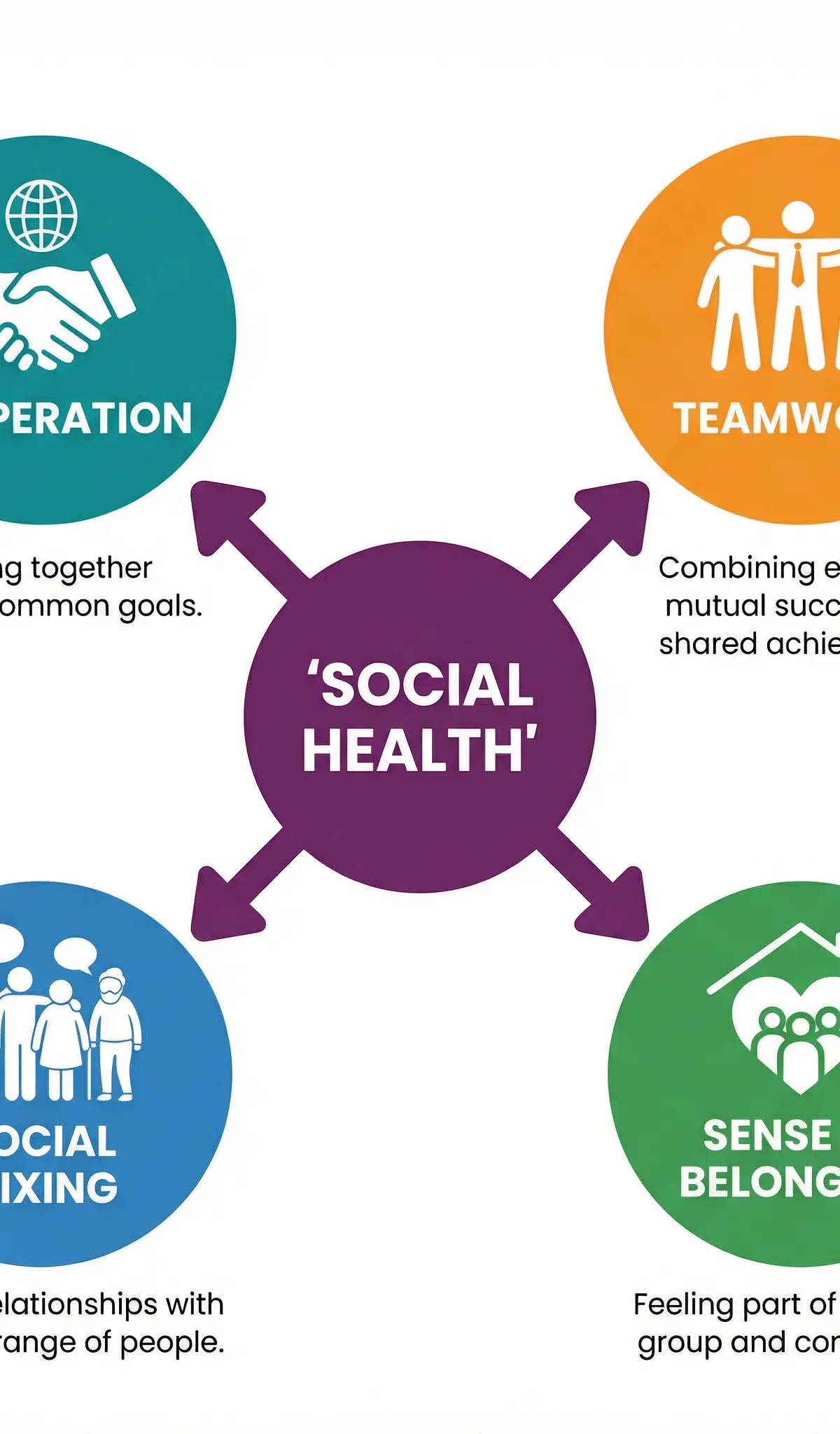
The foundation of this topic rests on four key pillars. Candidates must be able to define, explain, and provide examples for each.
-
Cooperation: This is the process of working together towards a common goal. In a team sport, this is demonstrated through players executing set plays, communicating on the pitch, and supporting each other defensively and offensively. For example, in a game of hockey, players cooperate to pass the ball between them, moving it up the pitch to create a scoring opportunity. This requires trust and mutual understanding.
-
Teamwork: While similar to cooperation, teamwork focuses on the combined and coordinated effort of a group. It involves individuals taking on specific roles and responsibilities that contribute to the team's collective success. A classic example is a rowing crew, where each rower must synchronise their stroke perfectly with others for the boat to move efficiently. Teamwork is about the synergy of the group being greater than the sum of its individual parts.
-
Social Mixing (Friendship): Team sports provide a natural environment for social mixing, bringing together individuals from diverse backgrounds, schools, and communities who might not otherwise interact. This regular, structured contact helps to break down social barriers and fosters the development of new friendships. A local youth cricket club, for instance, unites players from across a town, building a strong social network.
-
Sense of Belonging: This refers to the feeling of being an accepted and valued member of a group. Wearing a team kit, sharing in victories and defeats, and having a collective identity all contribute to a powerful sense of belonging. This is a crucial factor in reducing feelings of loneliness and social isolation, promoting positive mental and social well-being.
Key Practitioners/Artists/Composers
While PE doesn't have 'practitioners' in the same way as Art or Music, it's crucial to understand the theories and models that underpin the subject.
| Theorist/Model | Period/Style | Key Concepts | Relevance |
|---|---|---|---|
| Bruce Tuckman | 1965 | Stages of Group Development (Forming, Storming, Norming, Performing) | This model is highly relevant for analysing how a sports team develops over time. It explains the initial uncertainty (Forming), conflict (Storming), resolution (Norming), and eventual high performance (Performing), providing a theoretical lens for AO3 analysis of teamwork. |
| Albert Carron | 1980s | Model of Cohesion | Carron identified two types of cohesion: Task Cohesion (how well a team works together to achieve a goal) and Social Cohesion (how much the players like each other). This is vital for evaluating why some talented teams fail while others succeed. |
Technical Vocabulary
Using precise terminology is non-negotiable for achieving high marks. Candidates MUST use these terms in their answers.
- Social Health: The ability to form meaningful relationships with other people and to interact in a healthy, positive way.
- Cohesion: The dynamic process which is reflected in the tendency for a group to stick together and remain united in the pursuit of its instrumental objectives and/or for the satisfaction of member affective needs.
- Group Dynamics: The patterns of interaction between individuals in a group setting.
- Social Isolation: A state of complete or near-complete lack of contact between an individual and society.
- Community: A group of people living in the same place or having a particular characteristic in common.
- Interpersonal Skills: The skills we use every day when we communicate and interact with other people, both individually and in groups. Includes communication, listening, and empathy.
Practical Skills
Techniques & Processes
While this is a theory topic, applying it to practical scenarios is a key skill (AO2). The process involves:
- Identify the Social Demand: Read the question and identify the specific social benefit being assessed (e.g., cooperation).
- Select a Sporting Context: Choose a relevant team sport that clearly illustrates the concept.
- Provide a Specific Example: Describe a concrete action within the sport. Instead of saying "footballers cooperate," say "in football, a centre-back and a fullback cooperate to defend against an attacking winger, communicating to ensure they maintain a defensive line."
- Explain the Benefit: Link the action back to the definition. "This cooperation is a social benefit as it requires players to develop trust and effective communication skills to achieve a shared objective."
Exam Component
Written Exam Knowledge
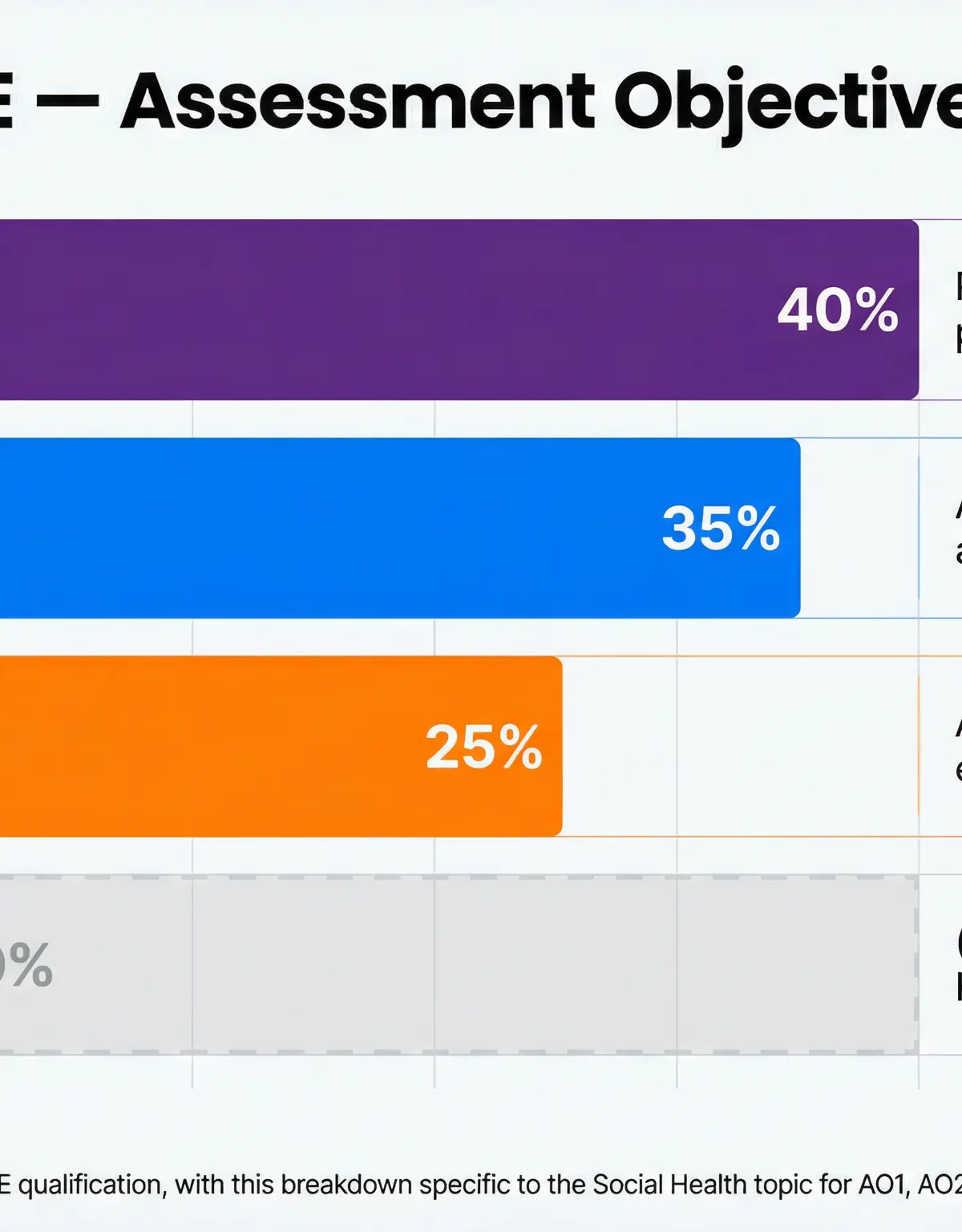
This topic is exclusively assessed in the Component 02: Socio-cultural issues in physical activity and sport written paper. Questions can range from 1-mark definitions to 6-mark extended answer questions requiring analysis and evaluation.
- AO1 (Recall): You will be asked to define terms or identify social benefits.
- AO2 (Application): You will be given a sporting scenario and asked to explain how social benefits are demonstrated.
- AO3 (Analysis/Evaluation): You will be asked to compare the social benefits of team vs. individual sports, or evaluate the importance of social health.
Practical Exam Preparation
While not directly assessed in the practical component, a strong understanding of teamwork, cooperation, and communication is fundamental to achieving high performance in team sports, which can form part of your practical assessment. Demonstrating these qualities as a performer or leader will be noted by assessors."
Worked Examples
3 worked examples — open one to explore the question and available guidance.
Practice Questions
Test your understanding — click to reveal model answers
Identify one social benefit and one emotional benefit of taking part in physical activity. (2 marks)
Hint: Remember the key distinction between social (relationships with others) and emotional (your own feelings).
Describe how a basketball player uses cooperation during a game. (2 marks)
Hint: Think about a specific moment in a game where two or more players have to work together.
Explain two ways that joining a local football club can improve an individual's social health. (4 marks)
Hint: Choose two of the four key social benefits and apply them to the football club scenario.
Discuss the importance of teamwork in a team sport of your choice. (4 marks)
Hint: Go beyond just defining teamwork. Explain *why* it is important for success, using specific examples from your chosen sport.