OCR · GCSE · Physical Education
Technology: Impact on Performance and Spectatorship
This study guide for OCR GCSE PE (J587) explores Topic 6.3, the impact of modern technology on sports performance and spectatorship. It provides a detailed analysis of how systems like VAR and Hawkeye affect performers, officials, and fans, equipping candidates to tackle evaluative exam questions effectively.
- 7 min read
- 3 worked examples
- 4 practice questions
- 6 key terms
Study Notes

Overview
Welcome to the definitive guide for Topic 6.3: The Impact of Technology on Performance and Spectatorship. This is a crucial area of the OCR GCSE PE specification, falling under the Socio-cultural issues paper. Examiners frequently set questions on this topic because it requires candidates to move beyond simple descriptions and engage in genuine evaluation, weighing up the pros and cons of technological interventions in sport. A strong understanding here is essential for achieving high marks, as it tests your ability to analyse complex issues from multiple perspectives.
This guide will break down the key technologies, their application in specific sports, and their varied impacts on the three key stakeholders you must know: Performers, Officials, and Spectators.

Key Knowledge & Theory
Core Concepts
The core of this topic is understanding the tension between the benefits and drawbacks of technology. For your exam, you must be able to analyse these impacts across different groups. The primary areas of technological influence are:
- Decision-Making for Officials: Technologies designed to improve the accuracy and fairness of officiating (e.g., VAR, Hawkeye, TMO).
- Performance Enhancement for Athletes: Technologies that help performers to train more effectively, improve their technique, and use superior equipment (e.g., performance analysis software, wearable tech, advanced materials).
- Experience for Spectators: Technologies that change how fans watch and engage with sport, both in the stadium and at home (e.g., giant screens, broadcast graphics, multi-angle replays).
Key Technologies & Applications
It is not enough to refer to 'technology' generically. Marks are awarded for citing specific systems and linking them to the correct sport. Below is a table you must learn.
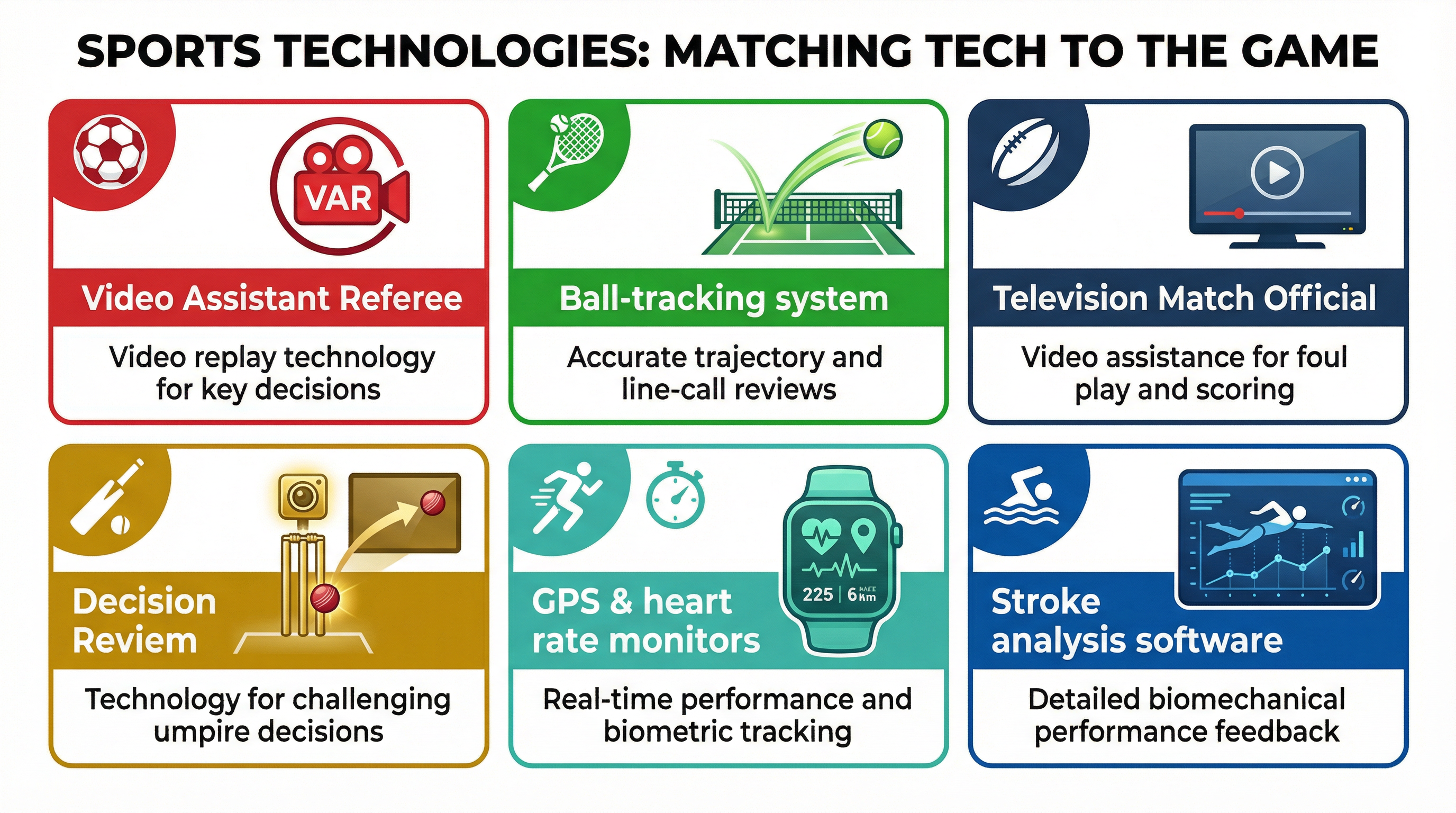
| Technology | Sport(s) | Primary Function | Key Impact Area |
|---|---|---|---|
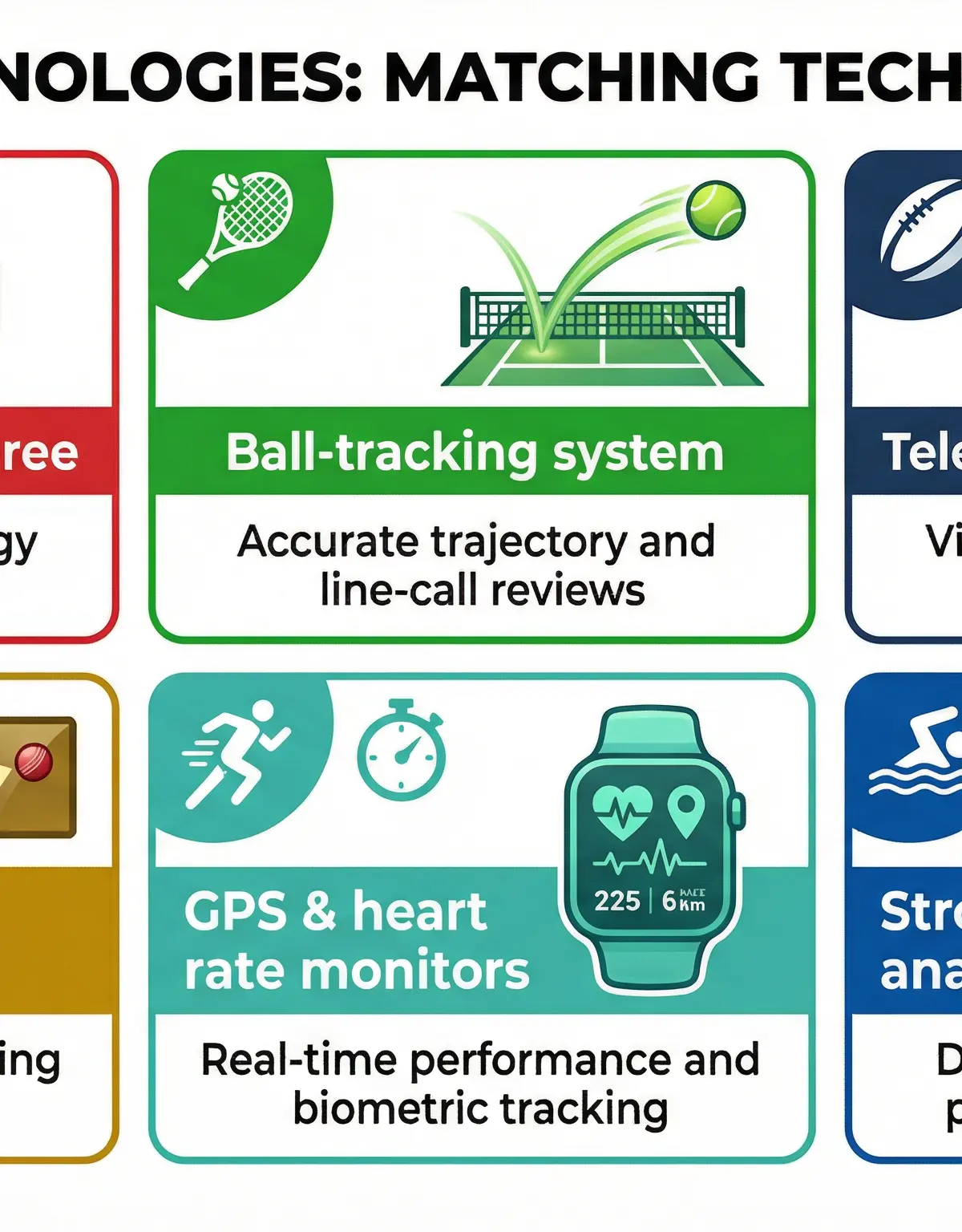
| VAR (Video Assistant Referee) | Football | Reviews key decisions (goals, penalties, red cards) using video replays. | Official & Spectator |
| Hawkeye | Tennis, Cricket | Tracks the ball's trajectory to determine if it is in or out, or to predict its path. | Official & Spectator |
| TMO (Television Match Official) | Rugby Union & League | Reviews tries, foul play, and other key incidents via television replays. | Official & Spectator |
| DRS (Decision Review System) | Cricket | Allows teams to challenge the umpire's decision using Hawkeye, Hot Spot, and Snickometer. | Official & Spectator |
| Performance Analysis Software (e.g., Catapult, Prozone) | Team Sports (Football, Rugby, etc.) | Tracks player movements, physiological data, and tactical patterns. | Performer |
| Wearable Technology (e.g., GPS Vests, Heart Rate Monitors) | Various (Athletics, Team Sports) | Provides real-time biometric data to monitor athlete workload and prevent injury. | Performer |
Technical Vocabulary
Using precise terminology is critical for accessing the higher mark bands. Ensure you are confident using these terms in your written answers.
- Objectivity: The ability to make judgements based on facts, uninfluenced by personal feelings or opinions. Technology often increases objectivity in officiating.
- Subjectivity: Judgements based on personal opinions, feelings, and interpretations. Many on-field decisions involve subjectivity.
- Biometrics: The measurement and statistical analysis of people's unique physical and behavioral characteristics (e.g., heart rate, distance covered).
- Performance Analytics: The use of data to build predictive models and make data-driven decisions to improve performance.
- Game Flow: The natural rhythm and pace of a sporting contest. A common criticism of technologies like VAR is that they disrupt the game flow.
- Stakeholder: A person or group with an interest or concern in something. In this topic, the key stakeholders are performers, officials, and spectators.
Practical Skills
While this is a theory topic, it links directly to the practical elements of PE. Your understanding of technology can inform your own performance and analysis.
Techniques & Processes
As a performer, you can use technology to improve your own skills. For example:
-
Video Analysis: Record yourself performing a skill (e.g., a tennis serve, a basketball jump shot). Use a simple app on a phone or tablet to play it back in slow motion.
- Look for: Technical faults in your form (e.g., incorrect grip, poor footwork).
- Compare: Watch your performance alongside a video of an elite athlete. What are the differences?
- Analyse: Annotate the video, highlighting areas for improvement. This is exactly what professional analysts do.
-
Heart Rate Monitoring: If you have access to a smartwatch or heart rate monitor, use it during a training session.
- Track: Note how your heart rate responds to different intensities of exercise.
- Apply: Use this data to ensure you are training in the correct heart rate zones to meet your fitness goals (e.g., aerobic vs. anaerobic).
Materials & Equipment
Understanding the impact of equipment technology is vital. When evaluating equipment, consider:
- Performance: How does the material improve performance? (e.g., carbon fibre in running blades provides a high strength-to-weight ratio and energy return).
- Safety: How does the technology make the sport safer? (e.g., advanced helmet technology in American Football to reduce concussion risk).
- Cost & Access: Is the equipment expensive? Does this create an unfair advantage for wealthier performers or teams? This is a key evaluative point.
Exam Component
Written Exam Knowledge
This topic will be assessed in the Socio-cultural issues written paper (Component 02). You can expect questions ranging from 1-mark 'identify' questions to 6-mark 'evaluate' extended response questions. The majority of marks (40%) are for AO3 (Analysis and Evaluation), so you must be prepared to argue both sides of the issue.
Key areas for the written exam:
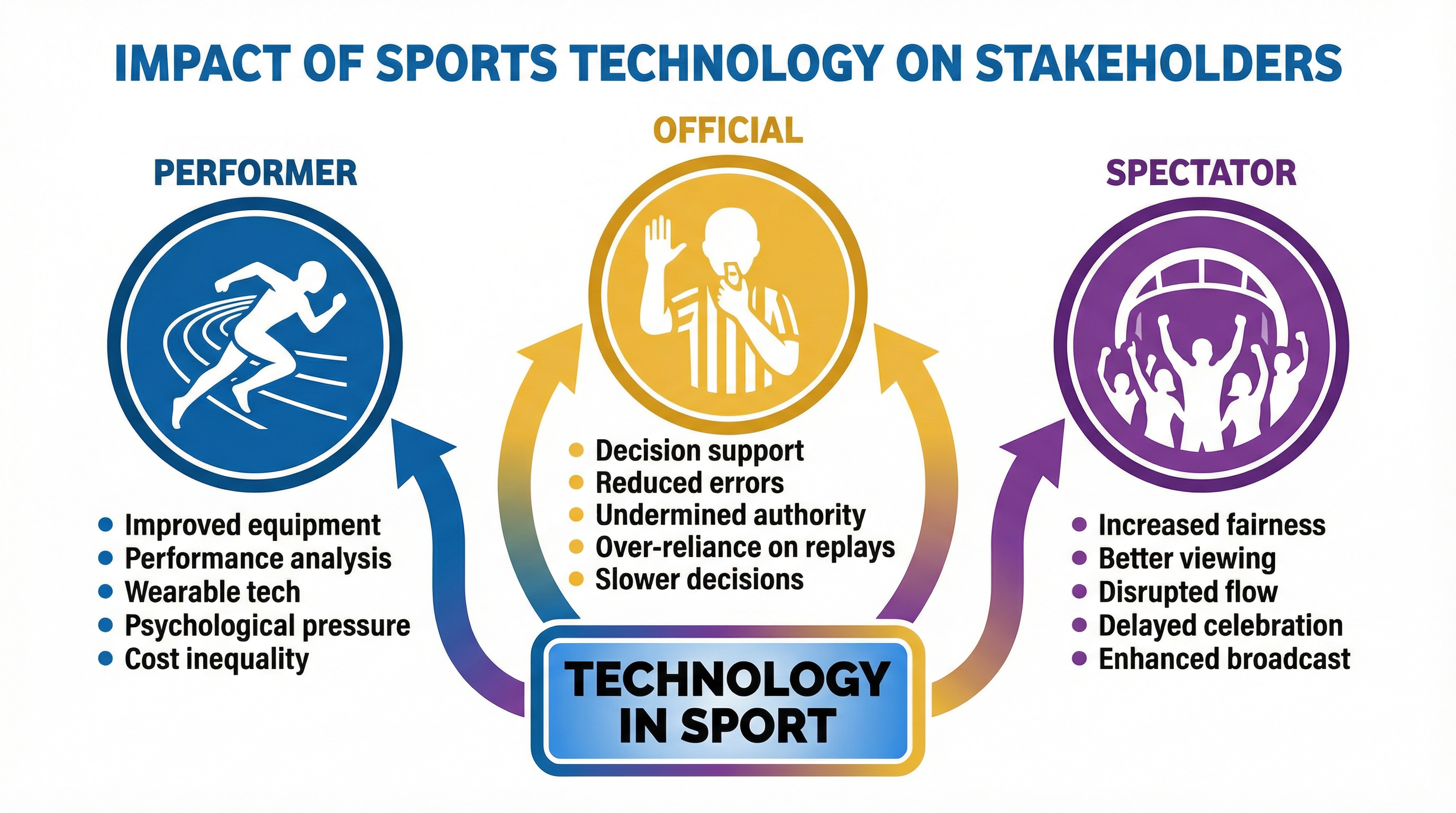
- Positive vs. Negative Impacts: Be able to discuss the pros and cons for each of the three stakeholders.
- Specific Examples: Name the technologies and the sports they are used in.
- Evaluation: Make a justified judgement. For example, after discussing the pros and cons of VAR, conclude with a statement like: 'Overall, while VAR disrupts game flow, its contribution to fairness and decision accuracy represents a net positive for the sport.'
Visual Resources
2 diagrams and illustrations
Interactive Diagrams
1 interactive diagram to visualise key concepts
Conceptual Flow Outline
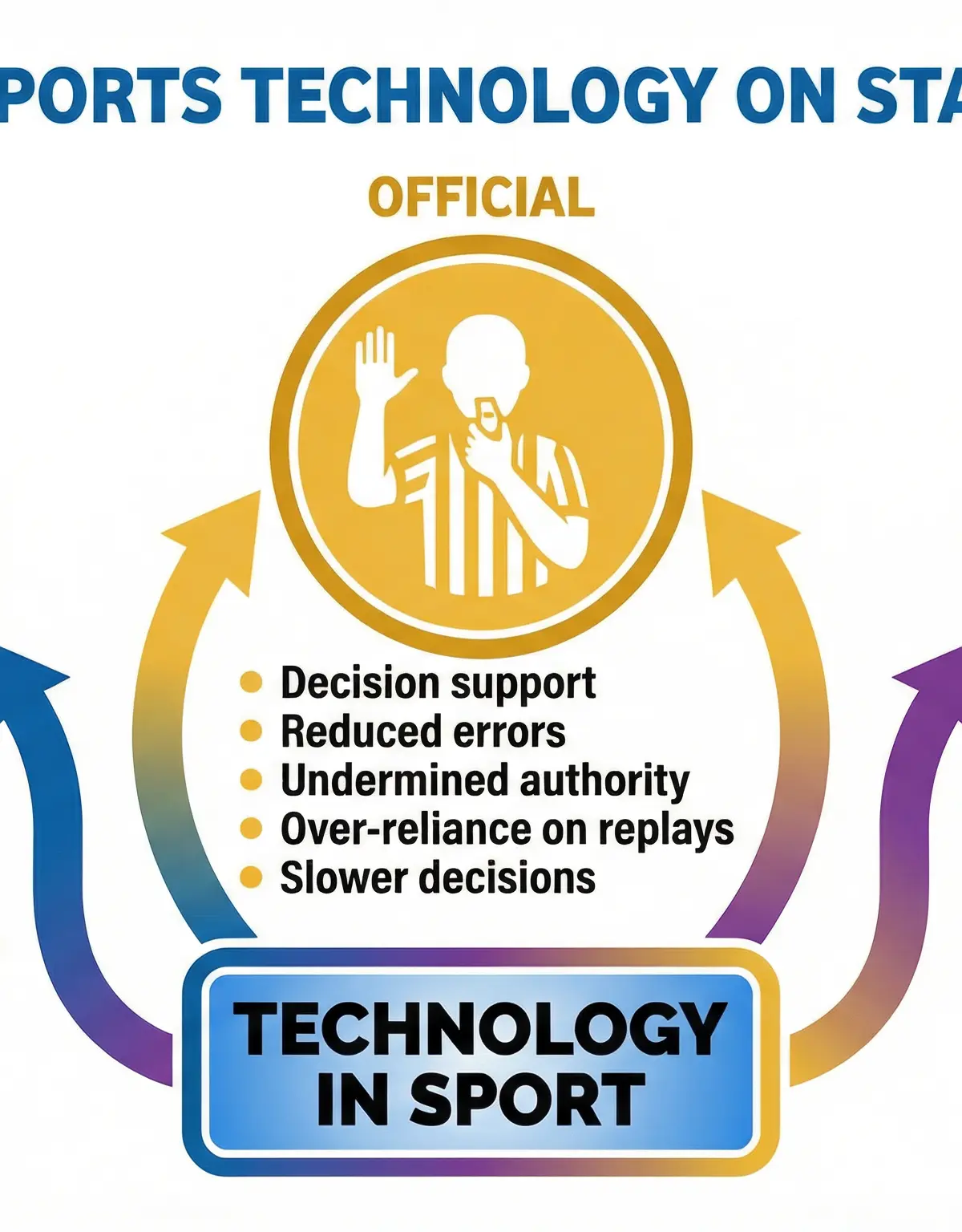
A flowchart showing the divergent positive (+) and negative (-) impacts of technology on the three key stakeholders in sport.
Worked Examples
3 worked examples — open one to explore the question and available guidance.
Practice Questions
Test your understanding — click to reveal model answers
Identify a technology used in cricket to help officials make decisions. (1 mark)
Hint: Think about the system players can use to challenge an umpire's call.
Describe the positive and negative impacts of wearable technology on a performer. (4 marks)
Hint: Think about training optimisation vs. the pressure of being constantly monitored.
Explain how the use of the Television Match Official (TMO) in rugby can be considered both an advantage and a disadvantage. (4 marks)
Hint: Link the advantage to fairness and the disadvantage to the spectator experience.
'The use of technology in sport has had a purely positive impact.' Discuss this statement. (6 marks)
Hint: This is an 'evaluate' question in disguise. You must argue both for and against the statement, using the P.O.S. (Performers, Officials, Spectators) structure.