WJEC · A-Level · Physical Education
Health Contributions and Effects of Exercise
This guide provides a comprehensive analysis of the health contributions and effects of exercise, focusing on how physical activity mitigates hypokinetic diseases. It is tailored for the WJEC A-Level Physical Education specification, equipping candidates with the precise physiological knowledge and exam technique required to achieve top marks.
- 7 min read
- 3 worked examples
- 4 practice questions
- 6 key terms
Study Notes
Overview
This unit explores the critical relationship between physical activity and long-term health, a cornerstone of the WJEC A-Level PE specification. Candidates are required to move beyond a general appreciation of exercise and develop a detailed understanding of the physiological and psychological mechanisms by which regular physical activity prevents and manages a range of hypokinetic diseases — conditions resulting from a sedentary lifestyle. A strong grasp of this topic is essential for success in the written exam, as it tests knowledge (AO1), application (AO2), and analysis (AO3) in depth.
Key Knowledge & Theory
Core Concepts
The central theme is how chronic (long-term) adaptation to exercise provides a protective effect against major health issues. Candidates must be able to explain the specific pathways through which exercise impacts the cardiovascular, metabolic, musculoskeletal, and endocrine systems.
1. Coronary Heart Disease (CHD) and Cardiovascular Adaptations:
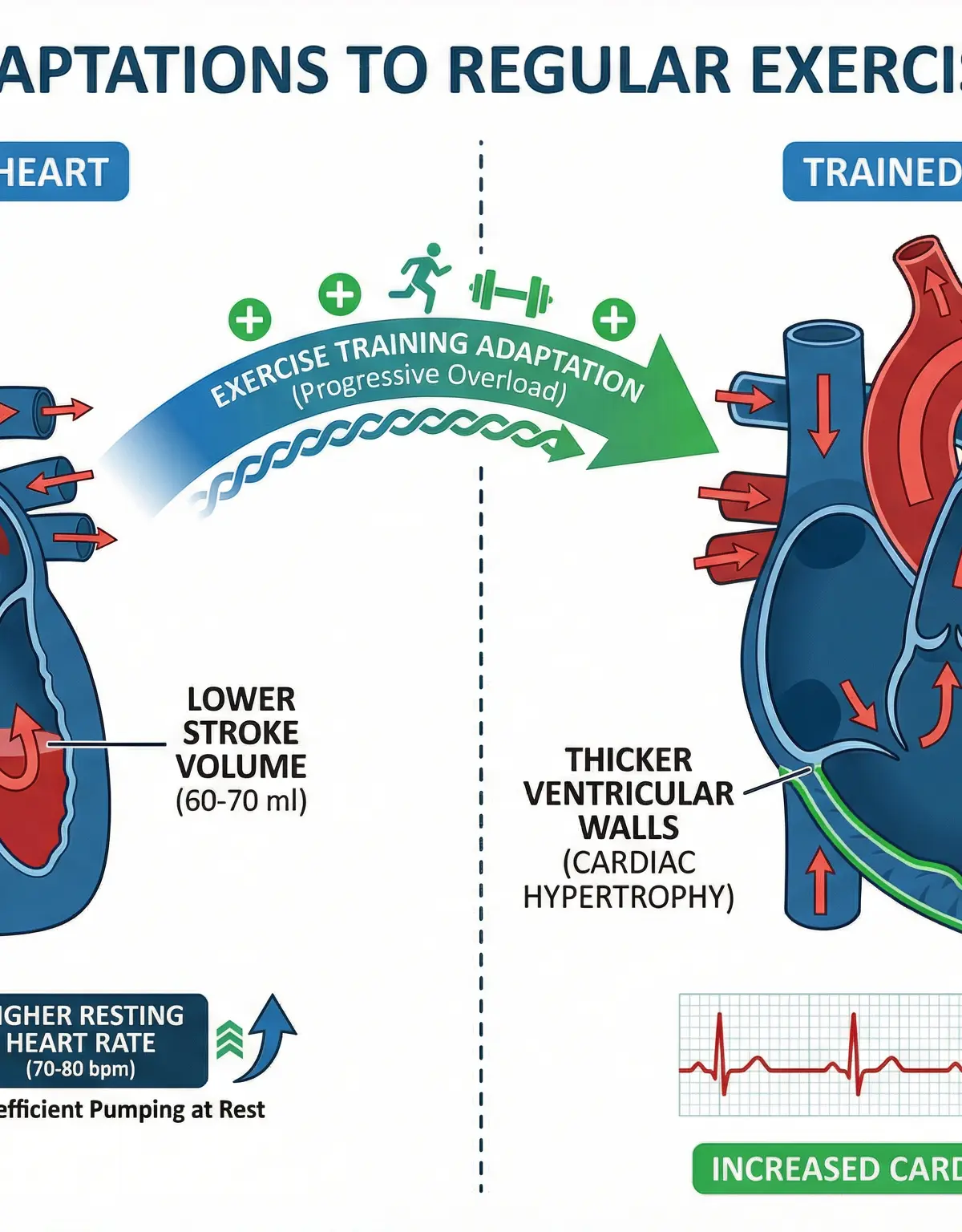
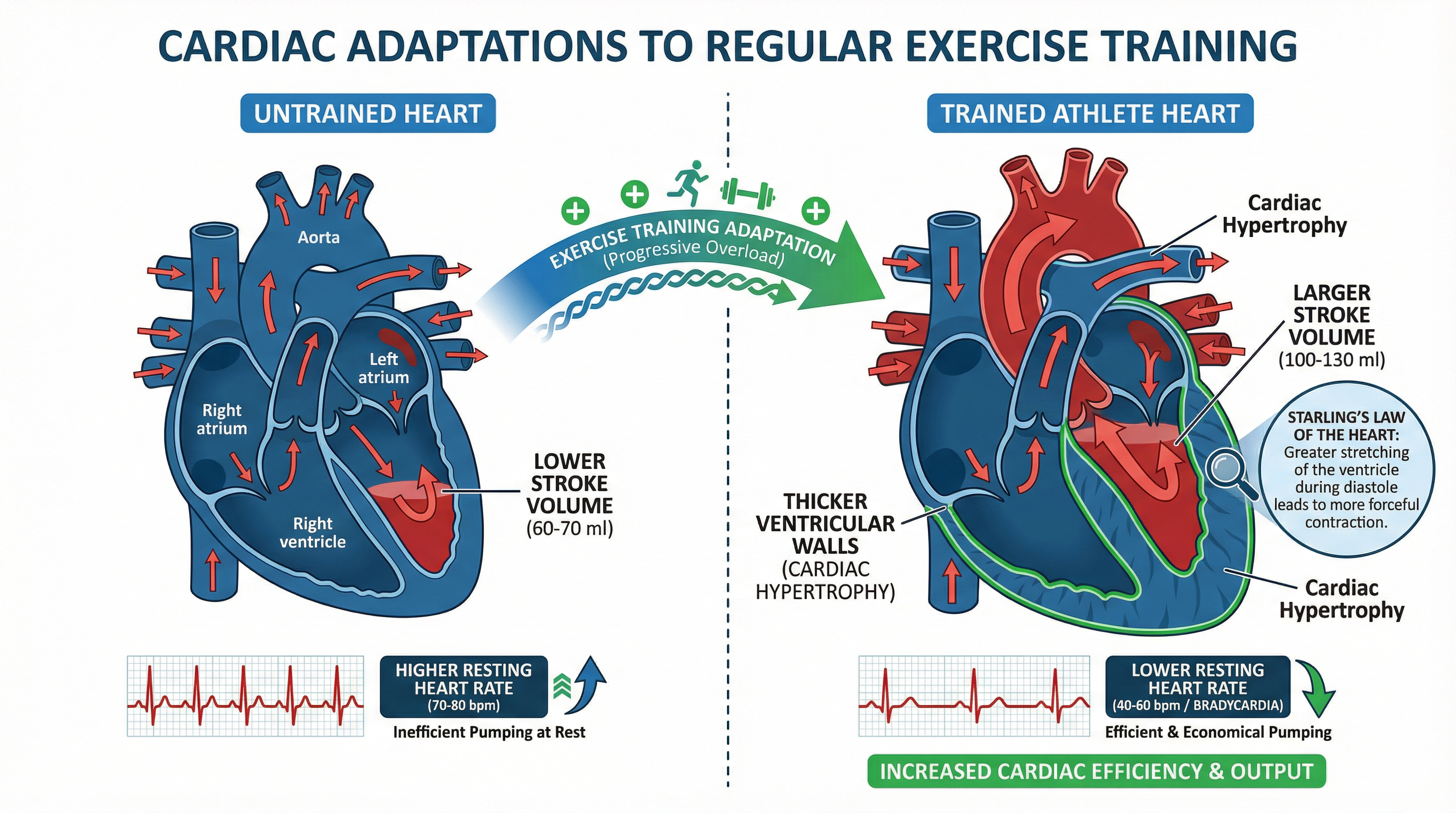
- Cardiac Hypertrophy: Regular aerobic exercise leads to the thickening of the heart's muscular wall, particularly the left ventricle. This is a positive adaptation that increases the heart's pumping capacity.
- Increased Stroke Volume: As the heart becomes stronger, it can pump more blood with each beat. This is known as an increased stroke volume.
- Bradycardia: A direct consequence of increased stroke volume is a lower resting heart rate. An efficient heart doesn't need to beat as often to supply the body with oxygenated blood. A resting heart rate below 60 bpm is termed bradycardia and is common in trained athletes.
- Improved Lipid Profile: Exercise positively alters blood cholesterol levels. It increases High-Density Lipoproteins (HDL), often called 'good cholesterol', which transport cholesterol away from the arteries. Simultaneously, it decreases Low-Density Lipoproteins (LDL), or 'bad cholesterol', which contribute to the formation of atherosclerotic plaques.
- Increased Elasticity of Arterial Walls: Exercise helps maintain the flexibility of blood vessels, which aids in regulating blood pressure and reducing the strain on the heart.
2. Obesity and Energy Balance:
- Energy Balance Equation: The fundamental principle is that weight is managed by balancing energy intake (calories from food) with energy expenditure (calories burned).
- Increased Basal Metabolic Rate (BMR): Exercise, particularly resistance training, builds muscle mass. Muscle tissue is more metabolically active than fat tissue, meaning it burns more calories even at rest, thus increasing BMR.
- Excess Post-Exercise Oxygen Consumption (EPOC): Following a bout of intense exercise, the body's metabolism remains elevated for several hours, continuing to burn calories at a higher rate. This 'afterburn' effect is a significant contributor to overall energy expenditure.
3. Type 2 Diabetes and Glucose Regulation:
- Increased Insulin Sensitivity: Type 2 diabetes is characterized by the body's cells becoming resistant to insulin. Exercise makes muscle cells more sensitive to insulin.
- GLUT-4 Translocation: During physical activity, muscle contractions stimulate the movement of glucose transporters, known as GLUT-4, to the cell surface. This allows glucose to be taken up by the muscles for energy, without relying on insulin. This is a crucial mechanism for controlling blood sugar levels.
4. Osteoporosis and Bone Health:
- Osteoblastic Activity: Osteoblasts are cells that build new bone tissue. Weight-bearing and high-impact exercise (e.g., running, gymnastics, resistance training) places stress on the skeleton, which stimulates osteoblasts to increase bone mineral density.
- Specificity of Exercise: It is vital to note that not all exercise builds bone. Non-weight-bearing activities like swimming or cycling, while excellent for cardiovascular health, have minimal impact on bone density.
Technical Vocabulary
Using precise terminology is non-negotiable for achieving high marks. Candidates must be fluent in the following terms:
- Hypokinetic Disease: A disease associated with a sedentary or inactive lifestyle.
- Atherosclerosis: The build-up of fatty plaques within the arterial walls.
- Arteriosclerosis: The hardening and loss of elasticity of the arterial walls.
- Cardiac Hypertrophy: The enlargement and strengthening of the heart muscle.
- Stroke Volume (SV): The volume of blood pumped from the left ventricle per beat.
- Bradycardia: A resting heart rate of below 60 beats per minute.
- HDL/LDL: High-Density Lipoprotein and Low-Density Lipoprotein.
- Basal Metabolic Rate (BMR): The rate of energy expenditure per unit time by endothermic animals at rest.
- EPOC: Excess Post-exercise Oxygen Consumption.
- GLUT-4: An insulin-regulated glucose transporter found primarily in adipose tissues and striated muscle.
- Osteoblastic Activity: The process of new bone formation.
- Somatic vs. Cognitive Anxiety: Somatic refers to the physiological symptoms of anxiety (e.g., increased heart rate), while cognitive refers to the mental symptoms (e.g., worry, negative thoughts).
Practical Skills
Techniques & Processes
While this is a theoretical topic, it has direct practical application in designing training programmes.
Designing a Programme to Reduce CHD Risk:
- Mode: Focus on continuous aerobic exercise (running, cycling, swimming, rowing).
- Frequency: Aim for 3-5 sessions per week.
- Intensity: Work at 60-85% of maximum heart rate (MHR). Use the Karvonen formula for more advanced calculations.
- Duration: Each session should last for at least 20-30 minutes.
- Progression: Gradually increase duration or intensity to ensure progressive overload and continued adaptation.
Designing a Programme for Weight Management (Obesity):
- Combine Aerobic and Resistance Training: Use aerobic exercise for calorie expenditure and resistance training to build muscle and increase BMR.
- Incorporate High-Intensity Interval Training (HIIT): HIIT is highly effective at stimulating EPOC.
- Monitor Energy Balance: Educate the client on the importance of a balanced diet in conjunction with the exercise programme.
Exam Component
Written Exam Knowledge
This topic is a staple of the written theory paper. Questions will require you to:
- Identify the health benefits of exercise (AO1).
- Explain the physiological mechanisms behind these benefits (AO2).
- Analyse how different types of exercise impact specific conditions (AO3).
- Evaluate the role of exercise in public health strategies (AO3).
Expect questions ranging from short 2-mark definitions to extended 8- or 10-mark essays. For longer questions, structure is key. Use an introduction to define hypokinetic disease, dedicated paragraphs for each condition with specific mechanisms, and a concluding summary.

Visual Resources
2 diagrams and illustrations
Interactive Diagrams
1 interactive diagram to visualise key concepts
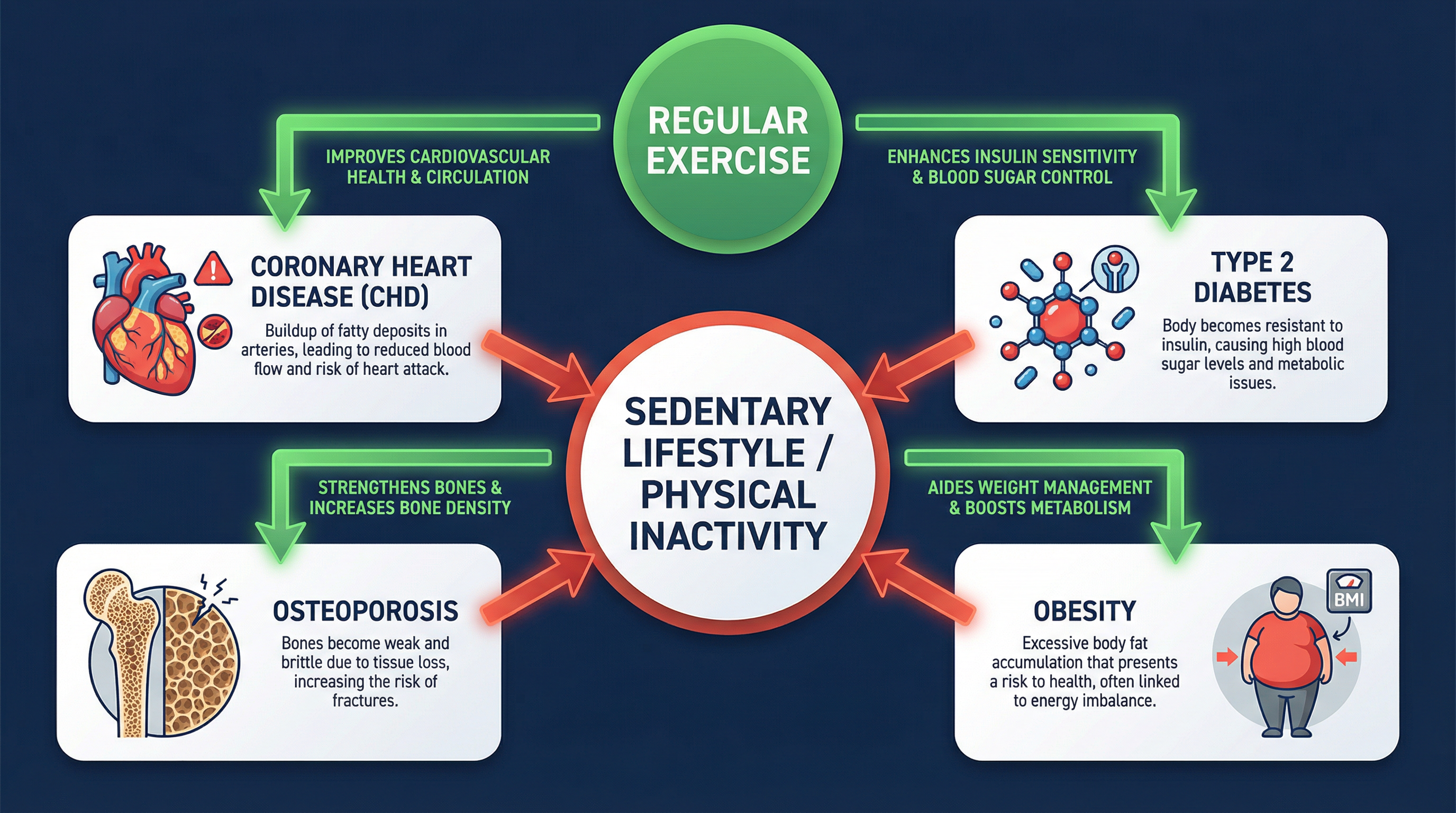
Conceptual Flow Outline
The relationship between a sedentary lifestyle, hypokinetic diseases, and the mitigating effect of regular exercise.
Worked Examples
3 worked examples — open one to explore the question and available guidance.
Practice Questions
Test your understanding — click to reveal model answers
Identify two chronic cardiovascular adaptations to aerobic exercise.
Hint: Think about how the heart structure and function change over time with training.
Describe the role of HDL and LDL in the development of atherosclerosis.
Hint: Which one is 'good' and which is 'bad'? What do they do with cholesterol?
Explain how regular exercise helps in the management of Type 2 Diabetes.
Hint: Focus on insulin sensitivity and the specific transporter protein involved in muscle glucose uptake.
Evaluate the statement: 'Any type of exercise is effective at preventing all hypokinetic diseases.'
Hint: This is an evaluation question. You need to agree and disagree, providing evidence for both sides of the argument before reaching a conclusion.