WJEC · GCSE · Physical Education
Arousal
This guide explores Arousal in WJEC GCSE PE, covering the Inverted-U theory and its application to sports performance. Understanding how arousal levels affect fine, gross, simple, and complex skills is crucial for exam success.
- 7 min read
- 3 worked examples
- 4 practice questions
- 6 key terms
Study Notes

Overview
Arousal is a fundamental concept in sports psychology, representing a state of physiological and psychological readiness for action. For WJEC GCSE PE candidates, mastering this topic is essential as it frequently appears in written exams and has direct relevance to practical performance. This guide will break down the core theories, provide practical application, and highlight key exam techniques to help you secure top marks.
Key Knowledge & Theory
Core Concepts
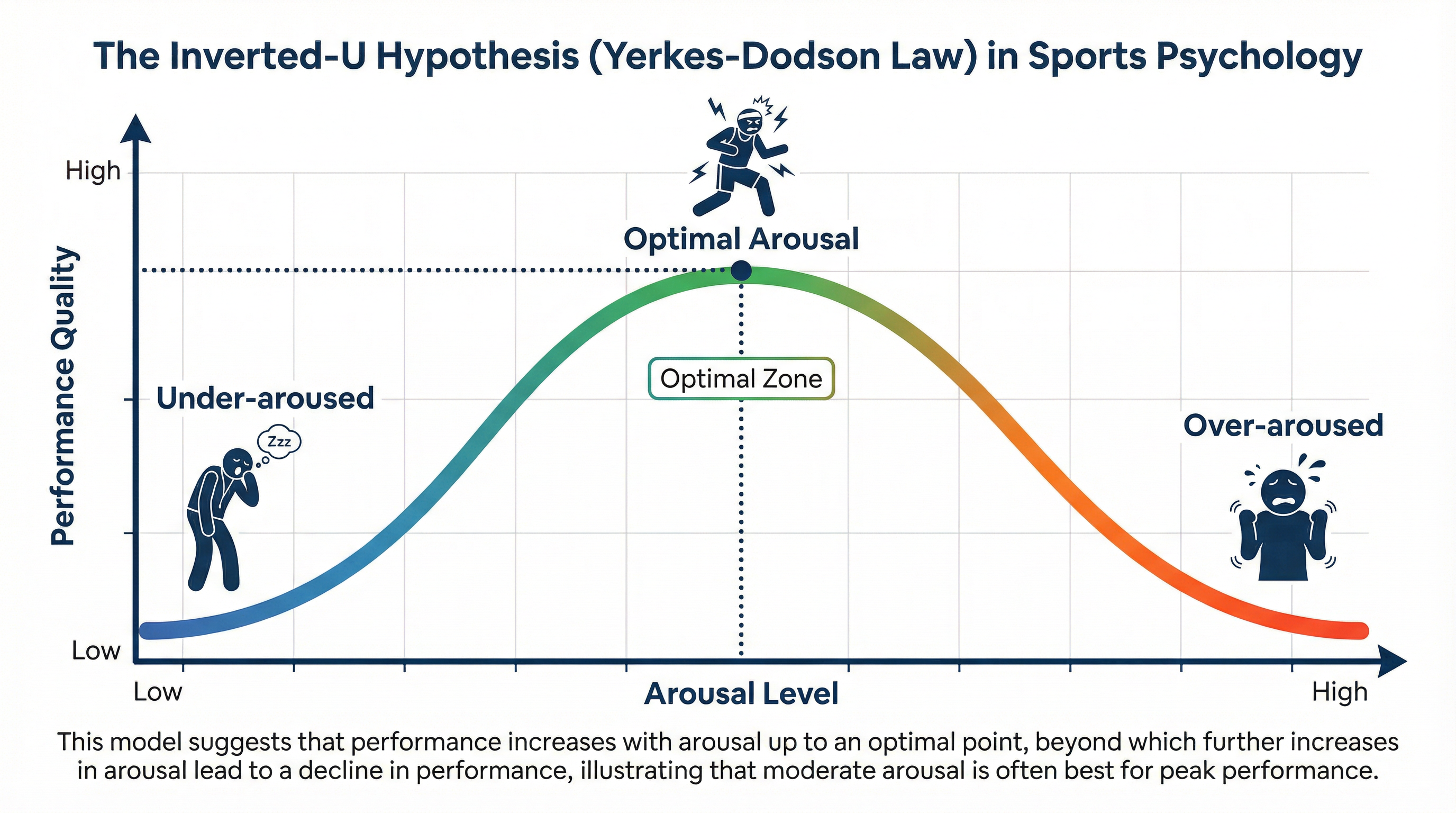
The central theory is the Inverted-U Hypothesis (also known as the Yerkes-Dodson Law). This model describes the relationship between arousal and performance. As arousal increases from a low level (e.g., just waking up), performance quality also increases. This continues until an 'optimal' point is reached, where performance is at its peak. However, if arousal continues to rise beyond this optimal zone, performance quality begins to decline sharply. This is because the performer becomes over-aroused, leading to issues like increased muscle tension, loss of fine motor control, and perceptual narrowing (where you miss important cues in your environment).
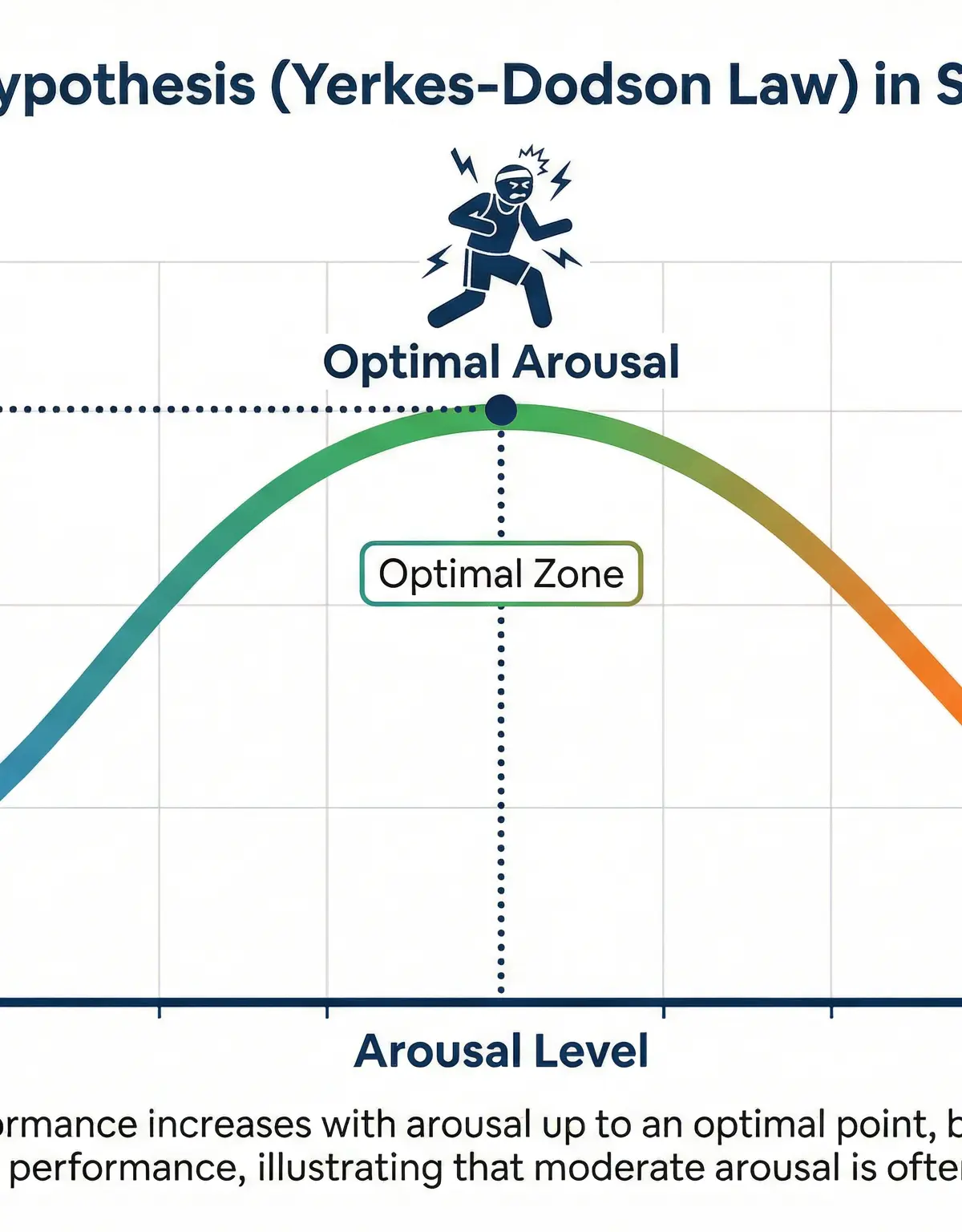
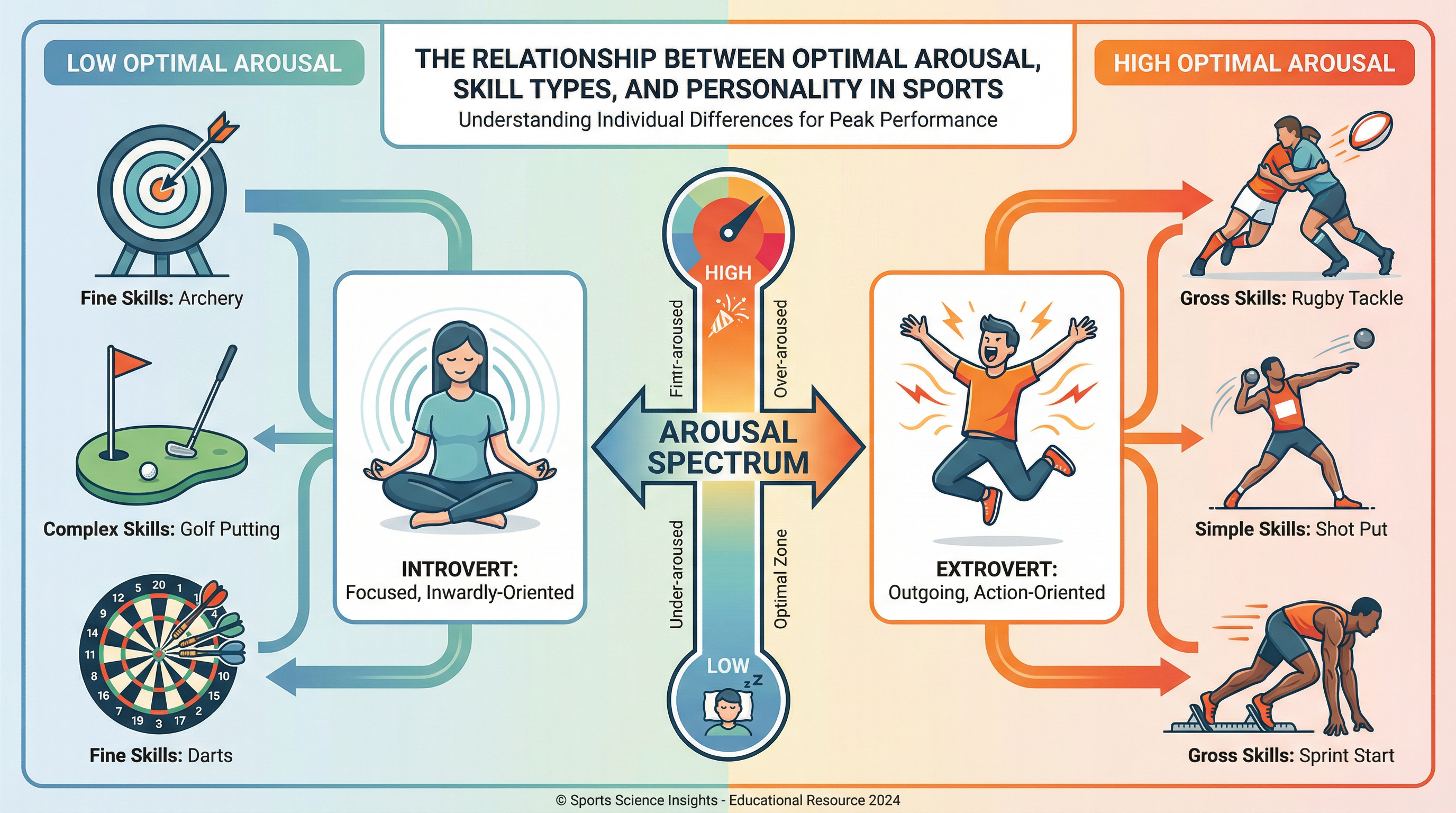
Optimal arousal levels are not universal; they depend on three key factors:
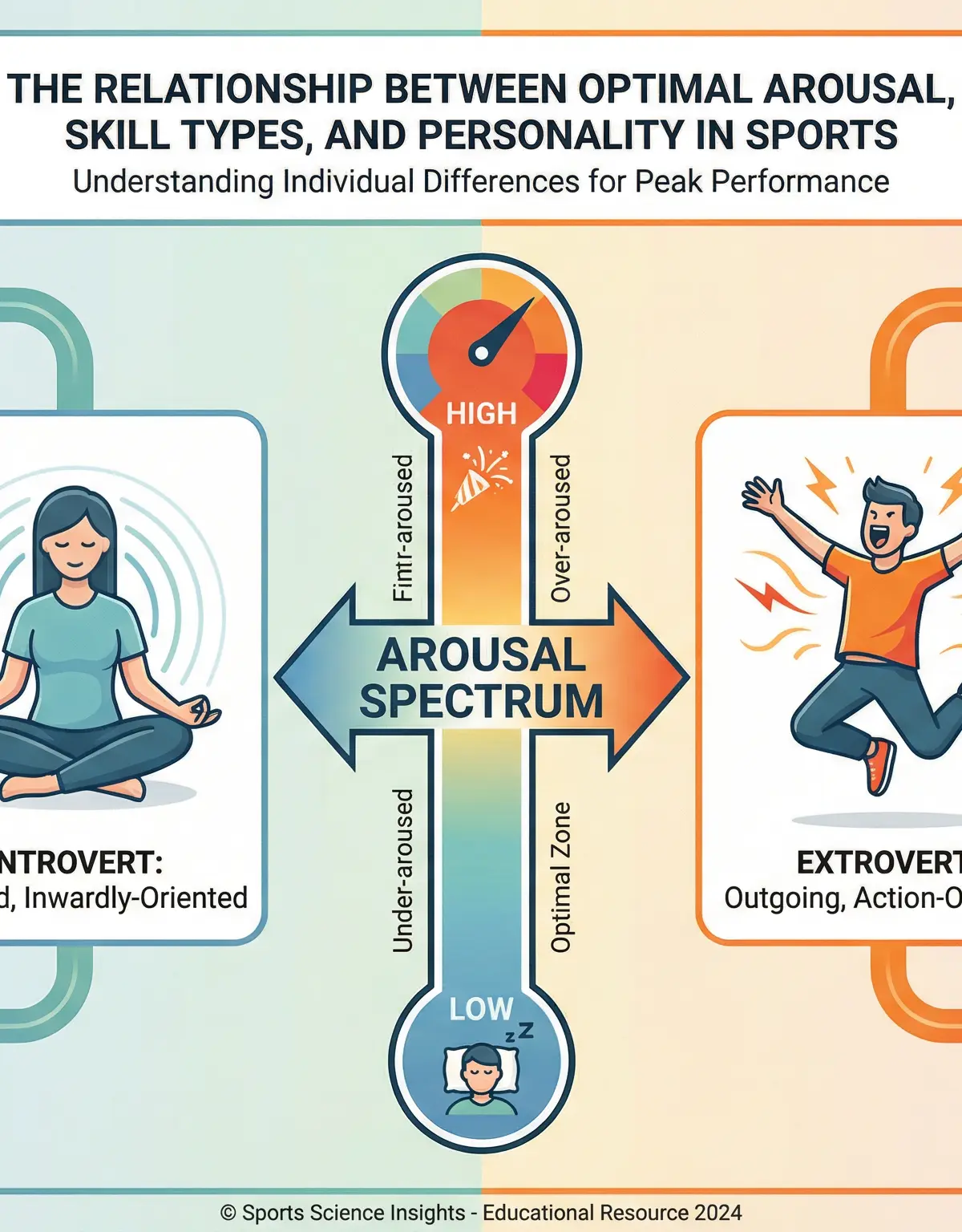
- Skill Type (Fine vs. Gross): Fine skills (e.g., archery, snooker shot) require precision and control, and are performed best at low arousal levels. Gross skills (e.g., rugby tackle, long jump) involve large muscle groups and power, and benefit from high arousal levels.
- Skill Type (Complex vs. Simple): Complex skills (e.g., a tennis serve) involve many decisions and intricate coordination, requiring low arousal for clear information processing. Simple skills (e.g., a sprint start) have few decisions and are more automatic, allowing for high arousal.
- Personality (Introvert vs. Extrovert): Introverts are naturally more internally stimulated and perform better at lower arousal levels. Extroverts require more external stimulation and often perform better at higher arousal levels.
Key Practitioners/Artists/Composers
| Name | Period/Style | Key Works | Relevance |
|---|---|---|---|
| Yerkes & Dodson | 1908 / Psychology | The relation of strength of stimulus to rapidity of habit-formation | Developed the Inverted-U Hypothesis, which is the core theoretical model for understanding arousal in sport. |
Technical Vocabulary
- Arousal: A state of physiological and psychological alertness and readiness.
- Inverted-U Hypothesis: A theory suggesting that performance increases with arousal up to an optimal point, after which it declines.
- Optimal Arousal: The perfect level of arousal for achieving the best possible performance in a specific skill.
- Over-arousal: A state where arousal is too high, leading to a decrease in performance due to anxiety, tension, and loss of focus.
- Under-arousal: A state where arousal is too low, leading to poor performance due to lack of motivation, focus, or readiness.
- Somatic Techniques: Physical methods used to manage arousal, such as deep breathing.
- Cognitive Techniques: Mental methods used to manage arousal, such as mental rehearsal or positive self-talk.
- Fine Skills: Precise movements using small muscle groups.
- Gross Skills: Large movements using major muscle groups.
- Introvert/Extrovert: Personality types that influence an individual's optimal arousal level.
Practical Skills
Techniques & Processes
Managing arousal is a practical skill for any athlete. Candidates must be able to identify and explain how to use stress management techniques to control arousal and optimise performance.
Somatic (Physical) Techniques:
- Deep Breathing: A simple but powerful technique. Inhale slowly through the nose for four counts, hold for two, and exhale slowly through the mouth for six counts. This process actively lowers heart rate, reduces muscle tension, and brings focus back to the present moment. It is highly effective for performers in high-pressure situations like a penalty shootout or a golf putt.
Cognitive (Mental) Techniques:
- Mental Rehearsal (Visualisation): The athlete imagines themselves performing the skill perfectly, from start to finish. They visualise the environment, the feel of the movement, and the successful outcome. This builds confidence and reduces anxiety by creating a mental blueprint for success. A trampolinist might mentally rehearse their routine before competing.
- Positive Self-Talk: This involves replacing negative, anxious thoughts with positive, affirming statements. Instead of thinking, "I'm going to miss this shot," a basketball player would think, "I am focused, I am calm, I will execute this free throw successfully." This reframes the situation and helps control cognitive anxiety.
Materials & Equipment
While arousal is a psychological state, its effects are physical. Understanding how equipment interacts with performance under different arousal levels is key. For example, a rock climber (complex, fine skill) who is over-aroused may grip the holds too tightly, wasting energy and increasing the risk of falling. Their ability to use their equipment (harness, ropes) safely could be compromised.
Portfolio/Coursework Guidance
Assessment Criteria
In practical assessments, while arousal isn't directly marked, its effects on performance are. Examiners look for:
- Technical Skill Execution (AO2): Is the skill performed with control, fluency, and accuracy? Over or under-arousal will negatively impact this.
- Decision Making (AO3): Does the performer make smart choices under pressure? Over-arousal can lead to poor decisions (e.g., a panicked pass in football). A performer who can manage their arousal will demonstrate better tactical awareness.
Building a Strong Portfolio
When analysing your own performance in your coursework, you can gain credit by discussing your arousal levels. For example: "In this clip of my badminton match, my arousal was too high, causing me to hit several smashes out of the back of the court. To improve, I used deep breathing between points to lower my arousal to a more optimal level, which increased my control for the rest ofthe game." This shows a sophisticated understanding (AO3).
Exam Component
Written Exam Knowledge
The written paper will test your theoretical knowledge of arousal. You must be able to:
- Define arousal.
- Draw and/or explain the Inverted-U Hypothesis graph.
- Explain how skill type and personality affect optimal arousal.
- Apply your knowledge to a given sporting scenario.
- Describe and explain stress management techniques to control arousal.

Practical Exam Preparation
In your practical exam, you are under pressure. This is a real-world test of your ability to manage arousal. Before your performance, use mental rehearsal to visualise success. If you feel your heart racing and your hands sweating (somatic signs of over-arousal), use deep breathing to calm yourself down. Staying within your optimal arousal zone is key to performing your best on the day.
Visual Resources
2 diagrams and illustrations
Interactive Diagrams
1 interactive diagram to visualise key concepts
Conceptual Flow Outline
A simplified flowchart showing the stages of the Inverted-U Hypothesis.
Worked Examples
3 worked examples — open one to explore the question and available guidance.
Practice Questions
Test your understanding — click to reveal model answers
Identify the type of skill and optimal arousal level required for a snooker player.
Hint: Think about the level of precision and concentration needed.
Describe the Inverted-U Hypothesis. (4 marks)
Hint: Explain the relationship between arousal and performance from low to high arousal, including the key turning point.
An extroverted rugby player is about to make a tackle. Explain the likely optimal arousal level for this player and why. (4 marks)
Hint: Connect the personality (extrovert) and the skill type (gross, simple) to the required arousal level.
Evaluate the use of mental rehearsal for a gymnast preparing for a floor routine. (6 marks)
Hint: Discuss the strengths of the technique but also consider any potential limitations. Make a final judgement.