OCR · A-Level · Psychology
Course version: H567 · Version from Sept 2015
Background: With reference to psychology, learners should be able to…
Full specification wording
2c. Content of Applied psychology (Component 03): Background: With reference to psychology, learners should be able to explain and exemplify the background and consider relevant issues and debates in relation to the topic area.
Learners must explain and exemplify the background of a topic area, detailing the theories, definitions, and earlier findings that contextualise key research.
- Point 1 of 4
- 3 key terms
Study notes
From the teaching notes for this specification point.
The idea
Learners must explain and exemplify the background of a topic area, detailing the theories, definitions, and earlier findings that contextualise key research. For example, in criminal psychology, this involves explaining how cognitive bias affects fingerprint identification. In mental health, it involves defining abnormality and the development of classification systems. You must also consider relevant issues and debates in relation to the topic area. High-quality responses integrate concrete examples alongside theoretical explanations and explicitly link the background material to debates, such as discussing whether a biological account of offending is reductionist, determinist, or socially sensitive.
What earns the marks
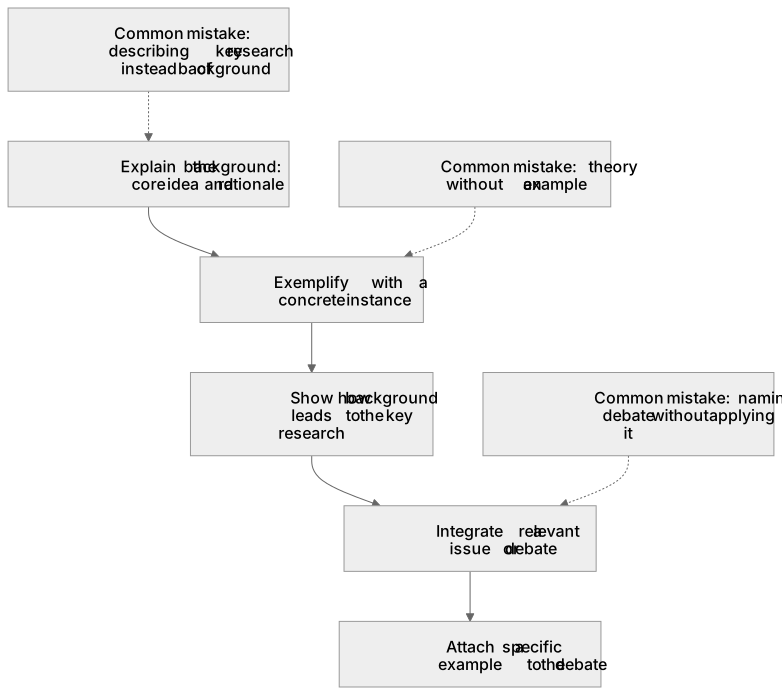
- Explaining the background requires outlining the core idea and its rationale, such as defining abnormality and its underlying assumptions.
- Exemplifying means providing a concrete instance; follow the theory with a named case or realistic situation rather than just rewording the theory.
- Credit is awarded for demonstrating how the background context logically leads to the key research conducted in that area.
- Integrating a relevant debate with a specific example attached, rather than merely naming the debate, demonstrates higher-level understanding of the issues and debates.
Common mistakes and how to put them right
Describing the key research when asked for the background.
Put it right: Focus on the theories and earlier findings that preceded and justified the key research.
Providing theory without an example.
Put it right: Include a specific example, as exemplifying is explicitly required by the specification.
Naming a debate without applying it.
Put it right: Explain exactly how the debate applies to the background, such as specifying what is being reduced in a reductionist explanation.
Exam tips
- Background questions often require concise answers; practise delivering one clear theoretical point paired with one specific example.
- Prepare at least one relevant issue or debate for every topic area, ensuring you can apply it directly to the background context.
Try the lesson
The start of the 2c. Content of Applied psychology (Component 03): Background: With reference to psychology, learners should be able to explain and exemplify the background and consider relevant issues and debates in relation to the topic area. lesson, made from teaching notes for this specification point.
Have a go first
A student is writing about the background of an applied psychology topic. Which of the following statements successfully integrates the background literature with a relevant psychological debate?
Listen
Learners must explain and exemplify the background of a topic area, detailing the theories, definitions, and earlier findings that contextualise key research. For example, in criminal psychology, this involves explaining how cognitive bias affects fingerprint identification. In mental health, it involves defining abnormality and the development of classification systems. You must also consider relevant issues and debates in relation to the topic area. High-quality responses integrate concrete examples alongside theoretical explanations and explicitly link the background material to debates, such as discussing whether a biological account of offending is reductionist, determinist, or socially sensitive. A strong answer earns marks for these points. Explaining the background requires outlining the core idea and its rationale, such as defining abnormality and its underlying assumptions. Exemplifying means providing a concrete instance; follow the theory with a named case or realistic situation rather than just rewording the theory. Credit is awarded for demonstrating how the background context logically leads to the key research conducted in that area. Integrating a relevant debate with a specific example attached, rather than merely naming the debate, demonstrates higher-level understanding of the issues and debates. A common slip: Describing the key research when asked for the background. Instead, Focus on the theories and earlier findings that preceded and justified the key research. Exam tip: Background questions often require concise answers; practise delivering one clear theoretical point paired with one specific example.
See it
Key words
Say what each word means before you turn the card.
theoretical background
Try answering aloud or in your head before turning the card.
exemplification
Try answering aloud or in your head before turning the card.
issues and debates
Try answering aloud or in your head before turning the card.
See every definition
- theoretical background
- The theories, definitions, and earlier findings that contextualise key research in a topic area.
- exemplification
- Providing a concrete instance, following the theory with a named case or realistic situation rather than just rewording the theory.
- issues and debates
- Relevant psychological debates that must be considered in relation to the topic area, with a specific example attached rather than merely naming the debate.
Label the diagram
Some boxes have lost their names. Pick the right name for each number.
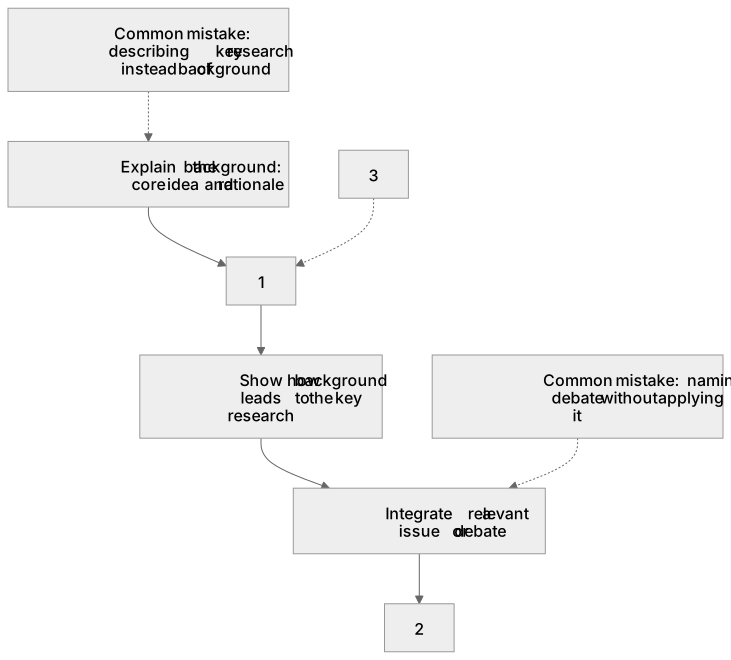
1Box 1
2Box 2
3Box 3
There is more to this lesson
The full lesson goes on to check your understanding and help you earn the marks. Create a free account to carry on, with your progress saved.
A week of Premium from your first lesson · Then the free plan continues · No card, no charge
Test your understanding of 2c. Content of Applied psychology (Component 03): Background: With reference to psychology, learners should be able to explain and exemplify the background and consider relevant issues and debates in relation to the topic area.
Active recall beats re-reading. Take an instant quiz now to test what you’ve learned and lock it into long-term memory.
A week of Premium from your first lesson · Then the free plan continues · No card, no charge