OCR · A-Level · Psychology
Course version: H567 · Version from Sept 2015
Key research: Learners should be able to describe the key research and…
Full specification wording
2c. Content of Applied psychology (Component 03): Key research: Learners should be able to describe the key research and appreciate how it relates to the topic area.
Every topic in the applied paper has one named study.
- Point 2 of 4
- 4 key terms
Study notes
From the teaching notes for this specification point.
The idea
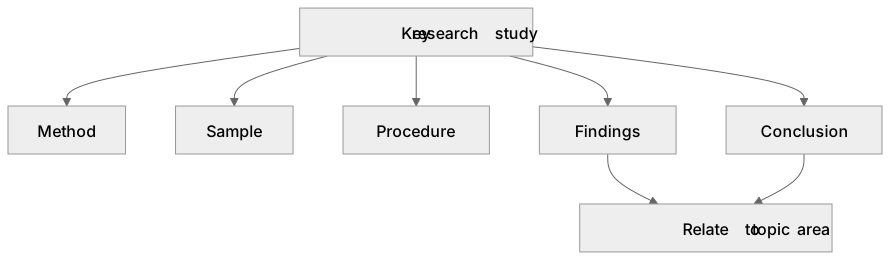
Every topic in the applied paper has one named study. Describing it means detailing the method, sample, procedure, findings and conclusion, with numbers to demonstrate accurate knowledge. For example, Dixon et al. (2002) used a matched-guise technique with 119 participants, finding that a Brummie accent, black suspect, and blue-collar crime yielded the highest guilt ratings. Hall and Player (2008) gave 70 fingerprint experts an ambiguous mark with a low or high emotional crime report; while 52% of the high-emotion group felt affected by context, it did not change their final decisions. You must also appreciate how it relates to the topic area, explaining how the key research informs our understanding of the broader psychological issue.
What earns the marks
- Describing the research requires detailing the procedure, so say what participants actually did, what was manipulated or compared, and how the outcome was measured.
- Findings should be reported as results with direction and, where you know them, with figures, since a vague statement that there was a difference is less effective than one that says which way it went.
- The link back to the topic is essential, so end by saying what the study shows about the issue the topic is built on, demonstrating an appreciation of how it relates to the topic area.
Common mistakes and how to put them right
Giving the conclusion as if it were the result, so that an answer says bias affects experts without reporting that the identification decisions did not in fact differ.
Put it right: Clearly distinguish between numerical findings and the overall conclusions drawn from them.
Inventing figures under pressure.
Put it right: A described finding without a number is safe, while a wrong number undermines everything around it; only use statistics you are certain of.
Describing the study accurately and never connecting it to the topic, which leaves the answer incomplete.
Put it right: Include a concluding sentence that explicitly states how the research relates to the topic area.
Exam tips
- Learn each study as five short lines, one each for method, sample, procedure, findings and conclusion, because that is exactly what a description question requires.
- Where a question asks how the research relates to the topic area, start with the topic and use the study as evidence rather than beginning with the study.
Try the lesson
The start of the 2c. Content of Applied psychology (Component 03): Key research: Learners should be able to describe the key research and appreciate how it relates to the topic area. lesson, made from teaching notes for this specification point.
Have a go first
What was the primary finding of Rosenhan's (1973) first experiment regarding the diagnosis of the pseudopatients?
Listen
Every topic in the applied paper has one named study. Describing it means detailing the method, sample, procedure, findings and conclusion, with numbers to demonstrate accurate knowledge. For example, Dixon et al. (2002) used a matched-guise technique with 119 participants, finding that a Brummie accent, black suspect, and blue-collar crime yielded the highest guilt ratings. Hall and Player (2008) gave 70 fingerprint experts an ambiguous mark with a low or high emotional crime report; while 52% of the high-emotion group felt affected by context, it did not change their final decisions. You must also appreciate how it relates to the topic area, explaining how the key research informs our understanding of the broader psychological issue. A strong answer earns marks for these points. Describing the research requires detailing the procedure, so say what participants actually did, what was manipulated or compared, and how the outcome was measured. Findings should be reported as results with direction and, where you know them, with figures, since a vague statement that there was a difference is less effective than one that says which way it went. The link back to the topic is essential, so end by saying what the study shows about the issue the topic is built on, demonstrating an appreciation of how it relates to the topic area. To appreciate how it relates to the topic area, explicitly connect the study's conclusions to the theoretical background, such as explaining how Dixon et al. (2002) provides evidence for the effect of accent on jury decision-making. A common slip: Giving the conclusion as if it were the result, so that an answer says bias affects experts without reporting that the identification decisions did not in fact differ. Instead, Clearly distinguish between numerical findings and the overall conclusions drawn from them. Exam tip: Learn each study as five short lines, one each for method, sample, procedure, findings and conclusion, because that is exactly what a description question requires.
See it
Key words
Say what each word means before you turn the card.
named key research
Try answering aloud or in your head before turning the card.
method and procedure
Try answering aloud or in your head before turning the card.
findings and conclusions
Try answering aloud or in your head before turning the card.
relevance to the topic
Try answering aloud or in your head before turning the card.
See every definition
- named key research
- The one study that every topic in the applied paper has, which learners should be able to describe and relate to the topic area.
- method and procedure
- Detailing what participants actually did, what was manipulated or compared, and how the outcome was measured.
- findings and conclusions
- Results reported with direction and, where known, figures, kept distinct from the overall conclusions drawn from them.
- relevance to the topic
- Explaining what the study shows about the issue the topic is built on, connecting its conclusions to the theoretical background.
Label the diagram
Some boxes have lost their names. Pick the right name for each number.
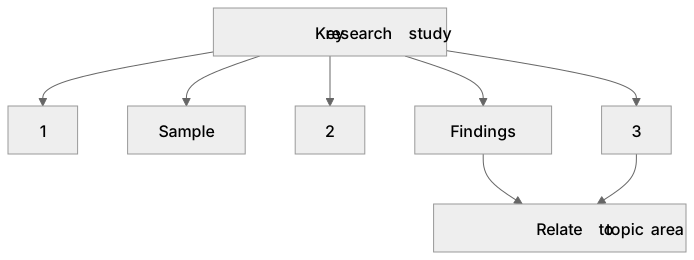
1Box 1
2Box 2
3Box 3
There is more to this lesson
The full lesson goes on to check your understanding and help you earn the marks. Create a free account to carry on, with your progress saved.
A week of Premium from your first lesson · Then the free plan continues · No card, no charge
Test your understanding of 2c. Content of Applied psychology (Component 03): Key research: Learners should be able to describe the key research and appreciate how it relates to the topic area.
Active recall beats re-reading. Take an instant quiz now to test what you’ve learned and lock it into long-term memory.
A week of Premium from your first lesson · Then the free plan continues · No card, no charge