OCR · GCSE · Psychology
Defining Psychological Problems
This study guide provides a comprehensive overview of how psychological problems are defined, a core topic for OCR GCSE Psychology. It explores the key definitions, the clinical characteristics of Schizophrenia and Depression, and the exam techniques needed to secure top marks.
- 4 min read
- 3 worked examples
- 5 practice questions
- 6 key terms
Study Notes
Overview
This topic introduces candidates to the fundamental challenge of defining what constitutes a ‘psychological problem’. For OCR GCSE Psychology (J203), a precise understanding of the distinction between ‘mental health’ and ‘mental health problems’ is crucial. The specification requires candidates to assess two key definitions — deviation from social norms and dysfunction — and to evaluate their strengths and limitations, particularly in relation to cultural relativity. Examiners expect a detailed knowledge of the clinical characteristics of Schizophrenia (positive and negative symptoms) and Depression (cognitive, emotional, and physical symptoms) as laid out in the International Classification of Diseases (ICD). Furthermore, credit is given for understanding the broader impact of these problems on individuals and society, including economic consequences. This guide will equip you with the specific knowledge, analytical skills, and exam techniques required to confidently tackle any question on this topic.

Defining Psychological Problems
Deviation from Social Norms vs. Dysfunction
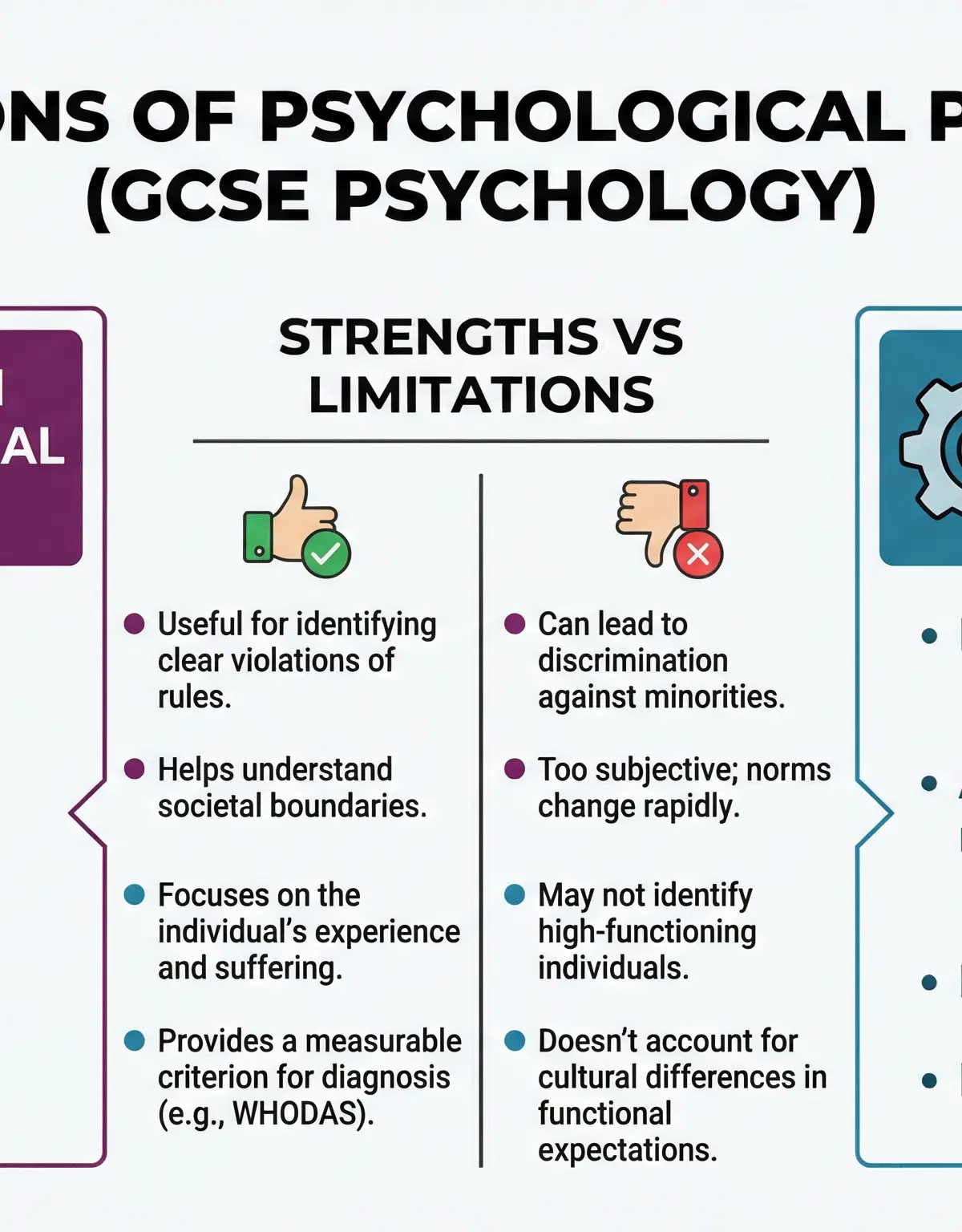
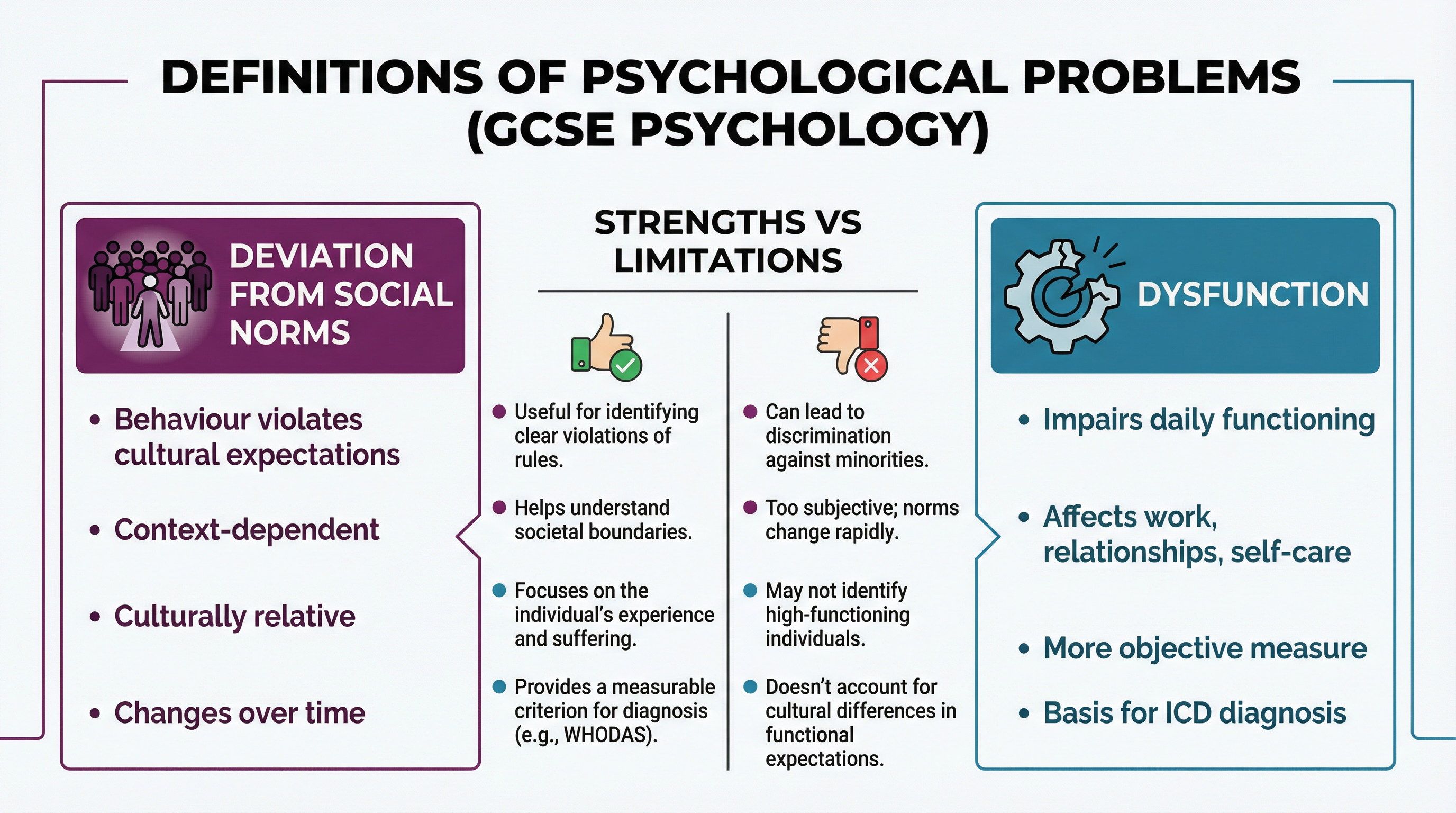
Deviation from Social Norms: This definition classifies behaviour as abnormal if it violates the unwritten rules or accepted standards of a particular society. For example, in many cultures, hearing voices would be seen as a deviation from the norm.
- Strengths: It is a practical way to identify behaviour that society finds unacceptable and can be a clear indicator when a social rule is broken.
- Limitations: This definition is highly subjective and dependent on cultural context. Social norms change over time (e.g., attitudes towards homosexuality), and what is normal in one culture may be abnormal in another. This is the concept of cultural relativity, a key evaluation point for examiners.
Dysfunction: This definition focuses on whether a person’s behaviour is preventing them from functioning adequately in their daily life. This includes their ability to work, maintain relationships, and look after themselves. The ICD-11 uses dysfunction as a core diagnostic criterion.
- Strengths: It is a more objective measure than deviation from social norms and is less culturally biased. It focuses on the individual's experience of distress and impairment.
- Limitations: What is considered ‘functional’ can still vary. A person with a high-functioning form of a disorder may not be identified by this definition alone.
Clinical Characteristics
Schizophrenia and Depression
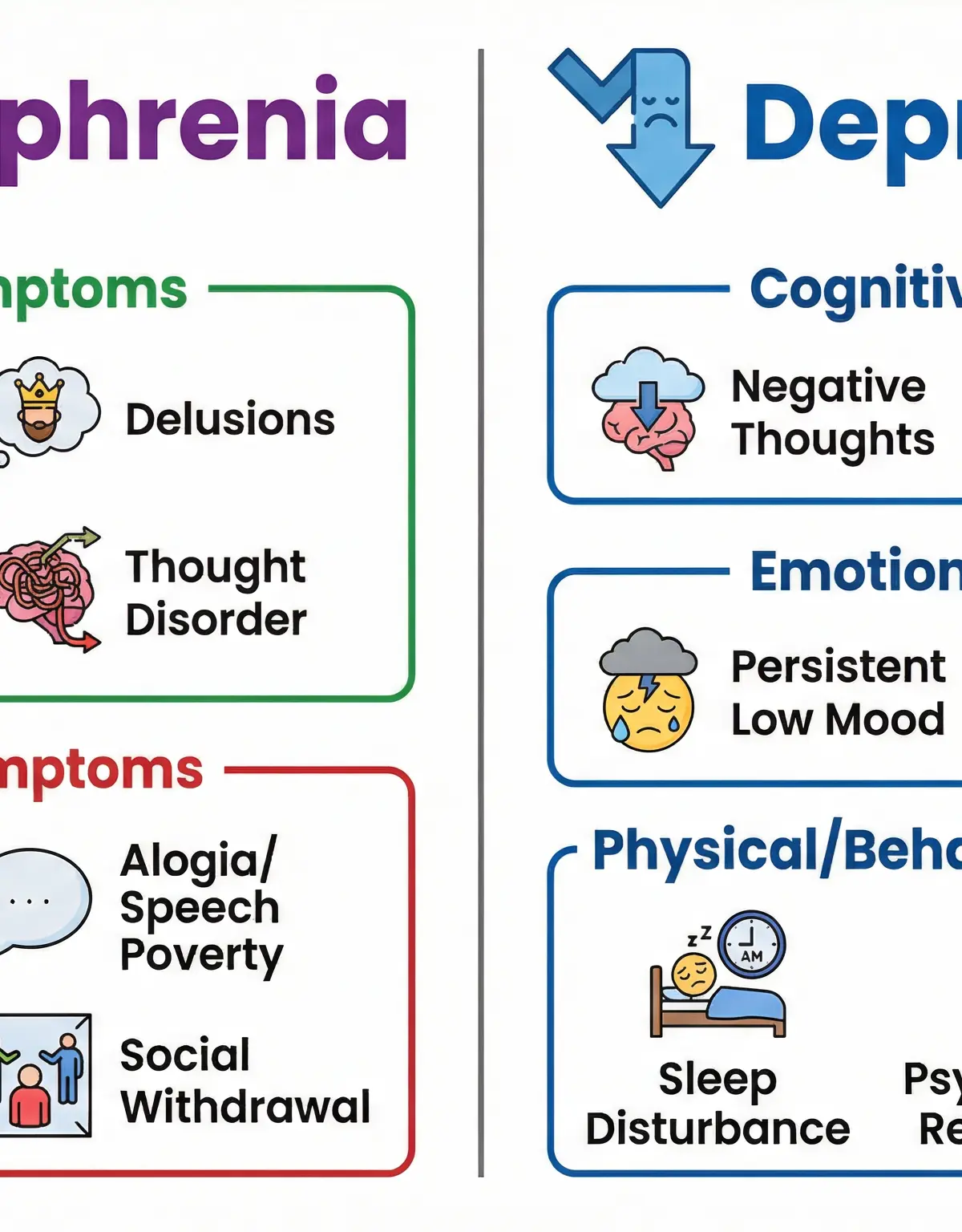
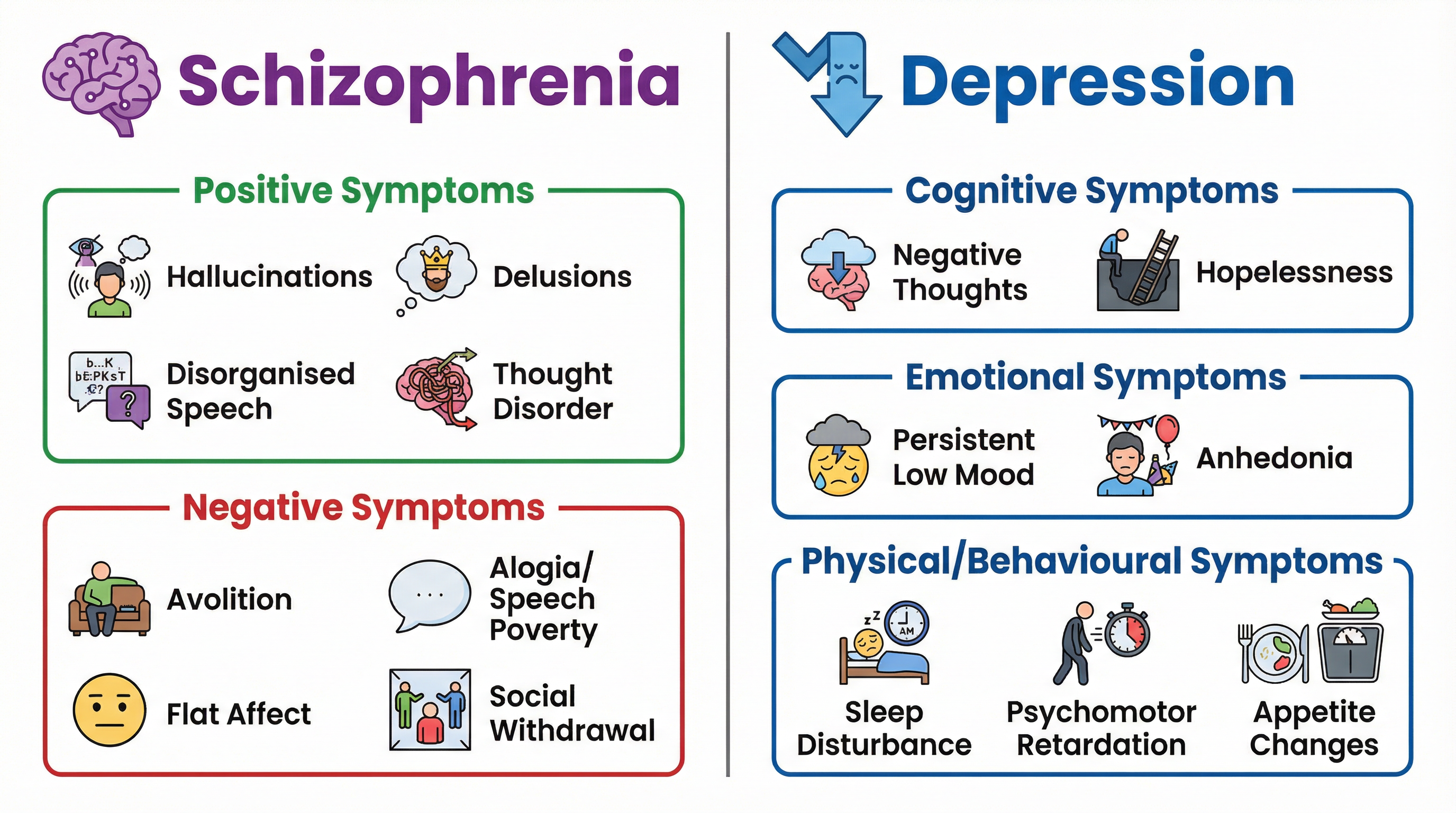
Schizophrenia: A severe, long-term psychotic disorder where a person has a break from reality. It is NOT a ‘split personality’.
- Positive Symptoms (experiences added): Hallucinations (e.g., hearing voices), Delusions (fixed, false beliefs), Disorganised Speech.
- Negative Symptoms (abilities lost): Avolition (severe lack of motivation), Alogia (speech poverty), Flat Affect (reduced emotional expression).
Depression: A mood disorder characterised by persistent low mood and loss of interest or pleasure.
- Cognitive Symptoms: Negative thoughts, hopelessness, difficulty concentrating.
- Emotional Symptoms: Persistent sadness, anhedonia (inability to feel pleasure).
- Physical/Behavioural Symptoms: Sleep disturbance, changes in appetite, psychomotor retardation (slowed movement).
Worked Examples
3 worked examples — open one to explore the question and available guidance.
Practice Questions
Test your understanding — click to reveal model answers
Explain the difference between mental health and mental health problems. (4 marks)
Hint: Think about one being a positive state and the other involving impaired functioning.
Evaluate the dysfunction definition of psychological problems. (8 marks)
Hint: Consider its strengths (objectivity) and weaknesses (context, high-functioning individuals).
Outline two negative symptoms of schizophrenia. (4 marks)
Hint: Think about what is 'taken away' from normal functioning.
Explain how cultural relativity affects the definition of psychological problems. (6 marks)
Hint: Focus on the 'deviation from social norms' definition and provide a specific example.
Describe the clinical characteristics of depression. (6 marks)
Hint: Include at least one symptom from each category: emotional, cognitive, and physical.