OCR · GCSE · Psychology
Theories of Dreaming
This study guide provides a comprehensive overview of the two major theories of dreaming for OCR GCSE Psychology: Freud's psychodynamic theory of wish fulfillment and Hobson & McCarley's biological Activation-Synthesis theory. It is designed to help students master the key concepts, evaluation points, and exam techniques required to achieve top marks."
- 5 min read
- 3 worked examples
- 2 practice questions
Study Notes
Overview
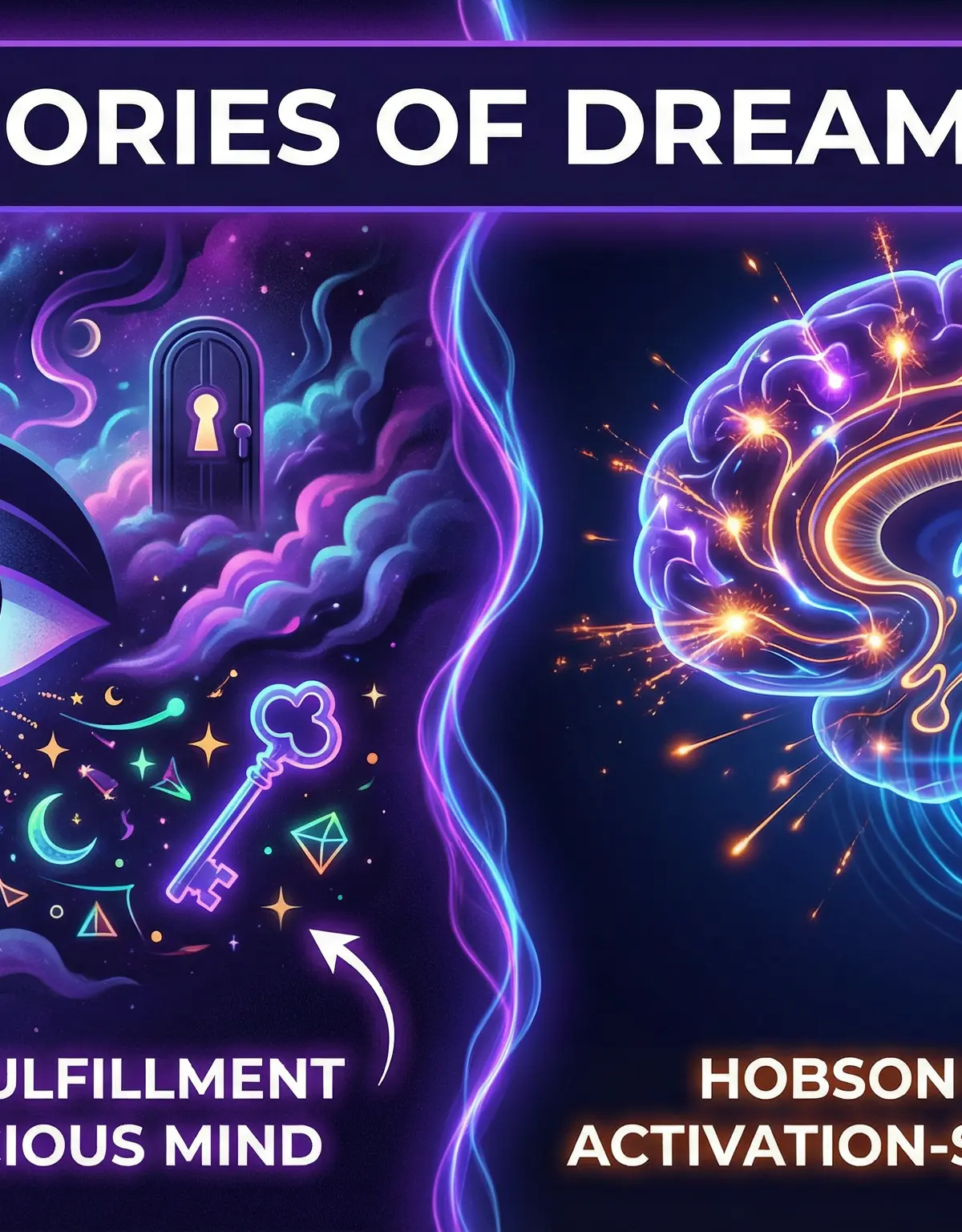
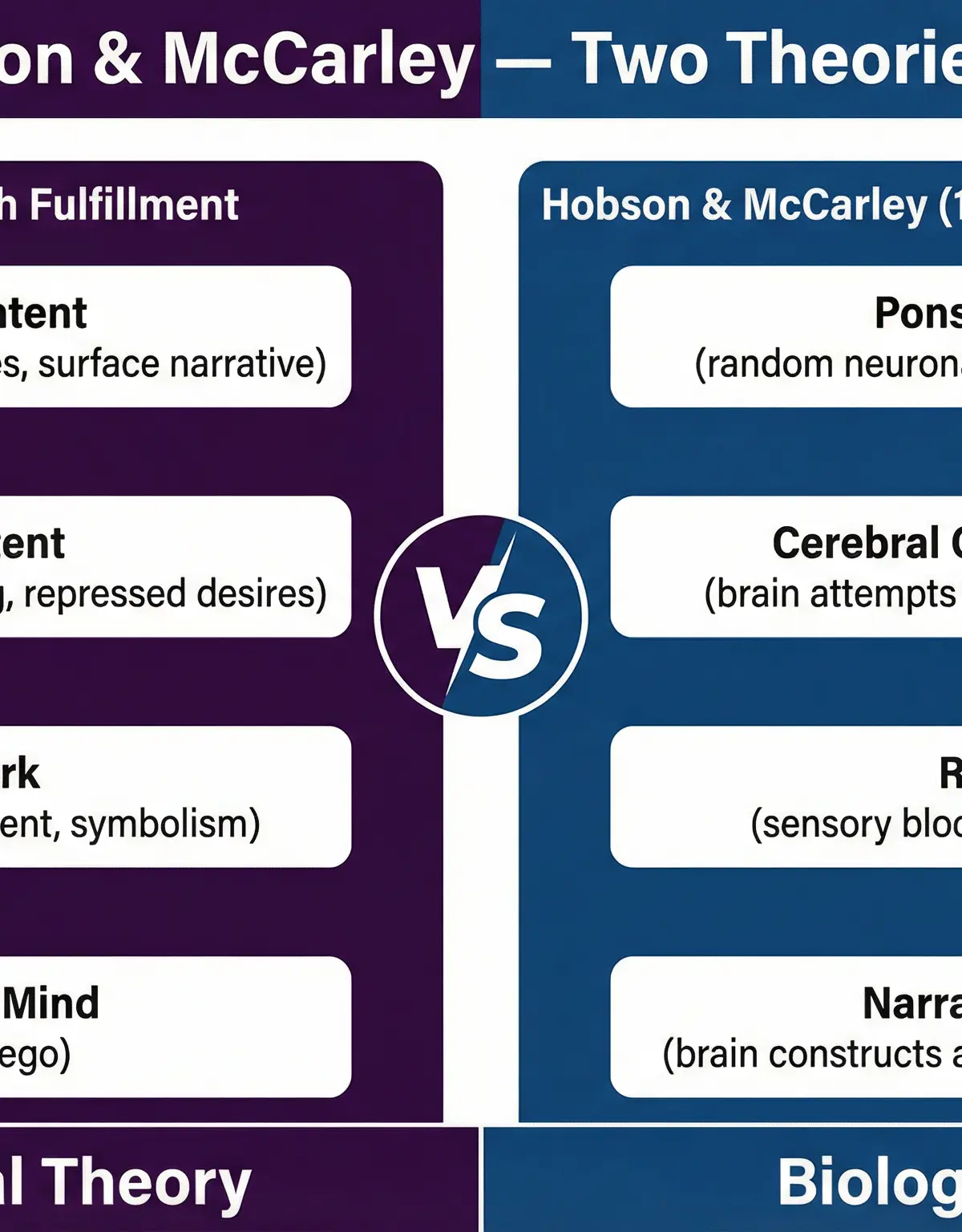
This guide explores the two contrasting scientific explanations for why we dream: Sigmund Freud's psychodynamic theory of wish fulfillment (1900) and Hobson & McCarley's biological Activation-Synthesis theory (1977). For the OCR GCSE Psychology exam, candidates are expected to not only describe these two theories accurately (AO1) but also to apply them to novel scenarios (AO2) and critically evaluate their strengths and weaknesses using evidence (AO3). Mastery of this topic requires a clear understanding of the fundamental difference between a psychological explanation, which focuses on meaning and unconscious desires, and a biological explanation, which focuses on the physiological processes of the brain during sleep. This guide will equip you with the specific knowledge, terminology, and analytical skills needed to excel.
Key Individuals
Sigmund Freud
Role: Founder of psychoanalysis and originator of the first major scientific theory of dreaming.
Key Actions: In his 1900 book, The Interpretation of Dreams, Freud proposed that dreams are a form of wish fulfillment, allowing the unconscious mind to express repressed desires in a disguised form.
Impact: Freud's theory revolutionised the study of the mind and introduced key concepts like the unconscious, manifest content, and latent content. While his methods are now criticised for being unscientific, his influence on psychology and culture is undeniable.
J. Allan Hobson & Robert McCarley
Role: Neuroscientists who proposed the Activation-Synthesis theory of dreaming.
Key Actions: In 1977, they published their theory, arguing that dreams are the result of the cerebral cortex trying to make sense of random neuronal signals fired by the pons during REM sleep.
Impact: Their theory provided a biological, evidence-based alternative to Freud's psychological explanation. It grounded the study of dreaming in observable brain activity, making it more scientifically credible and testable.
Core Concepts Explained
Freud's Theory of Wish Fulfillment
The Unconscious Mind: Freud believed the mind was like an iceberg, with only the tip (the conscious mind) visible. Beneath the surface lies the vast unconscious, a storehouse of repressed desires, fears, and memories that drive our behaviour.
Wish Fulfillment: The core idea is that dreams are a safety valve for the unconscious. They allow us to satisfy our deepest wishes, which are often unacceptable to our conscious mind, in a safe, symbolic way.
Manifest vs. Latent Content: This is a crucial distinction. The manifest content is the actual story of the dream as the dreamer experiences it (e.g., dreaming of flying). The latent content is the hidden, true meaning of the dream (e.g., the desire for freedom). Credit is always given for using these terms correctly.
Dream Work: This is the process that transforms the latent content into the manifest content. It includes:
- Condensation: Multiple ideas are fused into a single image.
- Displacement: Emotions are shifted from their real target to a safer one.
- Symbolism: Objects or images are used to represent something else (e.g., a key representing a solution).
Hobson & McCarley's Activation-Synthesis Theory
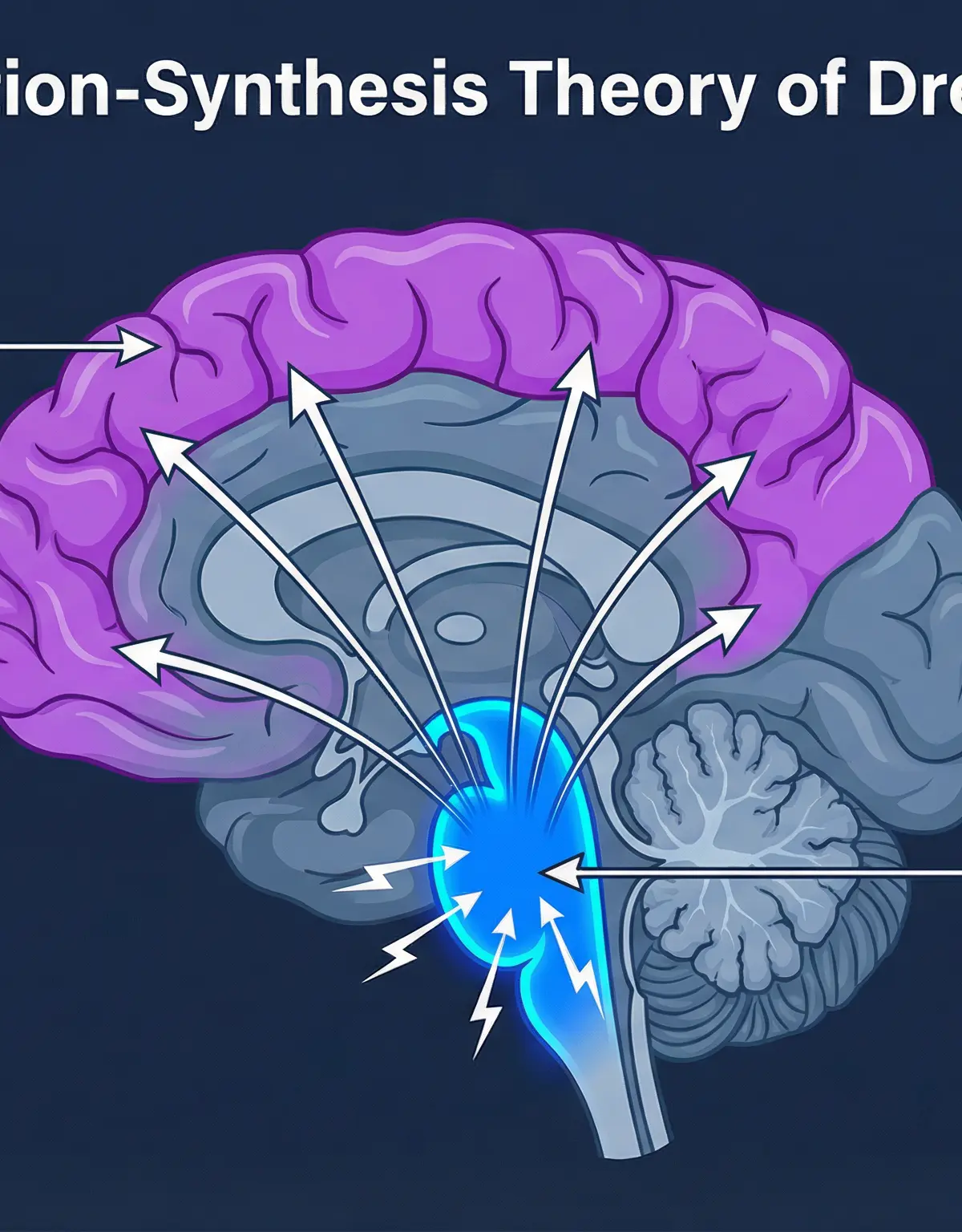
Activation: During REM (Rapid Eye Movement) sleep, a part of the brainstem called the pons becomes highly active and fires off random bursts of electrical signals. These signals have no inherent meaning.
Synthesis: The brain's higher-level thinking area, the cerebral cortex, receives these random signals and tries to create a coherent story or narrative from them. It synthesises the random input into the dream we experience.
Role of REM Sleep: This theory is specifically linked to REM sleep, a stage characterised by rapid eye movements, muscle paralysis (motor paralysis), and the brain blocking out most external stimuli (sensory blockade). This blockade is why the internally generated signals feel so real.
Meaning in Activation-Synthesis: A common mistake is to say this theory claims dreams are 'meaningless'. This is incorrect. The origin of the dream (the activation) is random, but the synthesis process is unique to the individual. The way your brain weaves a story reflects your own memories, experiences, and concerns. Therefore, the final dream narrative can be psychologically significant, even if it wasn't 'sent' by the unconscious with a hidden purpose.
Podcast Episode: Theories of Dreaming

Worked Examples
3 worked examples — open one to explore the question and available guidance.
Practice Questions
Test your understanding — click to reveal model answers
Describe the Activation-Synthesis theory of dreaming. (4 marks)
Hint: Think about the two key stages: what happens first and where? What happens second and where?
Compare Freud's theory of dreaming with the Activation-Synthesis theory. (8 marks)
Hint: Aim for two points of comparison (one similarity, one difference) and two points of contrast (differences). For each point, explain it for both theories.