AQA · GCSE · Religious Studies
Course version: 8062 · Version from Sept 2018
The Torah, the Psalms, the Gospel, the Scrolls of Abraham and their…
Full specification wording
Beliefs and teachings: the Torah, the Psalms, the Gospel, the Scrolls of Abraham and their authority.
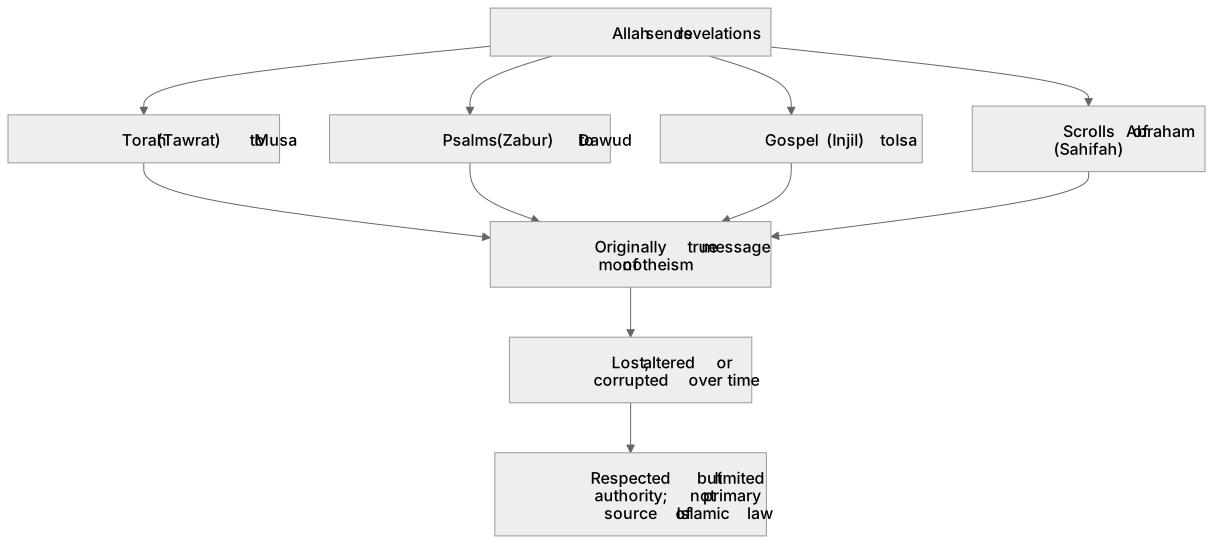
Islam teaches that Allah sent revelations to various prophets before Muhammad, including the Torah (Tawrat) given to Musa (Moses), the Psalms (Zabur) given to Dawud (David), the Gospel (Injil)…
Checked against the AQA 8062 specification (opens in a new tab) on .
- Point 12 of 13
Study notes
From the checked teaching notes for this specification point.
The idea
Islam teaches that Allah sent revelations to various prophets before Muhammad, including the Torah (Tawrat) given to Musa (Moses), the Psalms (Zabur) given to Dawud (David), the Gospel (Injil) given to Isa (Jesus), and the Scrolls of Abraham (Sahifah). These texts originally contained the true message of monotheism and submission to God. However, Muslims believe these earlier scriptures have been lost, altered, or corrupted over time by human interference. Consequently, while they hold historical and spiritual authority as original divine revelations, their current forms lack the absolute, uncorrupted authority of the Qur'an. They are respected but are not used as the primary source of Islamic law or practice.
What earns the marks
- The Torah (Tawrat) was revealed to Musa (Moses) and is respected as an early revelation of God's law.
- The Psalms (Zabur) were revealed to Dawud (David) and contain hymns praising God.
- The Gospel (Injil) was revealed to Isa (Jesus) and prophesied the coming of Muhammad.
- The Scrolls of Abraham (Sahifah) are considered one of the earliest revelations, though they are now lost.
Common mistakes and how to put them right
Claiming Muslims completely reject the Torah, Psalms, and Gospel.
Put it right: Muslims respect them as original divine revelations, but believe their current forms have been altered.
Confusing the prophets associated with each text.
Put it right: Ensure you correctly match Musa to the Torah, Dawud to the Psalms, and Isa to the Gospel.
Stating these texts have equal authority to the Qur'an in Islam.
Put it right: Only the Qur'an is viewed as the final, uncorrupted word of God, giving it supreme authority over earlier texts.
Exam tips
- Use the Arabic names for the texts (Tawrat, Zabur, Injil, Sahifah) alongside the English names to secure higher marks.
- When asked about holy books, explicitly mention the concept of corruption (tahrif) to explain why earlier texts have diminished authority.
- Compare the temporary or altered nature of these earlier scriptures with the eternal, preserved nature of the Qur'an.
Try the lesson
The start of the Beliefs and teachings: the Torah, the Psalms, the Gospel, the Scrolls of Abraham and their authority. lesson, made from checked teaching notes for this specification point.
Have a go first
According to Islamic teachings, to which prophet was the Injil (Gospel) revealed?
Listen
Islam teaches that Allah sent revelations to various prophets before Muhammad, including the Torah (Tawrat) given to Musa (Moses), the Psalms (Zabur) given to Dawud (David), the Gospel (Injil) given to Isa (Jesus), and the Scrolls of Abraham (Sahifah). These texts originally contained the true message of monotheism and submission to God. However, Muslims believe these earlier scriptures have been lost, altered, or corrupted over time by human interference. Consequently, while they hold historical and spiritual authority as original divine revelations, their current forms lack the absolute, uncorrupted authority of the Qur'an. They are respected but are not used as the primary source of Islamic law or practice. A strong answer earns marks for these points. The Torah (Tawrat) was revealed to Musa (Moses) and is respected as an early revelation of God's law. The Psalms (Zabur) were revealed to Dawud (David) and contain hymns praising God. The Gospel (Injil) was revealed to Isa (Jesus) and prophesied the coming of Muhammad. The Scrolls of Abraham (Sahifah) are considered one of the earliest revelations, though they are now lost. A common slip: Claiming Muslims completely reject the Torah, Psalms, and Gospel. Instead, Muslims respect them as original divine revelations, but believe their current forms have been altered. Exam tip: Use the Arabic names for the texts (Tawrat, Zabur, Injil, Sahifah) alongside the English names to secure higher marks.
See it
Label the diagram
Some boxes have lost their names. Pick the right name for each number.
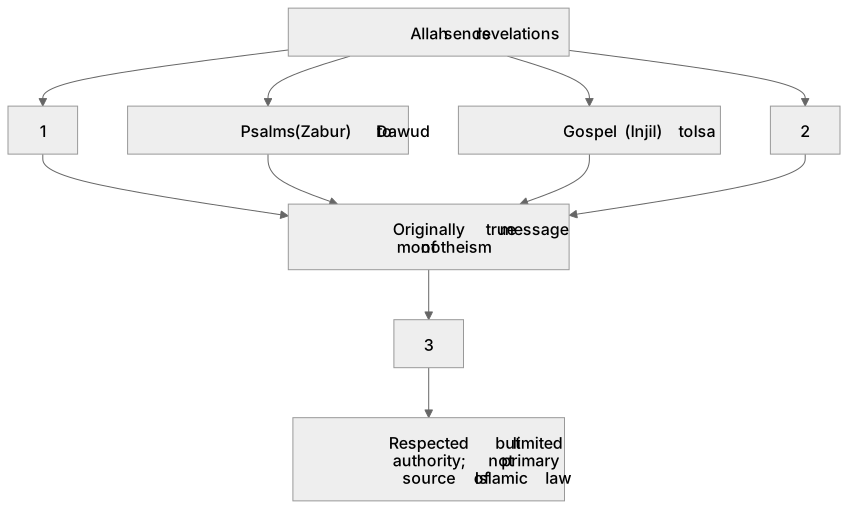
1Box 1
2Box 2
3Box 3
There is more to this lesson
The full lesson goes on to check your understanding and help you earn the marks. Create a free account to carry on, with your progress saved.
A week of Premium from your first lesson · Then the free plan continues · No card, no charge
Test your understanding of Beliefs and teachings: the Torah, the Psalms, the Gospel, the Scrolls of Abraham and their authority.
Active recall beats re-reading. Take an instant quiz now to test what you’ve learned and lock it into long-term memory.
A week of Premium from your first lesson · Then the free plan continues · No card, no charge