AQA · GCSE · Religious Studies
Course version: 8062 · Version from Sept 2018
Christianity - 3.1.2.2 Practices: the meaning of sacrament
The meaning of a sacrament is fundamentally rooted in the concept of grace, traditionally defined as an outward, visible sign of an inward, spiritual grace.
Checked against the AQA 8062 specification (opens in a new tab) on .
- Point 7 of 20
- 3 key terms
Study notes
From the checked teaching notes for this specification point.
The idea
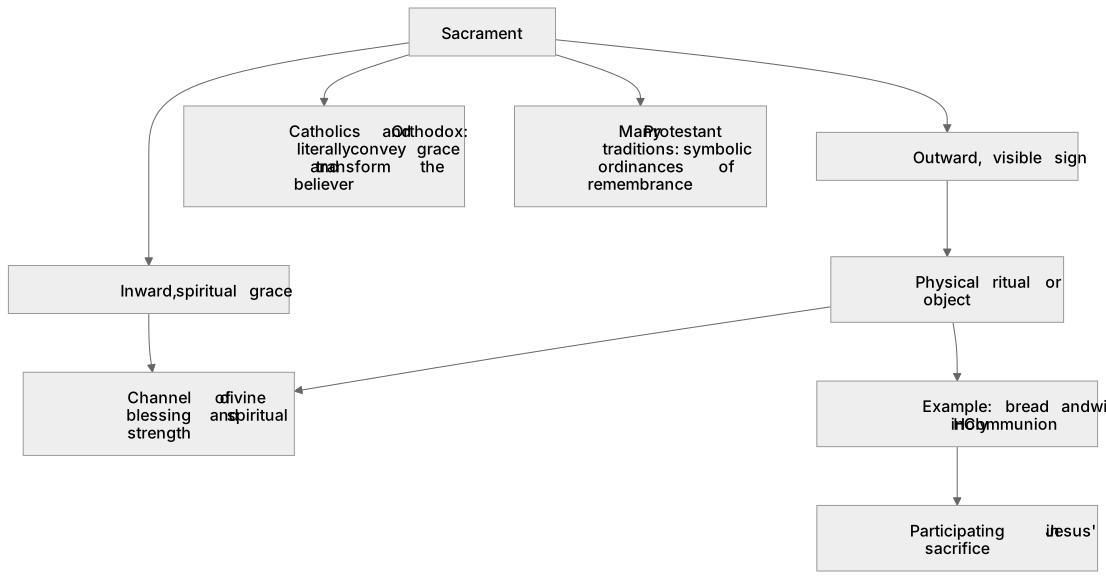
The meaning of a sacrament is fundamentally rooted in the concept of grace, traditionally defined as an outward, visible sign of an inward, spiritual grace. It means that a physical ritual or object becomes a channel through which God imparts divine blessing and spiritual strength to a believer. For example, the physical act of consuming bread and wine in Holy Communion holds the profound meaning of participating in Jesus' sacrifice. The theological meaning varies across denominations: Catholics and Orthodox Christians believe sacraments literally convey grace and transform the believer, whereas many Protestant traditions understand them primarily as symbolic ordinances that Jesus commanded his followers to perform as acts of remembrance.
What earns the marks
- Identify a sacrament as a holy ritual that outwardly expresses an inward spiritual grace.
- Explain that the meaning involves God using physical elements to impart spiritual blessings.
- Differentiate between the Catholic view of sacraments as literal channels of grace and the Protestant view of them as symbolic ordinances.
- Provide a specific example, such as how the water in baptism means the washing away of sin and spiritual rebirth.
Common mistakes and how to put them right
Defining a sacrament simply as a 'church service'.
Put it right: Define it specifically as a ritual that imparts or symbolises divine grace.
Assuming the meaning of a sacrament is identical across all Christian traditions.
Put it right: Contrast the sacramental view of imparting grace with the ordinance view of symbolic obedience.
Forgetting to mention the concept of 'grace' when explaining the meaning.
Put it right: Include 'grace' as the core spiritual component that gives a sacrament its meaning.
Exam tips
- Use the phrase 'outward sign of inward grace' to concisely capture the meaning of a sacrament.
- When asked about meaning, contrast the idea of a literal channel of grace with a symbolic act of remembrance.
- Support your explanation of meaning with a concrete example, such as the bread and wine in the Eucharist.
Try the lesson
The start of the Christianity - 3.1.2.2 Practices: the meaning of sacrament lesson, made from checked teaching notes for this specification point.
Have a go first
Which phrase is most commonly used in Christian theology to define the meaning of a sacrament?
Listen
The meaning of a sacrament is fundamentally rooted in the concept of grace, traditionally defined as an outward, visible sign of an inward, spiritual grace. It means that a physical ritual or object becomes a channel through which God imparts divine blessing and spiritual strength to a believer. For example, the physical act of consuming bread and wine in Holy Communion holds the profound meaning of participating in Jesus' sacrifice. The theological meaning varies across denominations: Catholics and Orthodox Christians believe sacraments literally convey grace and transform the believer, whereas many Protestant traditions understand them primarily as symbolic ordinances that Jesus commanded his followers to perform as acts of remembrance. A strong answer earns marks for these points. Identify a sacrament as a holy ritual that outwardly expresses an inward spiritual grace. Explain that the meaning involves God using physical elements to impart spiritual blessings. Differentiate between the Catholic view of sacraments as literal channels of grace and the Protestant view of them as symbolic ordinances. Provide a specific example, such as how the water in baptism means the washing away of sin and spiritual rebirth. A common slip: Defining a sacrament simply as a 'church service'. Instead, Define it specifically as a ritual that imparts or symbolises divine grace. Exam tip: Use the phrase 'outward sign of inward grace' to concisely capture the meaning of a sacrament.
See it
Key words
Say what each word means before you turn the card.
Grace
Try answering aloud or in your head before turning the card.
Symbolism vs literalism
Try answering aloud or in your head before turning the card.
Holy rituals
Try answering aloud or in your head before turning the card.
See every definition
- Grace
- An inward, spiritual gift that a sacrament outwardly signifies and through which God imparts divine blessing and spiritual strength to a believer.
- Symbolism vs literalism
- The difference between Protestant traditions understanding sacraments as symbolic ordinances of remembrance and Catholics and Orthodox Christians believing they literally convey grace and transform the believer.
- Holy rituals
- Outward, visible signs of an inward, spiritual grace that outwardly express an inward spiritual grace.
Label the diagram
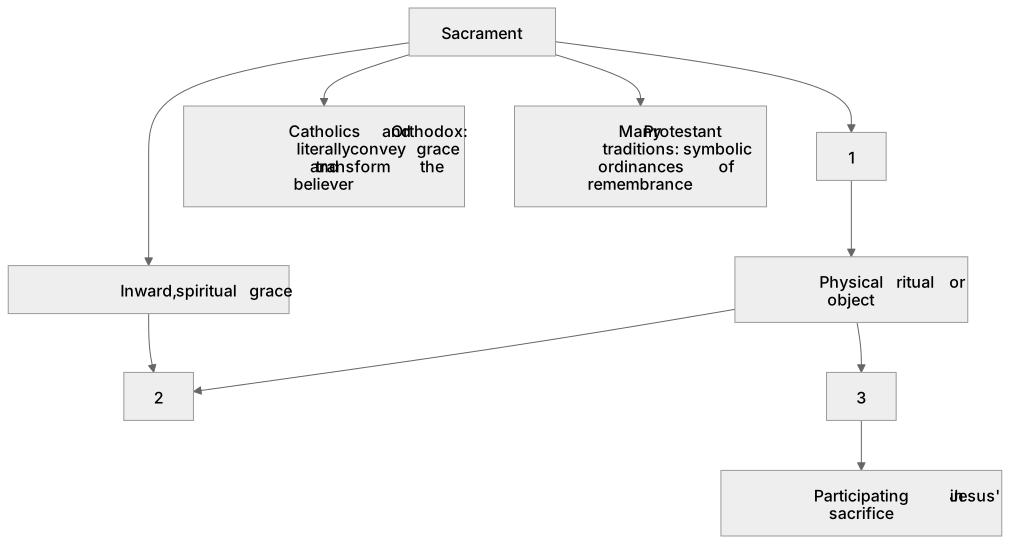
Some boxes have lost their names. Pick the right name for each number.
1Box 1
2Box 2
3Box 3
There is more to this lesson
The full lesson goes on to check your understanding and help you earn the marks. Create a free account to carry on, with your progress saved.
A week of Premium from your first lesson · Then the free plan continues · No card, no charge
Test your understanding of Christianity - 3.1.2.2 Practices: the meaning of sacrament
Active recall beats re-reading. Take an instant quiz now to test what you’ve learned and lock it into long-term memory.
A week of Premium from your first lesson · Then the free plan continues · No card, no charge