AQA · GCSE · Religious Studies
Course version: 8062 · Version from Sept 2018
Mitzvot between man and God and mitzvot between man and man, including the…
Full specification wording
Judaism - 3.1.6.1 Beliefs and teachings: Mitzvot between man and God and mitzvot between man and man, including the difference between them and their importance.
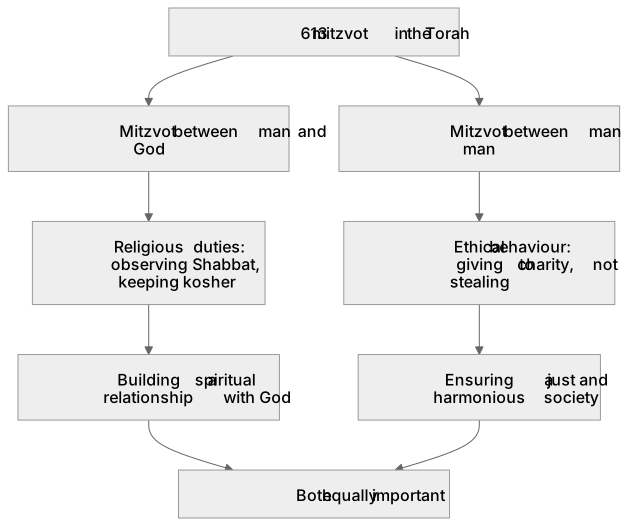
The 613 mitzvot (commandments) in the Torah are divided into two main categories.
- Point 15 of 15
- 4 key terms
Study notes
From the teaching notes for this specification point.
The idea
The 613 mitzvot (commandments) in the Torah are divided into two main categories. Mitzvot between humans and God (Ben Adam le-Makom) guide religious duties, such as observing Shabbat or keeping kosher, focusing on building a spiritual relationship with the Almighty. Mitzvot between humans (Ben Adam le-Chavero) govern ethical behaviour, such as giving to charity (tzedakah) or not stealing, ensuring a just and harmonious society. The key difference lies in their focus: one directs devotion upwards, while the other directs compassion outwards. Both are equally important in Judaism; fulfilling ethical duties to others is seen as an essential way of honouring God, meaning true obedience requires balancing both types of commandments.
What earns the marks
- Define mitzvot as the 613 commandments given to Moses, forming the basis of Jewish law (Halakhah).
- Explain that mitzvot between humans and God focus on worship, rituals, and acknowledging God's sovereignty, exemplified by the first four of the Ten Commandments.
- Explain that mitzvot between humans focus on morality, justice, and community welfare, exemplified by the final six of the Ten Commandments.
- Evaluate the importance of both categories, noting that neglecting human relationships invalidates religious observance, as God requires ethical behaviour alongside ritual worship.
Common mistakes and how to put them right
Stating that mitzvot between humans and God are more important than those between humans.
Put it right: Explain that both are equally vital, and Yom Kippur atonement requires seeking forgiveness from people before seeking it from God.
Confusing the Ten Commandments with the entirety of the 613 mitzvot.
Put it right: Clarify that the Ten Commandments are a summary or core part of the wider 613 mitzvot found in the Torah.
Using the term 'mitzvot' to mean only good deeds.
Put it right: Define mitzvot accurately as divine commandments or laws, which include both positive duties and negative prohibitions.
Exam tips
- Use the Ten Commandments to provide clear examples of both categories, such as keeping the Sabbath for God, and honouring parents for humans.
- When evaluating their importance, discuss how observing mitzvot strengthens both the individual's faith and the cohesion of the Jewish community.
- Link the concept of mitzvot between humans to the Jewish principle of Tikkun Olam (healing the world) to demonstrate deeper understanding.
Try the lesson
The start of the Judaism - 3.1.6.1 Beliefs and teachings: Mitzvot between man and God and mitzvot between man and man, including the difference between them and their importance. lesson, made from teaching notes for this specification point.
Have a go first
What is the primary difference between the mitzvot between man and God and the mitzvot between man and man?
Listen
The 613 mitzvot (commandments) in the Torah are divided into two main categories. Mitzvot between humans and God (Ben Adam le-Makom) guide religious duties, such as observing Shabbat or keeping kosher, focusing on building a spiritual relationship with the Almighty. Mitzvot between humans (Ben Adam le-Chavero) govern ethical behaviour, such as giving to charity (tzedakah) or not stealing, ensuring a just and harmonious society. The key difference lies in their focus: one directs devotion upwards, while the other directs compassion outwards. Both are equally important in Judaism; fulfilling ethical duties to others is seen as an essential way of honouring God, meaning true obedience requires balancing both types of commandments. A strong answer earns marks for these points. Define mitzvot as the 613 commandments given to Moses, forming the basis of Jewish law (Halakhah). Explain that mitzvot between humans and God focus on worship, rituals, and acknowledging God's sovereignty, exemplified by the first four of the Ten Commandments. Explain that mitzvot between humans focus on morality, justice, and community welfare, exemplified by the final six of the Ten Commandments. Evaluate the importance of both categories, noting that neglecting human relationships invalidates religious observance, as God requires ethical behaviour alongside ritual worship. A common slip: Stating that mitzvot between humans and God are more important than those between humans. Instead, Explain that both are equally vital, and Yom Kippur atonement requires seeking forgiveness from people before seeking it from God. Exam tip: Use the Ten Commandments to provide clear examples of both categories, such as keeping the Sabbath for God, and honouring parents for humans.
See it
Key words
Say what each word means before you turn the card.
Mitzvot
Try answering aloud or in your head before turning the card.
Mitzvot between humans and God
Try answering aloud or in your head before turning the card.
Mitzvot between humans
Try answering aloud or in your head before turning the card.
Tzedakah
Try answering aloud or in your head before turning the card.
See every definition
- Mitzvot
- The 613 commandments in the Torah, divided into two main categories.
- Mitzvot between humans and God
- Commandments that guide religious duties, such as observing Shabbat or keeping kosher, focusing on building a spiritual relationship with the Almighty.
- Mitzvot between humans
- Commandments that govern ethical behaviour, such as giving to charity or not stealing, ensuring a just and harmonious society.
- Tzedakah
- Giving to charity, given as an example of ethical behaviour governed by mitzvot between humans.
Label the diagram
Some boxes have lost their names. Pick the right name for each number.
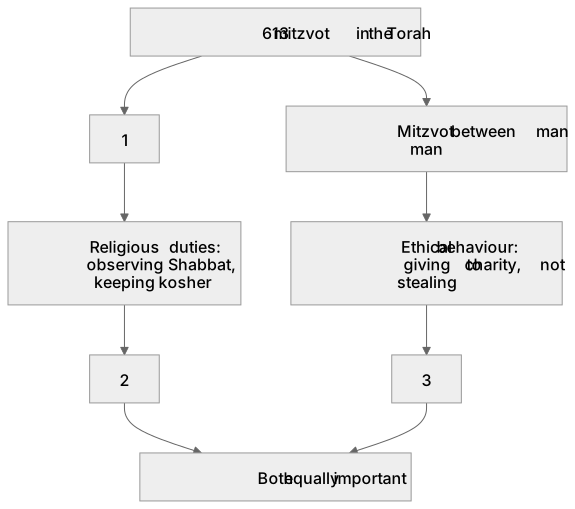
1Box 1
2Box 2
3Box 3
There is more to this lesson
The full lesson goes on to check your understanding and help you earn the marks. Create a free account to carry on, with your progress saved.
A week of Premium from your first lesson · Then the free plan continues · No card, no charge
Test your understanding of Judaism - 3.1.6.1 Beliefs and teachings: Mitzvot between man and God and mitzvot between man and man, including the difference between them and their importance.
Active recall beats re-reading. Take an instant quiz now to test what you’ve learned and lock it into long-term memory.
A week of Premium from your first lesson · Then the free plan continues · No card, no charge