AQA · GCSE · Religious Studies
Course version: 8062 · Version from Sept 2018
Perspectives in their answers, for example, Orthodox, Reform and Liberal…
Full specification wording
Judaism: perspectives in their answers, for example, Orthodox, Reform and Liberal Judaism. They must study the specific differences identified below.
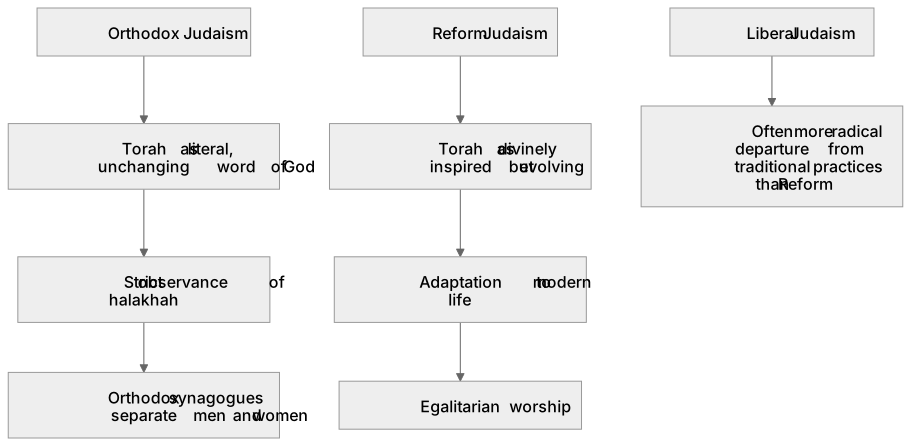
Orthodox Judaism generally views the Torah as the literal, unchanging word of God, leading to strict observance of halakhah (Jewish law).
- Point 5 of 5
- 3 key terms
Study notes
From the teaching notes for this specification point.
The idea
Orthodox Judaism generally views the Torah as the literal, unchanging word of God, leading to strict observance of halakhah (Jewish law). In contrast, Reform and Liberal Judaism view the Torah as divinely inspired but evolving, allowing for adaptation to modern life, such as egalitarian worship. You must study the specific differences between these groups as detailed in the specification, applying these distinct perspectives to topics like synagogue worship, dietary laws, and the role of women.
What earns the marks
- Define the core characteristics of Orthodox Judaism, including its view on the divine origin of the Torah.
- Explain the principles of Reform Judaism, focusing on its progressive interpretation of Jewish law.
- Describe the approach of Liberal Judaism, noting its emphasis on ethical teachings over ritual observance.
- Contrast the specific differences between these denominations regarding practices such as synagogue layout or ordination of rabbis.
Common mistakes and how to put them right
Confusing Reform and Orthodox practices, such as stating Orthodox synagogues have mixed seating.
Put it right: Ensure you correctly attribute specific practices to the right denomination; Orthodox synagogues separate men and women.
Using 'Jewish' when a specific denomination is required to make a point.
Put it right: Specify 'Orthodox Jews' or 'Reform Jews' when discussing practices that are not universally shared.
Assuming Liberal and Reform Judaism are exactly the same.
Put it right: While similar, recognise that Liberal Judaism is often more radical in its departure from traditional practices than Reform Judaism.
Exam tips
- Memorise at least one specific difference between Orthodox and Reform or Liberal Judaism for every topic studied.
- Use the names of the denominations (Orthodox, Reform, Liberal) explicitly in your evaluation questions to access higher marks.
- When asked about a specific difference, explain the underlying belief about the Torah that causes this difference in practice.
Try the lesson
The start of the Judaism: perspectives in their answers, for example, Orthodox, Reform and Liberal Judaism. They must study the specific differences identified below. lesson, made from teaching notes for this specification point.
Have a go first
Which of the following lists three major denominations or perspectives within contemporary Judaism?
Listen
Orthodox Judaism generally views the Torah as the literal, unchanging word of God, leading to strict observance of halakhah (Jewish law). In contrast, Reform and Liberal Judaism view the Torah as divinely inspired but evolving, allowing for adaptation to modern life, such as egalitarian worship. You must study the specific differences between these groups as detailed in the specification, applying these distinct perspectives to topics like synagogue worship, dietary laws, and the role of women. A strong answer earns marks for these points. Define the core characteristics of Orthodox Judaism, including its view on the divine origin of the Torah. Explain the principles of Reform Judaism, focusing on its progressive interpretation of Jewish law. Describe the approach of Liberal Judaism, noting its emphasis on ethical teachings over ritual observance. Contrast the specific differences between these denominations regarding practices such as synagogue layout or ordination of rabbis. A common slip: Confusing Reform and Orthodox practices, such as stating Orthodox synagogues have mixed seating. Instead, Ensure you correctly attribute specific practices to the right denomination; Orthodox synagogues separate men and women. Exam tip: Memorise at least one specific difference between Orthodox and Reform or Liberal Judaism for every topic studied.
See it
Key words
Say what each word means before you turn the card.
Denominations
Try answering aloud or in your head before turning the card.
Halakhah (Jewish Law)
Try answering aloud or in your head before turning the card.
Tradition vs Modernity
Try answering aloud or in your head before turning the card.
See every definition
- Denominations
- Major Jewish groups, specifically Orthodox, Reform and Liberal Judaism, which must be named and differentiated between in exam answers.
- Halakhah (Jewish Law)
- Jewish law, which Orthodox Judaism observes strictly because it views the Torah as the literal, unchanging word of God.
- Tradition vs Modernity
- The contrast between Orthodox Judaism's strict observance of halakhah and Reform and Liberal Judaism's adaptation to modern life.
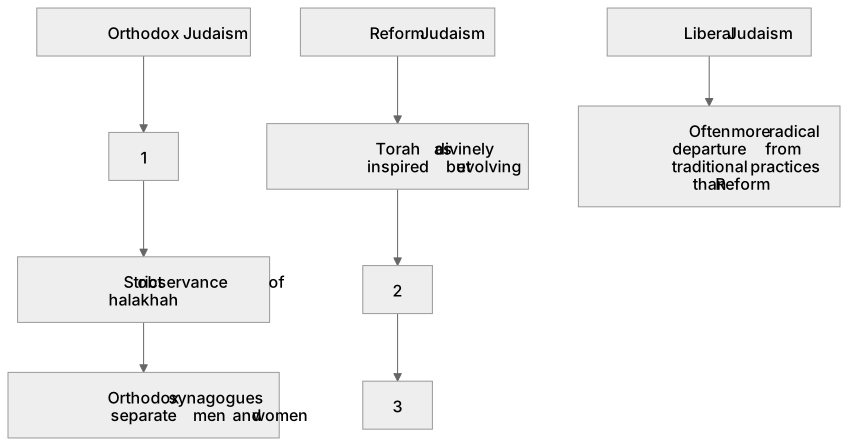
Label the diagram
Some boxes have lost their names. Pick the right name for each number.
1Box 1
2Box 2
3Box 3
There is more to this lesson
The full lesson goes on to check your understanding and help you earn the marks. Create a free account to carry on, with your progress saved.
A week of Premium from your first lesson · Then the free plan continues · No card, no charge
Test your understanding of Judaism: perspectives in their answers, for example, Orthodox, Reform and Liberal Judaism. They must study the specific differences identified below.
Active recall beats re-reading. Take an instant quiz now to test what you’ve learned and lock it into long-term memory.
A week of Premium from your first lesson · Then the free plan continues · No card, no charge