AQA · GCSE · Religious Studies
Course version: 8062 · Version from Sept 2018
Practices: Family life and festivals
In Judaism, family life and festivals are deeply intertwined, serving as the primary vehicles for passing down faith and traditions.
Checked against the AQA 8062 specification (opens in a new tab) on .
- Point 10 of 37
- 3 key terms
Study notes
From the checked teaching notes for this specification point.
The idea
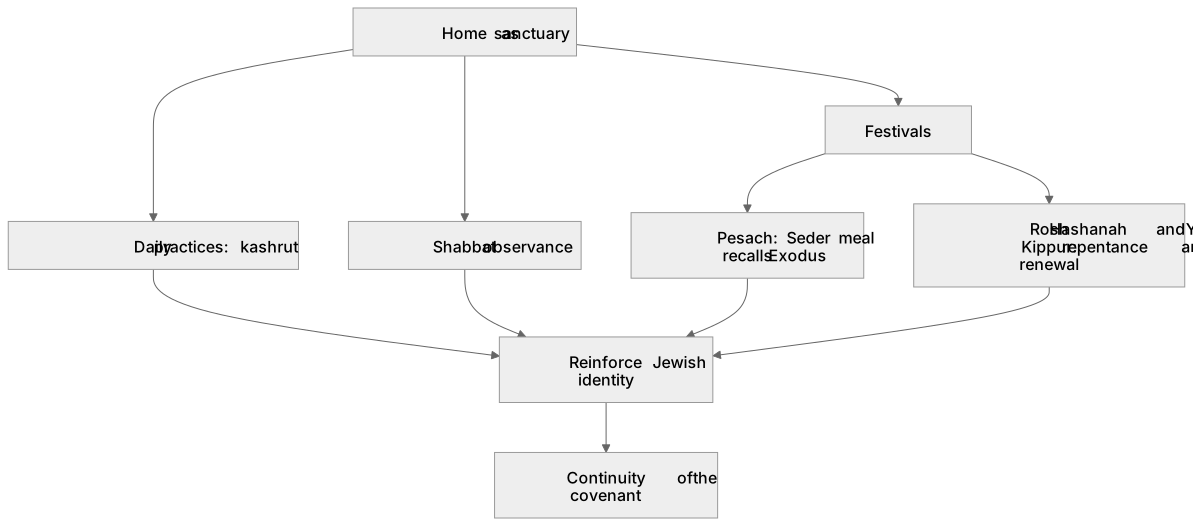
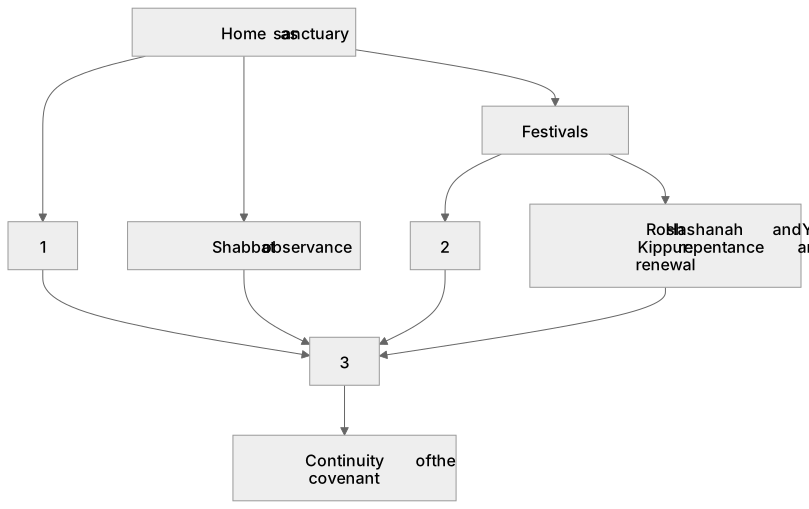
In Judaism, family life and festivals are deeply intertwined, serving as the primary vehicles for passing down faith and traditions. The home is considered a sanctuary where daily practices, such as keeping kosher (kashrut) and observing Shabbat, reinforce Jewish identity. Festivals punctuate the Jewish calendar with historical and spiritual significance. For example, Pesach (Passover) is celebrated with the family at the Seder meal, recalling the Exodus from Egypt. High Holy Days like Rosh Hashanah (New Year) and Yom Kippur (Day of Atonement) involve both synagogue worship and family reflection, emphasising repentance and renewal. Together, these practices ensure the continuity of the covenant.
What earns the marks
- Explain the role of the home as a place of worship and religious education in Judaism.
- Describe the observance of Shabbat within the family, including the lighting of candles and the Friday night meal.
- Evaluate the importance of festivals such as Pesach in remembering Jewish history and the covenant.
- Explain the significance of Rosh Hashanah and Yom Kippur in focusing on repentance and a fresh start.
Common mistakes and how to put them right
Confusing the focus of different festivals.
Put it right: Pesach is about the Exodus, while Yom Kippur is about atonement.
Assuming all Jewish families observe festivals identically.
Put it right: Acknowledge the differences between Orthodox and Reform practices, such as the duration of festivals.
Viewing family life and synagogue worship as completely separate.
Put it right: Explain how home rituals (like the Seder) complement synagogue services.
Exam tips
- Use specific Hebrew terms like kashrut, Seder, and Shabbat to demonstrate accurate subject knowledge.
- When evaluating the importance of festivals, contrast their historical significance with their modern spiritual value.
- Always link family practices back to core Jewish beliefs, such as the covenant or the importance of community.
Try the lesson
The start of the Practices: Family life and festivals lesson, made from checked teaching notes for this specification point.
Have a go first
Which Jewish festival is primarily celebrated with a special meal in the family home called the Seder?
Listen
In Judaism, family life and festivals are deeply intertwined, serving as the primary vehicles for passing down faith and traditions. The home is considered a sanctuary where daily practices, such as keeping kosher (kashrut) and observing Shabbat, reinforce Jewish identity. Festivals punctuate the Jewish calendar with historical and spiritual significance. For example, Pesach (Passover) is celebrated with the family at the Seder meal, recalling the Exodus from Egypt. High Holy Days like Rosh Hashanah (New Year) and Yom Kippur (Day of Atonement) involve both synagogue worship and family reflection, emphasising repentance and renewal. Together, these practices ensure the continuity of the covenant. A strong answer earns marks for these points. Explain the role of the home as a place of worship and religious education in Judaism. Describe the observance of Shabbat within the family, including the lighting of candles and the Friday night meal. Evaluate the importance of festivals such as Pesach in remembering Jewish history and the covenant. Explain the significance of Rosh Hashanah and Yom Kippur in focusing on repentance and a fresh start. A common slip: Confusing the focus of different festivals. Instead, Pesach is about the Exodus, while Yom Kippur is about atonement. Exam tip: Use specific Hebrew terms like kashrut, Seder, and Shabbat to demonstrate accurate subject knowledge.
See it
Key words
Say what each word means before you turn the card.
The covenant
Try answering aloud or in your head before turning the card.
Community and identity
Try answering aloud or in your head before turning the card.
Tradition and continuity
Try answering aloud or in your head before turning the card.
See every definition
- The covenant
- Family life and festivals ensure the continuity of the covenant.
- Community and identity
- Daily practices such as keeping kosher and observing Shabbat reinforce Jewish identity, and family practices link back to the importance of community.
- Tradition and continuity
- Family life and festivals serve as the primary vehicles for passing down faith and traditions.
Label the diagram
Some boxes have lost their names. Pick the right name for each number.
1Box 1
2Box 2
3Box 3
There is more to this lesson
The full lesson goes on to check your understanding and help you earn the marks. Create a free account to carry on, with your progress saved.
A week of Premium from your first lesson · Then the free plan continues · No card, no charge
Test your understanding of Practices: Family life and festivals
Active recall beats re-reading. Take an instant quiz now to test what you’ve learned and lock it into long-term memory.
A week of Premium from your first lesson · Then the free plan continues · No card, no charge