AQA · GCSE · Religious Studies
Course version: 8062 · Version from Sept 2018
Religious features of the gurdwara: design, furniture, and artefacts; the…
Full specification wording
Practices: Religious features of the gurdwara: design, furniture, and artefacts; the practices associated with these features and their importance, including the palki and takht.
The gurdwara is designed to show ultimate respect to the Guru Granth Sahib.
Checked against the AQA 8062 specification (opens in a new tab) on .
- Point 23 of 37
- 4 key terms
Study notes
From the checked teaching notes for this specification point.
The idea
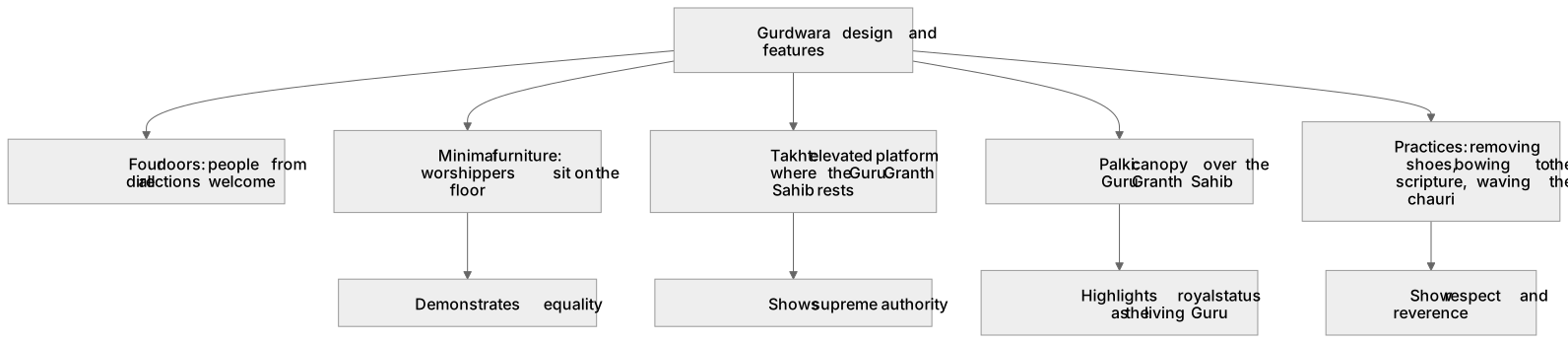
The gurdwara is designed to show ultimate respect to the Guru Granth Sahib. Key design features include four doors symbolising that people from all directions are welcome. Inside, there is minimal furniture; worshippers sit on the floor to demonstrate equality. The focal point is the takht (throne), an elevated platform where the Guru Granth Sahib rests, showing its supreme authority. The scripture is placed within a palki (a canopy), highlighting its royal status as the living Guru. Associated practices include removing shoes, bowing to the scripture, and using artefacts like the chauri (a fan waved over the book). These features and practices are vital as they reinforce core Sikh beliefs in equality and the eternal guidance of the Guru.
What earns the marks
- Identify the takht as the raised platform or throne that elevates the Guru Granth Sahib above the congregation.
- Explain that the palki is the canopy structure that houses the Guru Granth Sahib, symbolising its royal status.
- Describe the practice of sitting on the floor (without chairs) as a physical demonstration of equality among all worshippers.
- Explain the use of artefacts such as the chauri, which is waved over the scripture to show respect and reverence.
Common mistakes and how to put them right
Confusing the palki and the takht.
Put it right by remembering the takht is the raised platform (throne), whereas the palki is the canopy structure above it.
Stating that gurdwaras have pews or extensive seating.
Put it right by noting that the prayer hall is largely devoid of furniture so everyone sits equally on the floor.
Assuming the artefacts are worshipped.
Put it right by explaining that items like the chauri are used to show respect to the words of the Guru Granth Sahib, not worshipped as idols.
Exam tips
- Always link physical features like the takht or the lack of furniture to the underlying Sikh belief in equality or the authority of the Guru.
- Use specific Punjabi terms like 'palki', 'takht', and 'chauri' to demonstrate accurate subject knowledge.
- When evaluating the importance of these features, discuss how they shape the behaviour and mindset of Sikhs during worship.
Try the lesson
The start of the Practices: Religious features of the gurdwara: design, furniture, and artefacts; the practices associated with these features and their importance, including the palki and takht. lesson, made from checked teaching notes for this specification point.
Have a go first
In a gurdwara, what is the specific function of the palki?
Listen
The gurdwara is designed to show ultimate respect to the Guru Granth Sahib. Key design features include four doors symbolising that people from all directions are welcome. Inside, there is minimal furniture; worshippers sit on the floor to demonstrate equality. The focal point is the takht (throne), an elevated platform where the Guru Granth Sahib rests, showing its supreme authority. The scripture is placed within a palki (a canopy), highlighting its royal status as the living Guru. Associated practices include removing shoes, bowing to the scripture, and using artefacts like the chauri (a fan waved over the book). These features and practices are vital as they reinforce core Sikh beliefs in equality and the eternal guidance of the Guru. A strong answer earns marks for these points. Identify the takht as the raised platform or throne that elevates the Guru Granth Sahib above the congregation. Explain that the palki is the canopy structure that houses the Guru Granth Sahib, symbolising its royal status. Describe the practice of sitting on the floor (without chairs) as a physical demonstration of equality among all worshippers. Explain the use of artefacts such as the chauri, which is waved over the scripture to show respect and reverence. A common slip: Confusing the palki and the takht. Instead, remembering the takht is the raised platform (throne), whereas the palki is the canopy structure above it. Exam tip: Always link physical features like the takht or the lack of furniture to the underlying Sikh belief in equality or the authority of the Guru.
See it
Key words
Say what each word means before you turn the card.
Equality
Try answering aloud or in your head before turning the card.
Authority of the Guru
Try answering aloud or in your head before turning the card.
Reverence
Try answering aloud or in your head before turning the card.
Worship practices
Try answering aloud or in your head before turning the card.
See every definition
- Equality
- Worshippers sit on the floor with minimal furniture to demonstrate that all are equal.
- Authority of the Guru
- The takht is an elevated platform where the Guru Granth Sahib rests, showing its supreme authority.
- Reverence
- Artefacts such as the chauri are waved over the scripture to show respect and reverence.
- Worship practices
- Associated practices include removing shoes, bowing to the scripture, and using artefacts like the chauri.
Label the diagram
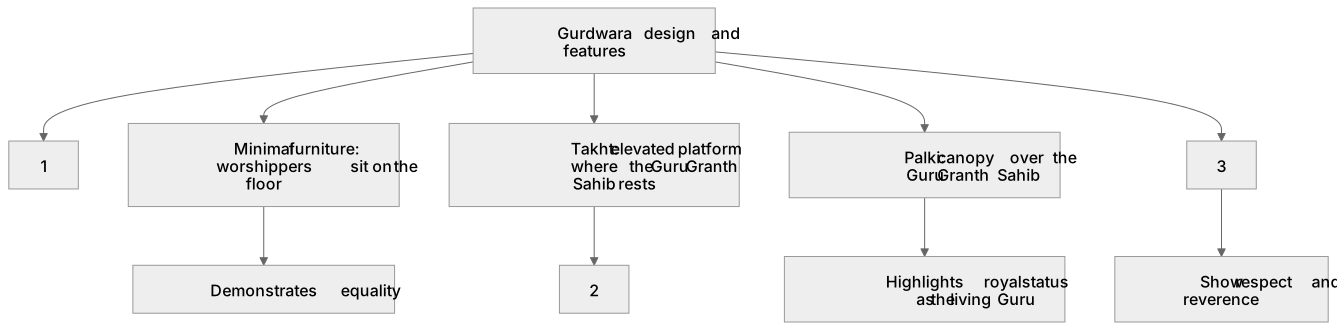
Some boxes have lost their names. Pick the right name for each number.
1Box 1
2Box 2
3Box 3
There is more to this lesson
The full lesson goes on to check your understanding and help you earn the marks. Create a free account to carry on, with your progress saved.
A week of Premium from your first lesson · Then the free plan continues · No card, no charge
Test your understanding of Practices: Religious features of the gurdwara: design, furniture, and artefacts; the practices associated with these features and their importance, including the palki and takht.
Active recall beats re-reading. Take an instant quiz now to test what you’ve learned and lock it into long-term memory.
A week of Premium from your first lesson · Then the free plan continues · No card, no charge