OCR · GCSE · Biology
Course version: J247 · Version from Sept 2018
Describe the principles of hormonal coordination and control by the human…
Full specification wording
Coordination and control – the endocrine system: describe the principles of hormonal coordination and control by the human endocrine system (to include: use of chemical messengers, transport in blood, endocrine glands and receptors)
The endocrine system coordinates physiological processes through chemical communication.
- Point 3 of 11
- 4 key terms
Study notes
From the teaching notes for this specification point.
The idea
The endocrine system coordinates physiological processes through chemical communication. Endocrine glands are ductless glands that synthesise and secrete chemical messengers called hormones directly into blood capillaries. Hormones are transported throughout the body within blood plasma. Although circulating hormones reach virtually all tissues, they elicit specific physiological responses only in target cells that express complementary protein receptors on their surface membranes or within their cytoplasm. Hormone binding triggers specific biochemical intracellular cascades. Compared to rapid, localised neural signalling, hormonal coordination is generally slower to initiate, more widespread, and longer-lasting.
What earns the marks
- Define hormones as chemical messengers synthesised and secreted by ductless endocrine glands directly into the blood.
- Explain that hormones travel in blood plasma throughout the circulatory system to target organs.
- Describe how target cells possess specific complementary receptors that bind matching hormone molecules.
- Compare endocrine and nervous control: hormones act more slowly, have longer-lasting effects, and produce widespread responses.
Common mistakes and how to put them right
Stating that hormones travel along nerves rather than through blood plasma.
Believing hormones affect every cell in the body, ignoring the requirement for complementary target cell receptors.
Confusing exocrine glands (with ducts) with ductless endocrine glands.
Exam tips
- When contrasting endocrine and nervous systems, always compare both speed of onset and duration of effect.
- Use the lock-and-key analogy appropriately to explain that target cells have specific complementary receptors for specific hormones.
Try the lesson
The start of the Coordination and control – the endocrine system: describe the principles of hormonal coordination and control by the human endocrine system (to include: use of chemical messengers, transport in blood, endocrine glands and receptors) lesson, made from teaching notes for this specification point.
Have a go first
Which statement describes how hormones reach their target organs in the human body?
Listen
The endocrine system coordinates physiological processes through chemical communication. Endocrine glands are ductless glands that synthesise and secrete chemical messengers called hormones directly into blood capillaries. Hormones are transported throughout the body within blood plasma. Although circulating hormones reach virtually all tissues, they elicit specific physiological responses only in target cells that express complementary protein receptors on their surface membranes or within their cytoplasm. Hormone binding triggers specific biochemical intracellular cascades. Compared to rapid, localised neural signalling, hormonal coordination is generally slower to initiate, more widespread, and longer-lasting. A strong answer earns marks for these points. define hormones as chemical messengers synthesised and secreted by ductless endocrine glands directly into the blood. explain that hormones travel in blood plasma throughout the circulatory system to target organs. describe how target cells possess specific complementary receptors that bind matching hormone molecules. compare endocrine and nervous control: hormones act more slowly, have longer-lasting effects, and produce widespread responses. Exam tip: When contrasting endocrine and nervous systems, always compare both speed of onset and duration of effect.
See it
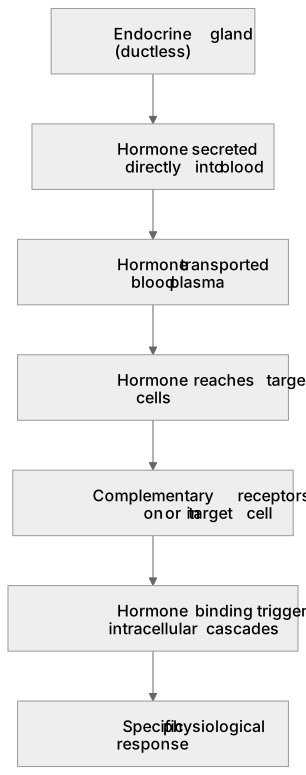
Put it in order
Put these steps in the order they happen.
- 1. Specific physiological response
- 2. Hormone binding triggers intracellular cascades
- 3. Hormone transported in blood plasma
- 4. Complementary receptors on or in target cell
- 5. Endocrine gland (ductless)
- 6. Hormone secreted directly into blood
- 7. Hormone reaches target cells
Key words
Say what each word means before you turn the card.
endocrine glands
Try answering aloud or in your head before turning the card.
hormones
Try answering aloud or in your head before turning the card.
target cell receptors
Try answering aloud or in your head before turning the card.
circulatory transport
Try answering aloud or in your head before turning the card.
See every definition
- endocrine glands
- Ductless glands that synthesise and secrete chemical messengers called hormones directly into blood capillaries.
- hormones
- Chemical messengers synthesised and secreted by ductless endocrine glands directly into the blood.
- target cell receptors
- Complementary protein receptors on the surface membranes or within the cytoplasm of target cells that bind matching hormone molecules.
- circulatory transport
- Hormones are transported throughout the body within blood plasma.
Label the diagram
Some boxes have lost their names. Pick the right name for each number.
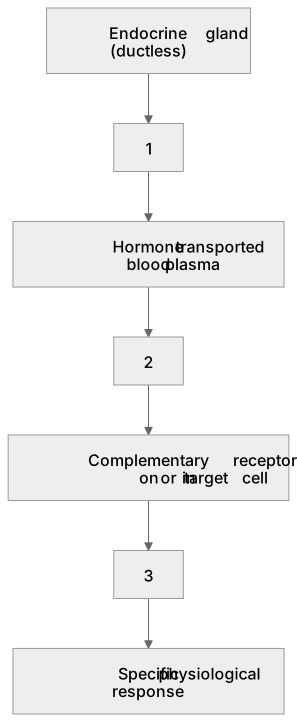
1Box 1
2Box 2
3Box 3
There is more to this lesson
The full lesson goes on to check your understanding and help you earn the marks. Create a free account to carry on, with your progress saved.
A week of Premium from your first lesson · Then the free plan continues · No card, no charge
Test your understanding of Coordination and control – the endocrine system: describe the principles of hormonal coordination and control by the human endocrine system (to include: use of chemical messengers, transport in blood, endocrine glands and receptors)
Active recall beats re-reading. Take an instant quiz now to test what you’ve learned and lock it into long-term memory.
A week of Premium from your first lesson · Then the free plan continues · No card, no charge