OCR · GCSE · Biology
Course version: J247 · Version from Sept 2018
Explain the roles of thyroxine and adrenaline in the body (to include:…
Full specification wording
Coordination and control – the endocrine system: explain the roles of thyroxine and adrenaline in the body (to include: thyroxine as an example of a negative feedback system) (Higher tier only)
Thyroxine, secreted by the thyroid gland, regulates basal metabolic rate, protein synthesis, and developmental growth.
- Point 4 of 11
- 3 key terms
Study notes
From the teaching notes for this specification point.
The idea
Thyroxine, secreted by the thyroid gland, regulates basal metabolic rate, protein synthesis, and developmental growth. Its concentration is controlled by negative feedback: when thyroxine levels drop below the normal set point, the hypothalamus detects this change and secretes thyroid-releasing hormone, which stimulates the pituitary gland to secrete thyroid-stimulating hormone into the blood. This hormone stimulates the thyroid to release thyroxine. As blood thyroxine rises back to normal, it inhibits the release of both earlier hormones, returning levels to the set point. Adrenaline is secreted by the adrenal glands during stress or fear to trigger the fight-or-flight response, raising heart rate, dilating bronchioles, and diverting blood to muscles.
What earns the marks
- Explain that thyroxine regulates basal metabolic rate, cellular respiration, and protein synthesis.
- Describe the negative feedback control of thyroxine: falling levels trigger release of thyroid-releasing and thyroid-stimulating hormones.
- Explain how elevated thyroxine inhibits the hypothalamus and pituitary gland to prevent excessive hormone synthesis.
- Describe the actions of adrenaline: increases heart rate, dilates airways, and mobilises glucose for respiration during fight-or-flight.
Common mistakes and how to put them right
Thinking adrenaline secretion is governed by a negative feedback loop rather than acute nervous stimulation.
Confusing the roles of the hypothalamus, pituitary gland, and thyroid gland in the feedback mechanism.
Omitting the inhibitory feedback step where elevated thyroxine dampens earlier hormone secretion.
Exam tips
- Clearly state that negative feedback acts to oppose change and restore a biological parameter to its set point.
- Adrenaline is not part of a negative feedback cycle; it is released rapidly in response to fear or stress to prepare the body for action.
Try the lesson
The start of the Coordination and control – the endocrine system: explain the roles of thyroxine and adrenaline in the body (to include: thyroxine as an example of a negative feedback system) (Higher tier only) lesson, made from teaching notes for this specification point.
Have a go first
Which statement best describes the role of adrenaline in the body?
Listen
Thyroxine, secreted by the thyroid gland, regulates basal metabolic rate, protein synthesis, and developmental growth. Its concentration is controlled by negative feedback: when thyroxine levels drop below the normal set point, the hypothalamus detects this change and secretes thyroid-releasing hormone, which stimulates the pituitary gland to secrete thyroid-stimulating hormone into the blood. This hormone stimulates the thyroid to release thyroxine. As blood thyroxine rises back to normal, it inhibits the release of both earlier hormones, returning levels to the set point. Adrenaline is secreted by the adrenal glands during stress or fear to trigger the fight-or-flight response, raising heart rate, dilating bronchioles, and diverting blood to muscles. A strong answer earns marks for these points. explain that thyroxine regulates basal metabolic rate, cellular respiration, and protein synthesis. describe the negative feedback control of thyroxine: falling levels trigger release of thyroid-releasing and thyroid-stimulating hormones. explain how elevated thyroxine inhibits the hypothalamus and pituitary gland to prevent excessive hormone synthesis. describe the actions of adrenaline: increases heart rate, dilates airways, and mobilises glucose for respiration during fight-or-flight. Exam tip: Clearly state that negative feedback acts to oppose change and restore a biological parameter to its set point.
See it
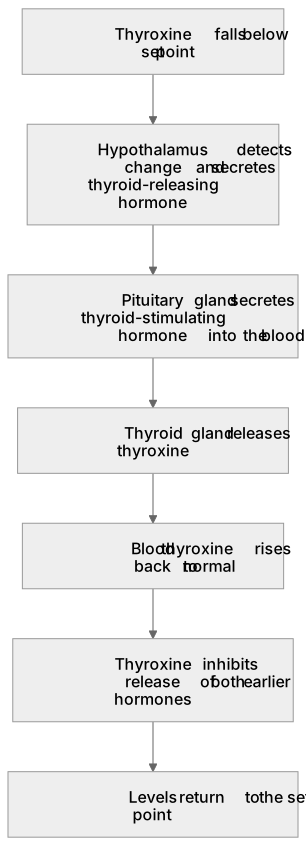
Put it in order
Put these steps in the order they happen.
- 1. Levels return to the set point
- 2. Thyroxine inhibits release of both earlier hormones
- 3. Pituitary gland secretes thyroid-stimulating hormone into the blood
- 4. Blood thyroxine rises back to normal
- 5. Thyroxine falls below set point
- 6. Hypothalamus detects change and secretes thyroid-releasing hormone
- 7. Thyroid gland releases thyroxine
Key words
Say what each word means before you turn the card.
thyroxine
Try answering aloud or in your head before turning the card.
adrenaline
Try answering aloud or in your head before turning the card.
fight-or-flight
Try answering aloud or in your head before turning the card.
See every definition
- thyroxine
- Secreted by the thyroid gland, it regulates basal metabolic rate, protein synthesis, and developmental growth.
- adrenaline
- Secreted by the adrenal glands during stress or fear to trigger the fight-or-flight response, raising heart rate, dilating bronchioles, and diverting blood to muscles.
- fight-or-flight
- The response triggered by adrenaline during stress or fear, raising heart rate, dilating bronchioles, and diverting blood to muscles.
Label the diagram
Some boxes have lost their names. Pick the right name for each number.
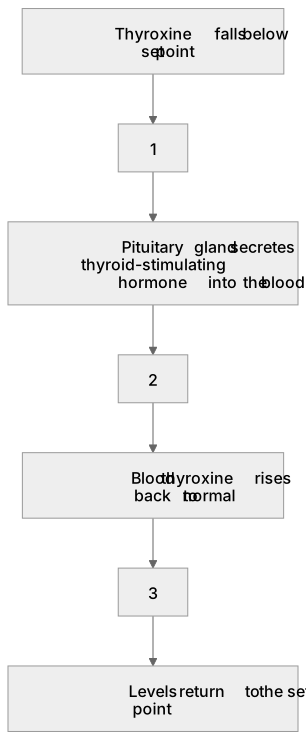
1Box 1
2Box 2
3Box 3
There is more to this lesson
The full lesson goes on to check your understanding and help you earn the marks. Create a free account to carry on, with your progress saved.
A week of Premium from your first lesson · Then the free plan continues · No card, no charge
Test your understanding of Coordination and control – the endocrine system: explain the roles of thyroxine and adrenaline in the body (to include: thyroxine as an example of a negative feedback system) (Higher tier only)
Active recall beats re-reading. Take an instant quiz now to test what you’ve learned and lock it into long-term memory.
A week of Premium from your first lesson · Then the free plan continues · No card, no charge