OCR · GCSE · Biology
Course version: J247 · Version from Sept 2018
Explain how the components of the nervous system can produce a coordinated…
Full specification wording
Coordination and control – the nervous system: explain how the components of the nervous system can produce a coordinated response (to include: it goes to all parts of the body, has many links, has different sensory receptors and is able to coordinate responses)
Coordinated neural responses require continuous communication between peripheral sensory structures, central processing circuits, and peripheral effectors.
- Point 3 of 9
- 4 key terms
Study notes
From the teaching notes for this specification point.
The idea
Coordinated neural responses require continuous communication between peripheral sensory structures, central processing circuits, and peripheral effectors. Specialised sensory receptors throughout the body detect distinct forms of energy, such as photoreceptors responding to light, mechanoreceptors to pressure or sound, and thermoreceptors to temperature changes. These transduce stimuli into electrical impulses. Extensive branching neural networks allow impulses from multiple sensory neurones to converge upon interneurones within the brain and spinal cord. Here, inputs are integrated and evaluated against stored information. Divergent motor neurone pathways then distribute coordinated impulses simultaneously to appropriate muscle groups and secretory glands.
What earns the marks
- Explain that sensory receptors transduce environmental stimuli into electrical impulses transmitted along sensory neurones.
- Describe how extensive neural pathways link all regions of the body to the Central Nervous System.
- Explain how integration within the brain or spinal cord coordinates multiple sensory inputs to produce a unified response.
- Describe how divergent motor pathways stimulate specific muscles to contract or glands to secrete in synchrony.
Common mistakes and how to put them right
Stating that sensory receptors produce thoughts rather than transducing stimuli into electrical impulses.
Assuming nerve impulses travel in both directions along an individual neurone.
Overlooking the integrative processing role of the Central Nervous System in coordinating multiple inputs.
Exam tips
- Use the standard pathway sequence in extended responses: stimulus, receptor, sensory neurone, coordinator, motor neurone, effector, response.
- Emphasise that the nervous system coordinates responses rapidly through electrical impulses along neurones and chemical diffusion across synapses.
Try the lesson
The start of the Coordination and control – the nervous system: explain how the components of the nervous system can produce a coordinated response (to include: it goes to all parts of the body, has many links, has different sensory receptors and is able to coordinate responses) lesson, made from teaching notes for this specification point.
Have a go first
Which part of the nervous system carries electrical impulses from sensory receptors towards the central nervous system?
Listen
Coordinated neural responses require continuous communication between peripheral sensory structures, central processing circuits, and peripheral effectors. Specialised sensory receptors throughout the body detect distinct forms of energy, such as photoreceptors responding to light, mechanoreceptors to pressure or sound, and thermoreceptors to temperature changes. These transduce stimuli into electrical impulses. Extensive branching neural networks allow impulses from multiple sensory neurones to converge upon interneurones within the brain and spinal cord. Here, inputs are integrated and evaluated against stored information. Divergent motor neurone pathways then distribute coordinated impulses simultaneously to appropriate muscle groups and secretory glands. A strong answer earns marks for these points. explain that sensory receptors transduce environmental stimuli into electrical impulses transmitted along sensory neurones. describe how extensive neural pathways link all regions of the body to the Central Nervous System. explain how integration within the brain or spinal cord coordinates multiple sensory inputs to produce a unified response. describe how divergent motor pathways stimulate specific muscles to contract or glands to secrete in synchrony. Exam tip: Use the standard pathway sequence in extended responses: stimulus, receptor, sensory neurone, coordinator, motor neurone, effector, response.
See it
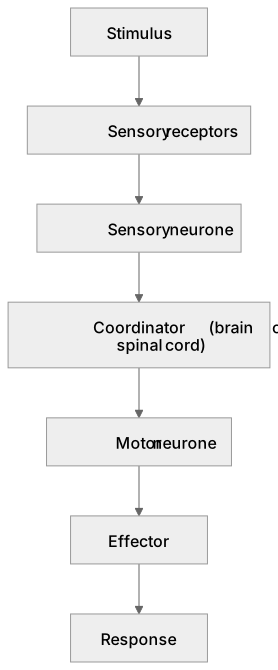
Put it in order
Put these steps in the order they happen.
- 1. Response
- 2. Effector
- 3. Sensory neurone
- 4. Motor neurone
- 5. Stimulus
- 6. Sensory receptors
- 7. Coordinator (brain or spinal cord)
Key words
Say what each word means before you turn the card.
sensory receptors
Try answering aloud or in your head before turning the card.
signal integration
Try answering aloud or in your head before turning the card.
neural pathways
Try answering aloud or in your head before turning the card.
coordinated response
Try answering aloud or in your head before turning the card.
See every definition
- sensory receptors
- Specialised structures throughout the body that detect distinct forms of energy and transduce stimuli into electrical impulses.
- signal integration
- The processing of multiple neural inputs within the brain or spinal cord, where inputs are integrated and evaluated against stored information.
- neural pathways
- Extensive branching networks that link all regions of the body to the Central Nervous System and distribute coordinated impulses to muscles and glands.
- coordinated response
- A unified response produced when integration within the brain or spinal cord coordinates multiple sensory inputs.
Label the diagram
Some boxes have lost their names. Pick the right name for each number.
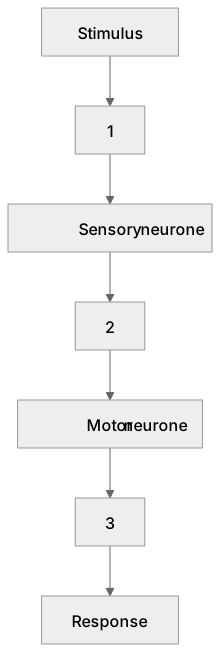
1Box 1
2Box 2
3Box 3
There is more to this lesson
The full lesson goes on to check your understanding and help you earn the marks. Create a free account to carry on, with your progress saved.
A week of Premium from your first lesson · Then the free plan continues · No card, no charge
Test your understanding of Coordination and control – the nervous system: explain how the components of the nervous system can produce a coordinated response (to include: it goes to all parts of the body, has many links, has different sensory receptors and is able to coordinate responses)
Active recall beats re-reading. Take an instant quiz now to test what you’ve learned and lock it into long-term memory.
A week of Premium from your first lesson · Then the free plan continues · No card, no charge