OCR · GCSE · Biology
Course version: J247 · Version from Sept 2018
Explain the effect of factors such as temperature, water content, and…
Full specification wording
Ecosystems: explain the effect of factors such as temperature, water content, and oxygen availability on rate of decomposition (to include: the terms aerobic and anaerobic) (content found only in the biology separate science qualification)
Decomposition rate depends on environmental factors that affect microbial metabolism and extracellular enzyme activity.
- Point 9 of 15
- 3 key terms
Study notes
From the teaching notes for this specification point.
The idea
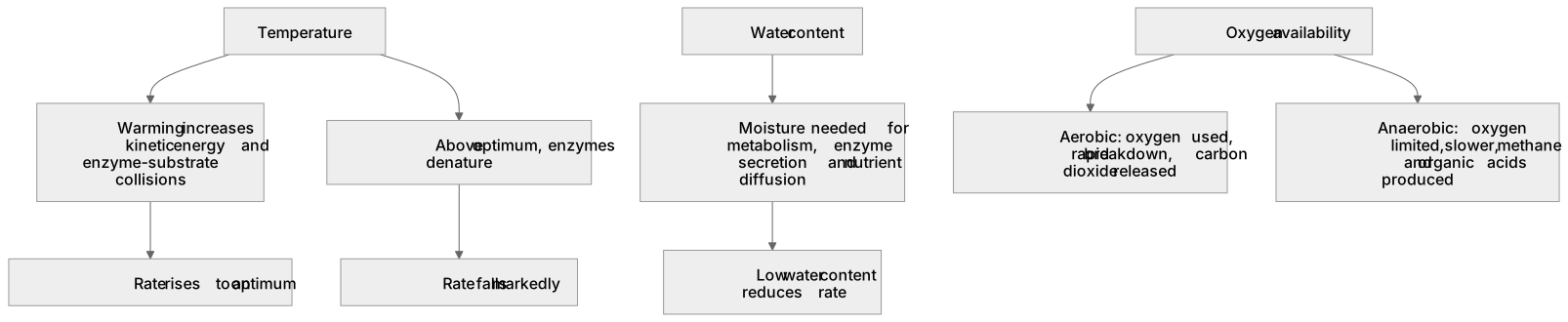
Decomposition rate depends on environmental factors that affect microbial metabolism and extracellular enzyme activity. Temperature affects kinetic energy: warming increases enzyme-substrate collisions and decay rate up to an optimum; above the optimum, microbial enzymes denature and decay slows markedly, though it does not necessarily stop completely. Water content is vital because decomposers need moisture for metabolism, enzyme secretion and nutrient diffusion; desiccation prevents microbial growth. Oxygen availability determines whether aerobic or anaerobic respiration occurs. Aerobic decomposition uses oxygen for efficient respiration and rapid breakdown of organic matter, releasing carbon dioxide. In waterlogged soils, oxygen is limited, so anaerobic decomposition proceeds more slowly and can produce methane and organic acids.
What earns the marks
- Explain that increasing temperature increases kinetic energy and enzyme-substrate collisions, raising decomposition rate up to an optimum; above the optimum, enzymes denature and the rate falls.
- Explain that decomposers require moisture for metabolic processes, enzyme secretion and diffusion of soluble nutrients, so low water content reduces decomposition rate.
- Explain that aerobic decomposition requires oxygen for efficient respiration, giving rapid breakdown of organic matter and release of carbon dioxide.
- Describe anaerobic conditions, such as waterlogged soils or bogs, where lack of oxygen results in slower decomposition and production of methane and organic acids.
- Compare aerobic and anaerobic decomposition in terms of oxygen requirement, relative speed and products.
Common mistakes and how to put them right
Stating that bacteria die of heat rather than explaining that their enzymes denature at high temperatures.
Put it right: High temperature denatures enzymes, slowing or stopping reactions; the decomposers may survive but function poorly.
Assuming decomposition ceases entirely in the absence of oxygen.
Put it right: Anaerobic decomposers can still operate, but more slowly, producing methane and organic acids.
Believing waterlogged soils speed up decay.
Put it right: Excess water excludes oxygen, creating anaerobic conditions and slowing decomposition.
Saying decay stops completely above the optimum temperature.
Put it right: Decay slows markedly because enzymes denature, but it does not necessarily halt entirely.
Exam tips
- Explain temperature effects using enzyme kinetics: kinetic energy, collision frequency, optimum temperature and denaturation.
- Contrast aerobic decomposition (fast, requires oxygen, releases carbon dioxide) with anaerobic decomposition (slower, no oxygen, releases methane and organic acids).
Try the lesson
The start of the Ecosystems: explain the effect of factors such as temperature, water content, and oxygen availability on rate of decomposition (to include: the terms aerobic and anaerobic) (content found only in the biology separate science qualification) lesson, made from teaching notes for this specification point.
Have a go first
Which term describes decomposition that happens when oxygen is available?
Listen
Decomposition rate depends on environmental factors that affect microbial metabolism and extracellular enzyme activity. Temperature affects kinetic energy: warming increases enzyme-substrate collisions and decay rate up to an optimum; above the optimum, microbial enzymes denature and decay slows markedly, though it does not necessarily stop completely. Water content is vital because decomposers need moisture for metabolism, enzyme secretion and nutrient diffusion; desiccation prevents microbial growth. Oxygen availability determines whether aerobic or anaerobic respiration occurs. Aerobic decomposition uses oxygen for efficient respiration and rapid breakdown of organic matter, releasing carbon dioxide. In waterlogged soils, oxygen is limited, so anaerobic decomposition proceeds more slowly and can produce methane and organic acids. A strong answer earns marks for these points. Explain that increasing temperature increases kinetic energy and enzyme-substrate collisions, raising decomposition rate up to an optimum; above the optimum, enzymes denature and the rate falls. Explain that decomposers require moisture for metabolic processes, enzyme secretion and diffusion of soluble nutrients, so low water content reduces decomposition rate. Explain that aerobic decomposition requires oxygen for efficient respiration, giving rapid breakdown of organic matter and release of carbon dioxide. Describe anaerobic conditions, such as waterlogged soils or bogs, where lack of oxygen results in slower decomposition and production of methane and organic acids. A common slip: Stating that bacteria die of heat rather than explaining that their enzymes denature at high temperatures. Instead, high temperature denatures enzymes, slowing or stopping reactions; the decomposers may survive but function poorly. Exam tip: Explain temperature effects using enzyme kinetics: kinetic energy, collision frequency, optimum temperature and denaturation.
See it
Key words
Say what each word means before you turn the card.
aerobic and anaerobic decomposition
Try answering aloud or in your head before turning the card.
decomposition factors
Try answering aloud or in your head before turning the card.
enzyme kinetics
Try answering aloud or in your head before turning the card.
See every definition
- aerobic and anaerobic decomposition
- Aerobic decomposition uses oxygen for efficient respiration and rapid breakdown of organic matter, releasing carbon dioxide, while anaerobic decomposition proceeds more slowly without oxygen and can produce methane and organic acids.
- decomposition factors
- Temperature affects kinetic energy and enzyme-substrate collisions up to an optimum, water content is vital for metabolism, enzyme secretion and nutrient diffusion, and oxygen availability determines whether aerobic or anaerobic respiration occurs.
- enzyme kinetics
- Warming increases kinetic energy and enzyme-substrate collisions, raising the rate up to an optimum, above which microbial enzymes denature and decay slows markedly.
Label the diagram
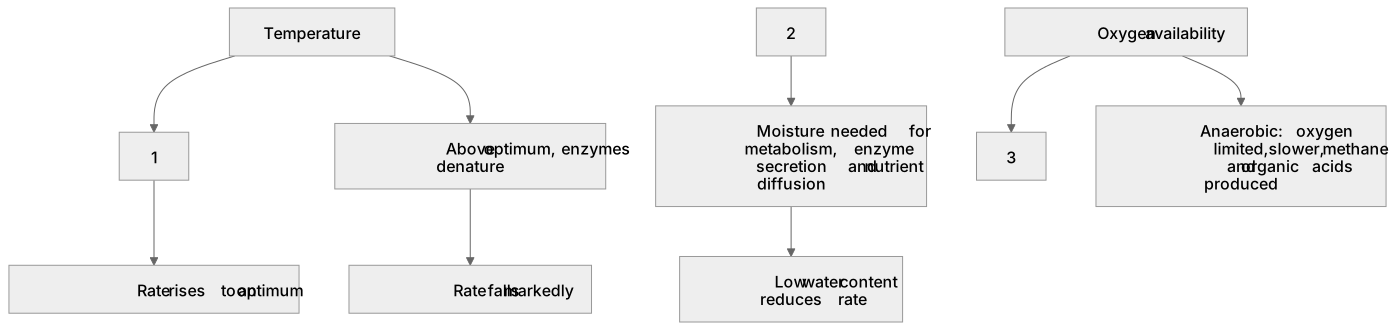
Some boxes have lost their names. Pick the right name for each number.
1Box 1
2Box 2
3Box 3
There is more to this lesson
The full lesson goes on to check your understanding and help you earn the marks. Create a free account to carry on, with your progress saved.
A week of Premium from your first lesson · Then the free plan continues · No card, no charge
Test your understanding of Ecosystems: explain the effect of factors such as temperature, water content, and oxygen availability on rate of decomposition (to include: the terms aerobic and anaerobic) (content found only in the biology separate science qualification)
Active recall beats re-reading. Take an instant quiz now to test what you’ve learned and lock it into long-term memory.
A week of Premium from your first lesson · Then the free plan continues · No card, no charge