OCR · GCSE · Biology
Course version: J247 · Version from Sept 2018
Describe genetic engineering as a process which involves modifying the…
Full specification wording
Feeding the human race: describe genetic engineering as a process which involves modifying the genome of an organism to introduce desirable characteristics
Genetic engineering is the deliberate modification of an organism genome by cutting out a specific gene responsible for a desirable trait from one species and transferring it into the cells of…
- Point 5 of 8
- 4 key terms
Study notes
From the teaching notes for this specification point.
The idea
Genetic engineering is the deliberate modification of an organism genome by cutting out a specific gene responsible for a desirable trait from one species and transferring it into the cells of another unrelated organism. The recipient organism becomes genetically modified (GM) or transgenic, expressing novel characteristics encoded by the foreign gene. In agriculture, major applications include modifying maize with the Bacillus thuringiensis (Bt) bacterial gene to synthesize an insecticidal toxin, protecting crops against corn borer caterpillars, and engineering soya crops to resist broad-spectrum herbicides.
What earns the marks
- Define genetic engineering as modifying an organism genome by inserting a gene from another organism to introduce desirable traits.
- Identify the recipient organism as a genetically modified or transgenic organism.
- Give agricultural examples of genetic modification, such as insect resistance (Bt toxin) or herbicide resistance in crop plants.
Common mistakes and how to put them right
Confusing genetic engineering with selective breeding, failing to state that foreign DNA is directly transferred between species.
Claiming that GM crops contain no genes, rather than carrying specific added functional genes.
Exam tips
- Learn the exact definition: modifying the genome of an organism by introducing a gene from another organism to give a desired characteristic.
- Use Bt maize or herbicide-tolerant soya as standard examples of genetically engineered agricultural crops.
Try the lesson
The start of the Feeding the human race: describe genetic engineering as a process which involves modifying the genome of an organism to introduce desirable characteristics lesson, made from teaching notes for this specification point.
Have a go first
Which statement best describes genetic engineering?
Listen
Genetic engineering is the deliberate modification of an organism genome by cutting out a specific gene responsible for a desirable trait from one species and transferring it into the cells of another unrelated organism. The recipient organism becomes genetically modified (GM) or transgenic, expressing novel characteristics encoded by the foreign gene. In agriculture, major applications include modifying maize with the Bacillus thuringiensis (Bt) bacterial gene to synthesize an insecticidal toxin, protecting crops against corn borer caterpillars, and engineering soya crops to resist broad-spectrum herbicides. A strong answer earns marks for these points. Define genetic engineering as modifying an organism genome by inserting a gene from another organism to introduce desirable traits. Identify the recipient organism as a genetically modified or transgenic organism. Give agricultural examples of genetic modification, such as insect resistance (Bt toxin) or herbicide resistance in crop plants. Exam tip: Learn the exact definition: modifying the genome of an organism by introducing a gene from another organism to give a desired characteristic.
See it
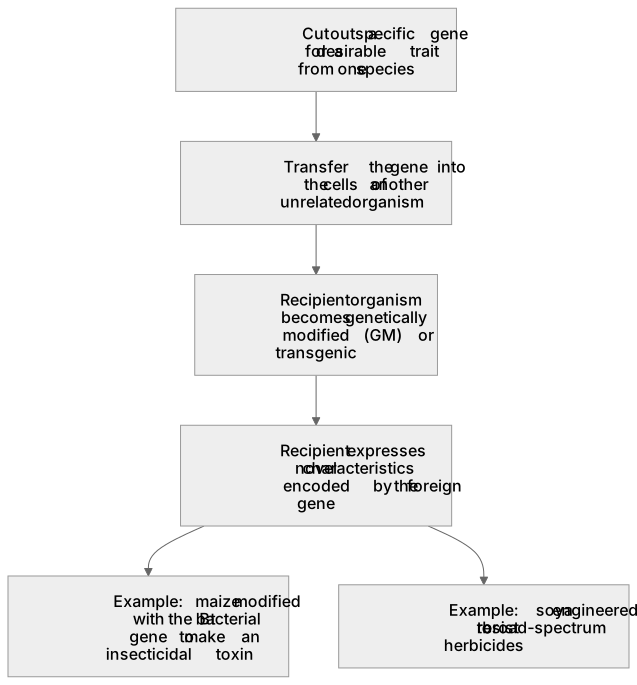
Key words
Say what each word means before you turn the card.
genetic engineering
Try answering aloud or in your head before turning the card.
transgenic organisms
Try answering aloud or in your head before turning the card.
pest resistance
Try answering aloud or in your head before turning the card.
herbicide tolerance
Try answering aloud or in your head before turning the card.
See every definition
- genetic engineering
- A process which involves modifying the genome of an organism to introduce desirable characteristics.
- transgenic organisms
- Organisms that have become genetically modified by receiving a gene from another organism.
- pest resistance
- A beneficial trait conferred by introducing a foreign gene, such as insect resistance from the Bt toxin.
- herbicide tolerance
- A beneficial trait conferred by genetic modification, shown in crops engineered to resist broad-spectrum herbicides.
Label the diagram
Some boxes have lost their names. Pick the right name for each number.
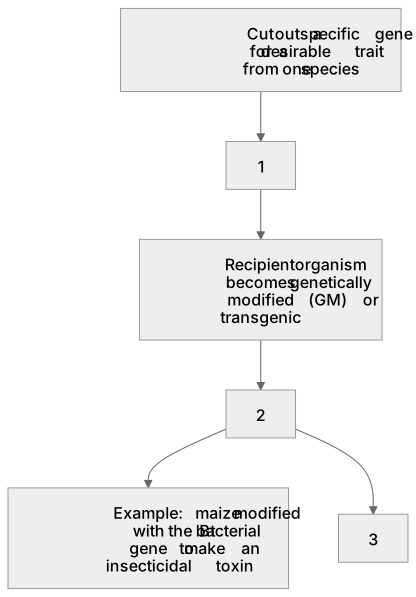
1Box 1
2Box 2
3Box 3
There is more to this lesson
The full lesson goes on to check your understanding and help you earn the marks. Create a free account to carry on, with your progress saved.
A week of Premium from your first lesson · Then the free plan continues · No card, no charge
Test your understanding of Feeding the human race: describe genetic engineering as a process which involves modifying the genome of an organism to introduce desirable characteristics
Active recall beats re-reading. Take an instant quiz now to test what you’ve learned and lock it into long-term memory.
A week of Premium from your first lesson · Then the free plan continues · No card, no charge