OCR · GCSE · Biology
Course version: J247 · Version from Sept 2018
Describe how genetic variants may influence phenotype: • in coding DNA by…
Full specification wording
Inheritance: describe how genetic variants may influence phenotype: • in coding DNA by altering the activity of a protein • in non-coding DNA by altering how genes are expressed (to include: • in coding: DNA related to mutations affecting protein structure, including active sites of enzymes • in non-coding: DNA related to stopping transcription of mRNA (use of terms promoter, transcription factor not required)) (content found only in the biology separate science qualification) (Higher tier only)
Genetic variants alter phenotype through distinct molecular mechanisms depending on their genomic location.
- Point 8 of 16
Study notes
From the teaching notes for this specification point.
The idea
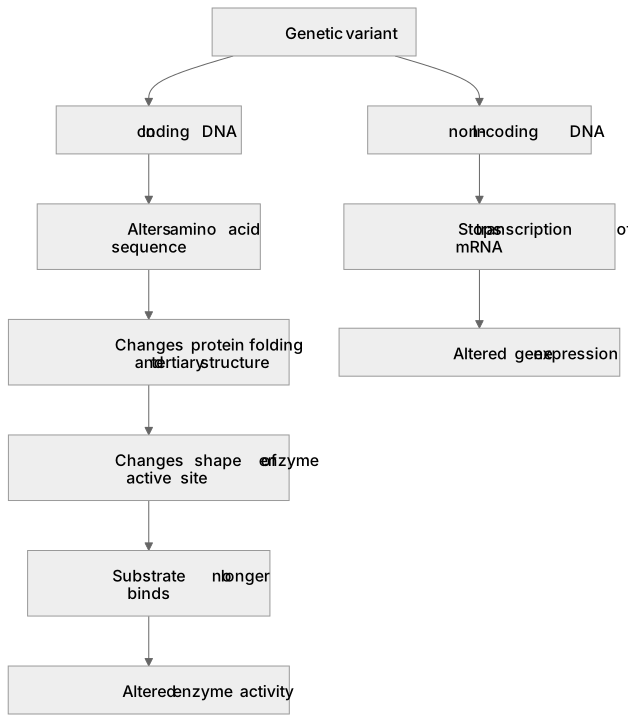
Genetic variants alter phenotype through distinct molecular mechanisms depending on their genomic location. In coding DNA, a base mutation changes the mRNA codon sequence transcribed, which may substitute an amino acid during translation. This alters the folding and tertiary structure of the resulting polypeptide; if this occurs within an enzyme active site, the substrate will no longer bind, diminishing or abolishing catalytic activity. In non-coding DNA, variants disrupt regulatory regions, preventing the binding of RNA polymerase and stopping the transcription of mRNA, thereby switching gene expression off.
What earns the marks
- Explain that mutations in coding DNA alter the amino acid sequence, changing protein folding and tertiary structure.
- Explain that changes to the shape of an enzyme active site prevent substrate binding, altering enzyme activity.
- Describe how mutations in non-coding DNA prevent or reduce the transcription of mRNA, altering gene expression.
Common mistakes and how to put them right
Describing active sites as dying or being killed rather than changing shape and becoming denatured or non-functional.
Assuming non-coding DNA has no function, failing to recognize its critical regulatory role in controlling mRNA transcription.
Exam tips
- For coding DNA, link the sequence of events: base change leading to amino acid change, altered folding, changed active site shape, substrate unable to fit.
- For non-coding DNA, specifically state that transcription of mRNA is prevented or altered.
Try the lesson
The start of the Inheritance: describe how genetic variants may influence phenotype: • in coding DNA by altering the activity of a protein • in non-coding DNA by altering how genes are expressed (to include: • in coding: DNA related to mutations affecting protein structure, including active sites of enzymes • in non-coding: DNA related to stopping transcription of mRNA (use of terms promoter, transcription factor not required)) (content found only in the biology separate science qualification) (Higher tier only) lesson, made from teaching notes for this specification point.
Have a go first
A variant in coding DNA changes the shape of an enzyme's active site. How does this variant influence the phenotype?
Listen
Genetic variants alter phenotype through distinct molecular mechanisms depending on their genomic location. In coding DNA, a base mutation changes the mRNA codon sequence transcribed, which may substitute an amino acid during translation. This alters the folding and tertiary structure of the resulting polypeptide; if this occurs within an enzyme active site, the substrate will no longer bind, diminishing or abolishing catalytic activity. In non-coding DNA, variants disrupt regulatory regions, preventing the binding of RNA polymerase and stopping the transcription of mRNA, thereby switching gene expression off. A strong answer earns marks for these points. Explain that mutations in coding DNA alter the amino acid sequence, changing protein folding and tertiary structure. Explain that changes to the shape of an enzyme active site prevent substrate binding, altering enzyme activity. Describe how mutations in non-coding DNA prevent or reduce the transcription of mRNA, altering gene expression. Exam tip: For coding DNA, link the sequence of events: base change leading to amino acid change, altered folding, changed active site shape, substrate unable to fit.
See it
Label the diagram
Some boxes have lost their names. Pick the right name for each number.
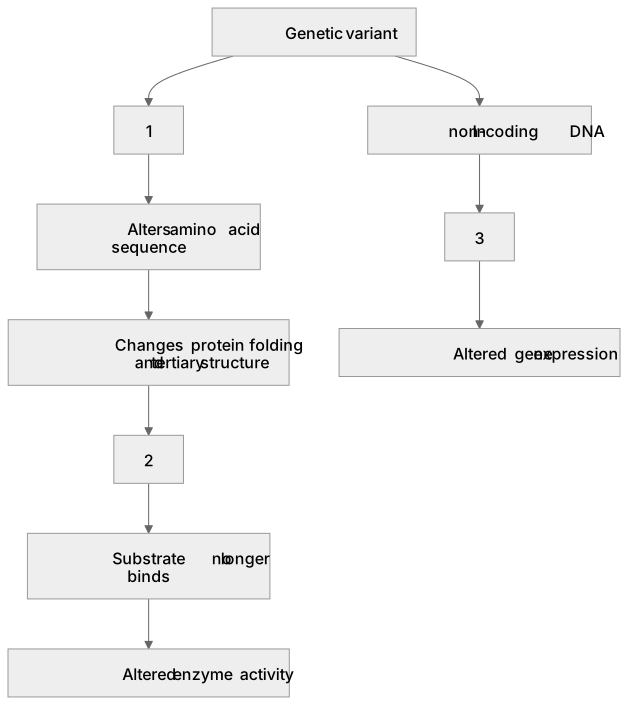
1Box 1
2Box 2
3Box 3
There is more to this lesson
The full lesson goes on to check your understanding and help you earn the marks. Create a free account to carry on, with your progress saved.
A week of Premium from your first lesson · Then the free plan continues · No card, no charge
Test your understanding of Inheritance: describe how genetic variants may influence phenotype: • in coding DNA by altering the activity of a protein • in non-coding DNA by altering how genes are expressed (to include: • in coding: DNA related to mutations affecting protein structure, including active sites of enzymes • in non-coding: DNA related to stopping transcription of mRNA (use of terms promoter, transcription factor not required)) (content found only in the biology separate science qualification) (Higher tier only)
Active recall beats re-reading. Take an instant quiz now to test what you’ve learned and lock it into long-term memory.
A week of Premium from your first lesson · Then the free plan continues · No card, no charge