OCR · GCSE · Biology
Course version: J247 · Version from Sept 2018
Recall that many non-communicable human diseases are caused by the…
Full specification wording
Monitoring and maintaining health: recall that many non-communicable human diseases are caused by the interaction of a number of factors (to include: cardiovascular diseases, many forms of cancer, some lung (bronchitis) and liver (cirrhosis) diseases and diseases influenced by nutrition, including type 2 diabetes)
Many non-communicable diseases develop through interacting genetic, environmental and lifestyle factors.
- Point 23 of 29
- 4 key terms
Study notes
From the teaching notes for this specification point.
The idea
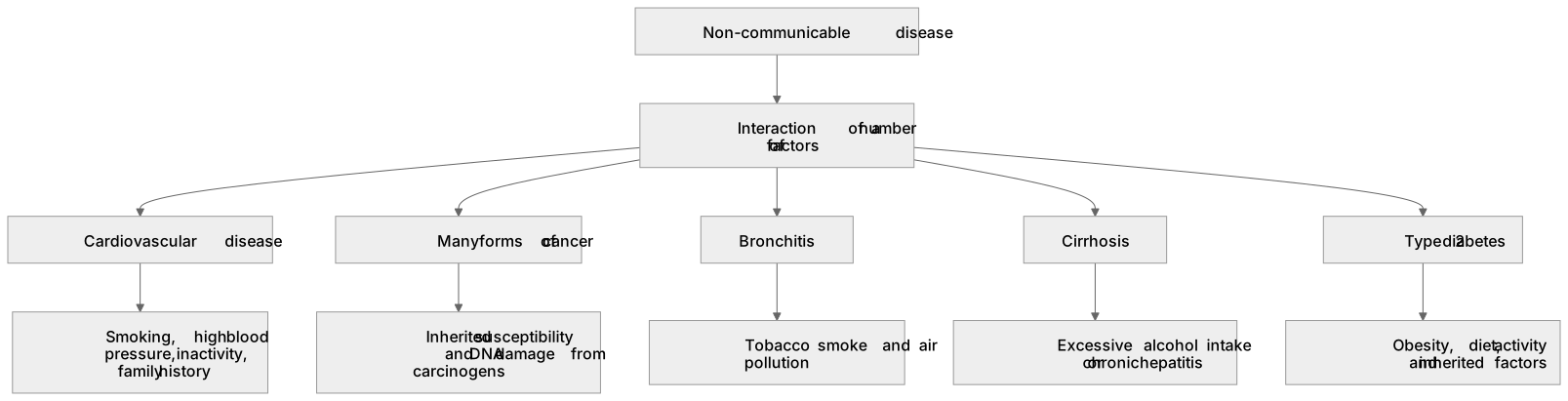
Many non-communicable diseases develop through interacting genetic, environmental and lifestyle factors. Cardiovascular disease risk is linked to smoking, high blood pressure, inactivity and family history. Cancers can involve inherited susceptibility and DNA damage from carcinogens such as tobacco smoke. Smoke and air pollution also increase chronic bronchitis risk. Excessive alcohol intake or chronic hepatitis can lead to liver scarring called cirrhosis; the resulting disease is not transmitted, although a contributing infection can be. Obesity, diet, activity and inherited factors influence type 2 diabetes risk, in which cells respond less effectively to insulin. Risk factors change probability; they do not guarantee disease.
What earns the marks
- Recall that non-communicable diseases result from interactions between genetic, lifestyle and environmental factors, not a single cause.
- Link specific risk factors to cardiovascular disease (saturated fat in the diet, hypertension, smoking, lack of exercise) and to bronchitis (tobacco smoke, particulates).
- Link excessive alcohol consumption and hepatitis infections to liver cirrhosis, and poor nutrition with obesity to an increased risk of type 2 diabetes.
- Explain that risk factors increase the probability of developing a disease without guaranteeing that it will occur.
- Distinguish type 1 diabetes (autoimmune destruction of insulin-producing pancreatic cells) from type 2 diabetes (reduced cellular sensitivity to insulin, linked to obesity).
Common mistakes and how to put them right
Believing non-communicable diseases have a single cause rather than multiple interacting risk factors.
Confusing type 1 diabetes (autoimmune destruction of insulin-producing pancreatic cells) with type 2 diabetes (reduced cellular response to insulin, linked to obesity).
Writing that poor nutrition and obesity 'directly cause' type 2 diabetes.
Put it right: They increase the risk, and other factors such as genetics also contribute.
Exam tips
- State clearly that lifestyle risk factors increase the probability of developing a non-communicable disease, rather than guaranteeing it.
- When discussing type 2 diabetes, link high-sugar diet and obesity to body cells responding less well to insulin, and avoid claiming a single deterministic cause.
Try the lesson
The start of the Monitoring and maintaining health: recall that many non-communicable human diseases are caused by the interaction of a number of factors (to include: cardiovascular diseases, many forms of cancer, some lung (bronchitis) and liver (cirrhosis) diseases and diseases influenced by nutrition, including type 2 diabetes) lesson, made from teaching notes for this specification point.
Have a go first
Which of these is a non-communicable disease?
Listen
Many non-communicable diseases develop through interacting genetic, environmental and lifestyle factors. Cardiovascular disease risk is linked to smoking, high blood pressure, inactivity and family history. Cancers can involve inherited susceptibility and DNA damage from carcinogens such as tobacco smoke. Smoke and air pollution also increase chronic bronchitis risk. Excessive alcohol intake or chronic hepatitis can lead to liver scarring called cirrhosis; the resulting disease is not transmitted, although a contributing infection can be. Obesity, diet, activity and inherited factors influence type 2 diabetes risk, in which cells respond less effectively to insulin. Risk factors change probability; they do not guarantee disease. A strong answer earns marks for these points. Recall that non-communicable diseases result from interactions between genetic, lifestyle and environmental factors, not a single cause. Link specific risk factors to cardiovascular disease (saturated fat in the diet, hypertension, smoking, lack of exercise) and to bronchitis (tobacco smoke, particulates). Link excessive alcohol consumption and hepatitis infections to liver cirrhosis, and poor nutrition with obesity to an increased risk of type 2 diabetes. Explain that risk factors increase the probability of developing a disease without guaranteeing that it will occur. Exam tip: State clearly that lifestyle risk factors increase the probability of developing a non-communicable disease, rather than guaranteeing it.
See it
Key words
Say what each word means before you turn the card.
multifactorial diseases
Try answering aloud or in your head before turning the card.
lifestyle risk factors
Try answering aloud or in your head before turning the card.
cardiovascular disease
Try answering aloud or in your head before turning the card.
type 2 diabetes
Try answering aloud or in your head before turning the card.
See every definition
- multifactorial diseases
- Non-communicable human diseases caused by the interaction of a number of factors, not a single cause.
- lifestyle risk factors
- Factors that increase the probability of developing a non-communicable disease without guaranteeing that it will occur.
- cardiovascular disease
- A disease whose risk is linked to smoking, high blood pressure, inactivity and family history.
- type 2 diabetes
- A disease influenced by nutrition in which cells respond less effectively to insulin, with obesity, diet, activity and inherited factors affecting risk.
Label the diagram
Some boxes have lost their names. Pick the right name for each number.
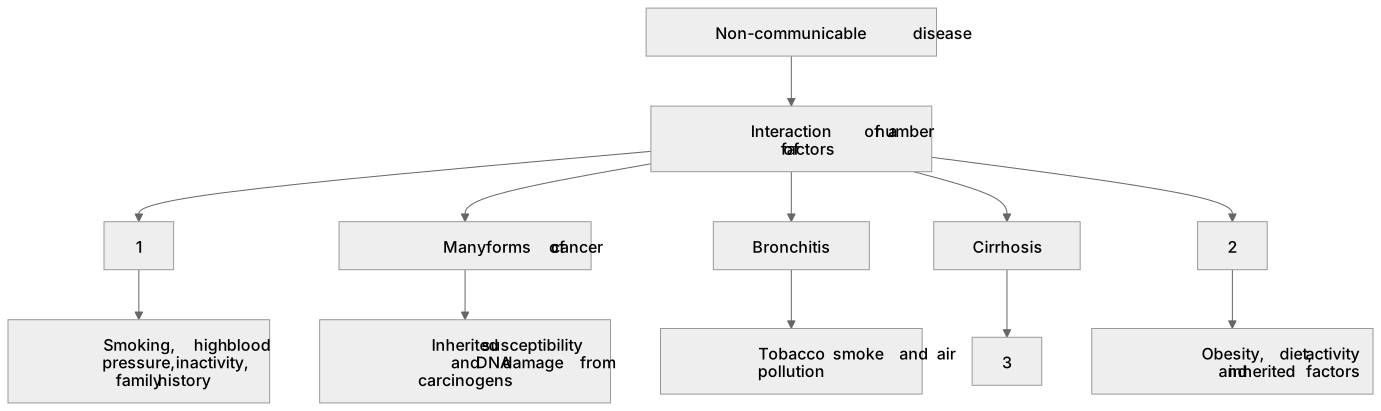
1Box 1
2Box 2
3Box 3
There is more to this lesson
The full lesson goes on to check your understanding and help you earn the marks. Create a free account to carry on, with your progress saved.
A week of Premium from your first lesson · Then the free plan continues · No card, no charge
Test your understanding of Monitoring and maintaining health: recall that many non-communicable human diseases are caused by the interaction of a number of factors (to include: cardiovascular diseases, many forms of cancer, some lung (bronchitis) and liver (cirrhosis) diseases and diseases influenced by nutrition, including type 2 diabetes)
Active recall beats re-reading. Take an instant quiz now to test what you’ve learned and lock it into long-term memory.
A week of Premium from your first lesson · Then the free plan continues · No card, no charge