OCR · GCSE · Biology
Course version: J247 · Version from Sept 2018
Describe evolution as a change in the inherited characteristics of a…
Full specification wording
Natural selection and evolution: describe evolution as a change in the inherited characteristics of a population over time, through a process of natural selection, which may result in the formation of new species
Evolution represents the progressive change in inherited characteristics and allele frequencies of a biological population across successive generations through natural selection.
- Point 4 of 6
- 4 key terms
Study notes
From the teaching notes for this specification point.
The idea
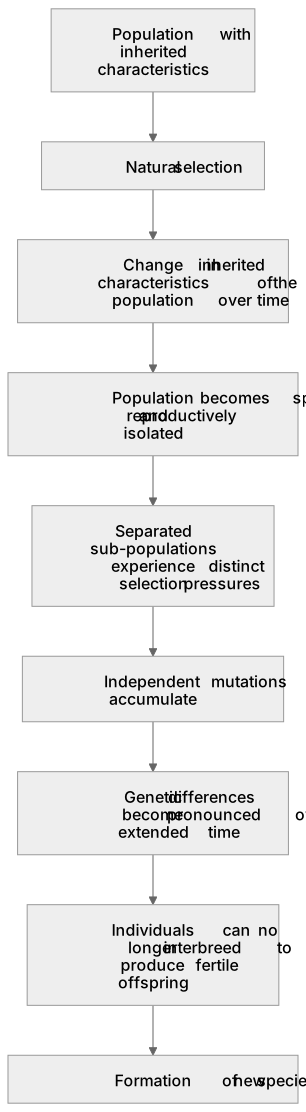
Evolution represents the progressive change in inherited characteristics and allele frequencies of a biological population across successive generations through natural selection. When a population becomes split and reproductively isolated, such as through geographic barriers like mountain ranges or rivers, the separated sub-populations experience distinct selection pressures and accumulate independent mutations. Over extended geological timeframes, genetic differences become so pronounced that individuals from the two populations can no longer interbreed to produce fertile offspring, marking the emergence of new species.
What earns the marks
- Define evolution as a change in the inherited characteristics of a population over time through natural selection.
- Describe how geographical or reproductive isolation prevents gene flow between separated populations.
- Explain that distinct selection pressures lead to divergence until populations can no longer interbreed to produce fertile offspring (speciation).
Common mistakes and how to put them right
Describing evolution as a change occurring within an individual organism during its single lifespan.
Forgetting the crucial criterion for speciation.
Put it right: Inability to interbreed to produce fertile offspring.
Exam tips
- State the biological definition of a species when answering speciation questions: organisms that can breed together to produce fertile offspring.
- Ensure you mention that speciation requires reproductive or geographical isolation to prevent interbreeding.
Try the lesson
The start of the Natural selection and evolution: describe evolution as a change in the inherited characteristics of a population over time, through a process of natural selection, which may result in the formation of new species lesson, made from teaching notes for this specification point.
Have a go first
Which statement best describes evolution?
Listen
Evolution represents the progressive change in inherited characteristics and allele frequencies of a biological population across successive generations through natural selection. When a population becomes split and reproductively isolated, such as through geographic barriers like mountain ranges or rivers, the separated sub-populations experience distinct selection pressures and accumulate independent mutations. Over extended geological timeframes, genetic differences become so pronounced that individuals from the two populations can no longer interbreed to produce fertile offspring, marking the emergence of new species. A strong answer earns marks for these points. Define evolution as a change in the inherited characteristics of a population over time through natural selection. Describe how geographical or reproductive isolation prevents gene flow between separated populations. Explain that distinct selection pressures lead to divergence until populations can no longer interbreed to produce fertile offspring (speciation). Exam tip: State the biological definition of a species when answering speciation questions: organisms that can breed together to produce fertile offspring.
See it
Key words
Say what each word means before you turn the card.
evolutionary change
Try answering aloud or in your head before turning the card.
speciation
Try answering aloud or in your head before turning the card.
isolation mechanisms
Try answering aloud or in your head before turning the card.
fertile offspring
Try answering aloud or in your head before turning the card.
See every definition
- evolutionary change
- A change in the inherited characteristics of a population over time, through a process of natural selection, which may result in the formation of new species.
- speciation
- The emergence of new species, occurring when genetic differences become so pronounced that individuals from two populations can no longer interbreed to produce fertile offspring.
- isolation mechanisms
- Geographical or reproductive isolation that prevents gene flow between separated populations, such as through geographic barriers like mountain ranges or rivers.
- fertile offspring
- Offspring that organisms can breed together to produce, the inability to do so being the crucial criterion for speciation.
Label the diagram
Some boxes have lost their names. Pick the right name for each number.
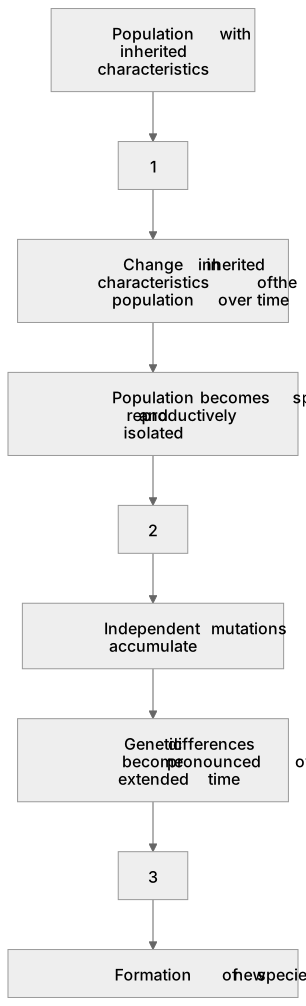
1Box 1
2Box 2
3Box 3
There is more to this lesson
The full lesson goes on to check your understanding and help you earn the marks. Create a free account to carry on, with your progress saved.
A week of Premium from your first lesson · Then the free plan continues · No card, no charge
Test your understanding of Natural selection and evolution: describe evolution as a change in the inherited characteristics of a population over time, through a process of natural selection, which may result in the formation of new species
Active recall beats re-reading. Take an instant quiz now to test what you’ve learned and lock it into long-term memory.
A week of Premium from your first lesson · Then the free plan continues · No card, no charge