OCR · GCSE · Biology
Course version: J247 · Version from Sept 2018
Describe the impact of developments in biology on classification systems…
Full specification wording
Natural selection and evolution: describe the impact of developments in biology on classification systems (to include: natural and artificial classification systems and use of molecular phylogenetics based on DNA sequencing)
Biological classification has transitioned from artificial systems based on observable morphological traits to natural phylogenetic systems reflecting evolutionary lineage.
- Point 2 of 6
- 4 key terms
Study notes
From the teaching notes for this specification point.
The idea
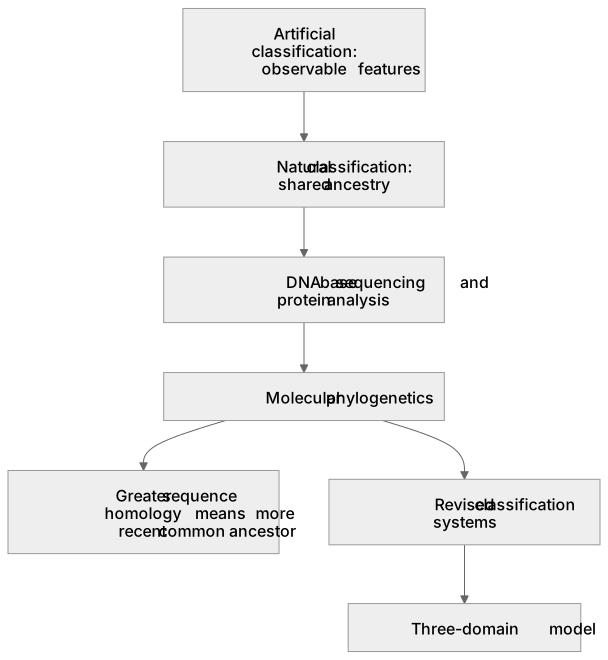
Biological classification has transitioned from artificial systems based on observable morphological traits to natural phylogenetic systems reflecting evolutionary lineage. Early artificial systems grouped organisms by superficial characteristics or shared habitats, often misclassifying convergent organisms like birds and insects together because both fly. Natural classification systems organise species based on shared ancestry. Advances in molecular biology, particularly DNA base sequencing and protein analysis, allow precise phylogenetic mapping; organisms with greater sequence homology share more recent common ancestors, leading to the modern three-domain model.
What earns the marks
- Distinguish between artificial classification based on observable features and natural classification based on evolutionary ancestry.
- Explain how DNA and protein sequencing provides objective evidence of evolutionary relationships.
- Describe how molecular evidence led to revisions of classification systems, such as the three-domain system.
Common mistakes and how to put them right
Thinking that artificial classification means organisms were artificially bred by humans.
Assuming anatomical similarity always indicates close evolutionary relatedness, ignoring convergent evolution.
Exam tips
- Use the phrase molecular phylogenetics or DNA sequencing when explaining modern classification developments.
- Emphasise that the more similar the DNA base sequences between two species, the more recently they diverged from a common ancestor.
Try the lesson
The start of the Natural selection and evolution: describe the impact of developments in biology on classification systems (to include: natural and artificial classification systems and use of molecular phylogenetics based on DNA sequencing) lesson, made from teaching notes for this specification point.
Have a go first
Which type of classification system groups organisms based on their evolutionary relationships?
Listen
Biological classification has transitioned from artificial systems based on observable morphological traits to natural phylogenetic systems reflecting evolutionary lineage. Early artificial systems grouped organisms by superficial characteristics or shared habitats, often misclassifying convergent organisms like birds and insects together because both fly. Natural classification systems organise species based on shared ancestry. Advances in molecular biology, particularly DNA base sequencing and protein analysis, allow precise phylogenetic mapping; organisms with greater sequence homology share more recent common ancestors, leading to the modern three-domain model. A strong answer earns marks for these points. Distinguish between artificial classification based on observable features and natural classification based on evolutionary ancestry. Explain how DNA and protein sequencing provides objective evidence of evolutionary relationships. Describe how molecular evidence led to revisions of classification systems, such as the three-domain system. Exam tip: Use the phrase molecular phylogenetics or DNA sequencing when explaining modern classification developments.
See it
Key words
Say what each word means before you turn the card.
classification systems
Try answering aloud or in your head before turning the card.
molecular phylogenetics
Try answering aloud or in your head before turning the card.
DNA sequencing
Try answering aloud or in your head before turning the card.
evolutionary relatedness
Try answering aloud or in your head before turning the card.
See every definition
- classification systems
- Systems that group organisms, having transitioned from artificial systems based on observable morphological traits to natural phylogenetic systems reflecting evolutionary lineage.
- molecular phylogenetics
- Precise phylogenetic mapping based on DNA base sequencing and protein analysis, used in modern classification developments.
- DNA sequencing
- Sequencing of DNA bases that, with protein analysis, allows precise phylogenetic mapping and provides objective evidence of evolutionary relationships.
- evolutionary relatedness
- Shared ancestry reflected in natural classification systems, with greater sequence homology indicating more recent common ancestors.
Label the diagram
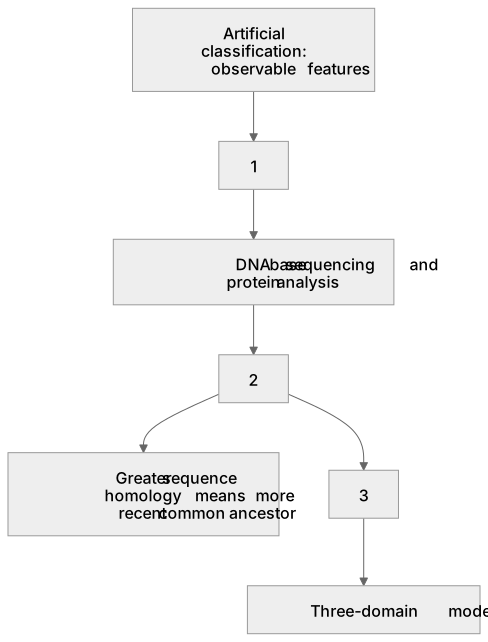
Some boxes have lost their names. Pick the right name for each number.
1Box 1
2Box 2
3Box 3
There is more to this lesson
The full lesson goes on to check your understanding and help you earn the marks. Create a free account to carry on, with your progress saved.
A week of Premium from your first lesson · Then the free plan continues · No card, no charge
Test your understanding of Natural selection and evolution: describe the impact of developments in biology on classification systems (to include: natural and artificial classification systems and use of molecular phylogenetics based on DNA sequencing)
Active recall beats re-reading. Take an instant quiz now to test what you’ve learned and lock it into long-term memory.
A week of Premium from your first lesson · Then the free plan continues · No card, no charge