OCR · GCSE · Biology
Course version: J247 · Version from Sept 2018
Safe and ethical use of living organisms (plants or animals) to measure…
Full specification wording
Photosynthesis: Safe and ethical use of living organisms (plants or animals) to measure physiological functions and responses to the environment
Investigating physiological processes in living plants requires careful handling to preserve tissue viability and obtain valid data.
- Point 13 of 15
- 4 key terms
Study notes
From the teaching notes for this specification point.
The idea
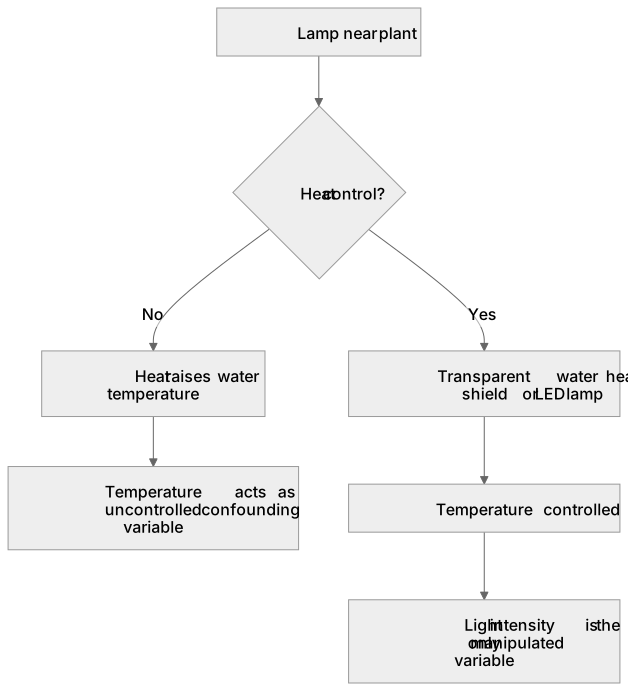
Investigating physiological processes in living plants requires careful handling to preserve tissue viability and obtain valid data. Aquatic plants like Cabomba must be kept submerged in pond water or nutrient solutions to prevent desiccation of delicate photosynthetic fronds. When positioning high-intensity lamps near plants, thermal damage must be prevented: traditional incandescent bulbs radiate significant heat, which raises water temperature and alters enzyme activity. To isolate light intensity as the sole independent variable, investigators place a transparent heat shield (such as a flat-sided beaker of water) between the lamp and boiling tube, or use cool LED lighting, and return plants safely to aquaria.
What earns the marks
- Keep aquatic plants fully submerged in suitable aquatic medium to prevent tissue desiccation and damage to cellular structures.
- Use an LED lamp or place a transparent water heat shield between the lamp and plant to prevent heat from affecting the rate.
- Handle plant stems gently and make clean diagonal cuts with a sharp blade to preserve vascular transport tissue.
- Maintain environmental stability to avoid heat stress, ensuring light intensity is the only manipulated variable.
Common mistakes and how to put them right
Using hot incandescent lamps without a heat screen, causing temperature to rise and acting as an uncontrolled confounding variable.
Leaving aquatic plants out of water during setup, causing fronds to dry out and halting photosynthetic gas exchange.
Cutting stems with blunt scissors that crush xylem and air spaces, preventing regular bubble release.
Exam tips
- Whenever an exam question shows a lamp placed close to pondweed, look for a beaker of water or heat screen and explain that it controls temperature.
- If asked to improve a photosynthesis experiment using a filament bulb, suggest replacing it with an LED bulb because LEDs emit minimal heat.
Try the lesson
The start of the Photosynthesis: Safe and ethical use of living organisms (plants or animals) to measure physiological functions and responses to the environment lesson, made from teaching notes for this specification point.
Have a go first
Why should a student wash their hands after handling pondweed during a photosynthesis experiment?
Listen
Investigating physiological processes in living plants requires careful handling to preserve tissue viability and obtain valid data. Aquatic plants like Cabomba must be kept submerged in pond water or nutrient solutions to prevent desiccation of delicate photosynthetic fronds. When positioning high-intensity lamps near plants, thermal damage must be prevented: traditional incandescent bulbs radiate significant heat, which raises water temperature and alters enzyme activity. To isolate light intensity as the sole independent variable, investigators place a transparent heat shield (such as a flat-sided beaker of water) between the lamp and boiling tube, or use cool LED lighting, and return plants safely to aquaria. A strong answer earns marks for these points. Keep aquatic plants fully submerged in suitable aquatic medium to prevent tissue desiccation and damage to cellular structures. Use an LED lamp or place a transparent water heat shield between the lamp and plant to prevent heat from affecting the rate. Handle plant stems gently and make clean diagonal cuts with a sharp blade to preserve vascular transport tissue. Maintain environmental stability to avoid heat stress, ensuring light intensity is the only manipulated variable. Exam tip: Whenever an exam question shows a lamp placed close to pondweed, look for a beaker of water or heat screen and explain that it controls temperature.
See it
Key words
Say what each word means before you turn the card.
heat shield
Try answering aloud or in your head before turning the card.
LED lighting
Try answering aloud or in your head before turning the card.
confounding variable
Try answering aloud or in your head before turning the card.
living plant welfare and preservation
Try answering aloud or in your head before turning the card.
See every definition
- heat shield
- A transparent barrier, such as a flat-sided beaker of water, placed between the lamp and boiling tube to prevent heat from affecting the rate.
- LED lighting
- A cool light source that emits minimal heat, used instead of incandescent bulbs so that light intensity is the only manipulated variable.
- confounding variable
- An uncontrolled factor, such as a rise in temperature from hot incandescent lamps, that affects the rate alongside the independent variable.
- living plant welfare and preservation
- Careful handling of living plants, keeping aquatic plants fully submerged in a suitable aquatic medium and returning them safely to aquaria.
There is more to this lesson
The full lesson goes on to check your understanding and help you earn the marks. Create a free account to carry on, with your progress saved.
A week of Premium from your first lesson · Then the free plan continues · No card, no charge
Test your understanding of Photosynthesis: Safe and ethical use of living organisms (plants or animals) to measure physiological functions and responses to the environment
Active recall beats re-reading. Take an instant quiz now to test what you’ve learned and lock it into long-term memory.
A week of Premium from your first lesson · Then the free plan continues · No card, no charge