OCR · GCSE · Biology
Course version: J247 · Version from Sept 2018
Use of appropriate apparatus and techniques for the observation and…
Full specification wording
Photosynthesis: Use of appropriate apparatus and techniques for the observation and measurement of biological changes and/or processes
Photosynthesis investigations measure the rate of oxygen evolution from aquatic plants (such as Cabomba or Elodea) under varying environmental conditions.
- Point 12 of 15
- 4 key terms
Study notes
From the teaching notes for this specification point.
The idea
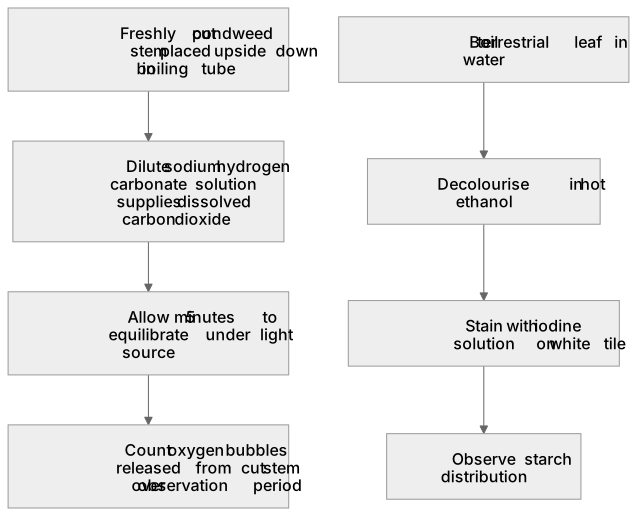
Photosynthesis investigations measure the rate of oxygen evolution from aquatic plants (such as Cabomba or Elodea) under varying environmental conditions. A freshly cut stem of pondweed is placed upside down in a boiling tube filled with dilute sodium hydrogen carbonate solution, which supplies an excess of dissolved carbon dioxide. The apparatus is allowed to equilibrate for 5 minutes under a light source before observations begin. As photosynthesis occurs, bubbles of oxygen gas emerge from the cut stem. Alternatively, starch production in terrestrial leaves is tested by boiling a leaf in water, decolorizing it in hot ethanol, and staining with iodine solution on a white tile to observe starch distribution.
What earns the marks
- Submerge freshly cut pondweed stem upwards in dilute sodium hydrogen carbonate solution to ensure carbon dioxide is not a limiting factor.
- Allow the plant an equilibration period (e.g. 5 minutes) at each new light intensity or distance before collecting data.
- Observe and count oxygen bubbles released from the cut stem or collect gas over a specified observation period (e.g. 1 minute).
- Test terrestrial leaves for starch by boiling in water, extracting chlorophyll in hot ethanol, and staining with iodine solution.
Common mistakes and how to put them right
Using boiled or deoxygenated plain water instead of sodium hydrogen carbonate solution, leaving carbon dioxide as a limiting factor.
Failing to allow an equilibration period after changing conditions, recording transitional rates rather than steady-state photosynthesis.
Crushing the cut end of the pondweed stem with scissors or blunt blades, which blocks the vascular bundles and stops bubble release.
Exam tips
- Always explain the purpose of sodium hydrogen carbonate in photosynthesis investigations: it provides a constant source of dissolved carbon dioxide.
- Remember that the leaf starch test proves photosynthesis occurred over hours or days, whereas pondweed bubbling measures instantaneous photosynthetic rate.
Try the lesson
The start of the Photosynthesis: Use of appropriate apparatus and techniques for the observation and measurement of biological changes and/or processes lesson, made from teaching notes for this specification point.
Have a go first
Which piece of apparatus is used to observe bubbles released by pondweed during photosynthesis?
Listen
Photosynthesis investigations measure the rate of oxygen evolution from aquatic plants (such as Cabomba or Elodea) under varying environmental conditions. A freshly cut stem of pondweed is placed upside down in a boiling tube filled with dilute sodium hydrogen carbonate solution, which supplies an excess of dissolved carbon dioxide. The apparatus is allowed to equilibrate for 5 minutes under a light source before observations begin. As photosynthesis occurs, bubbles of oxygen gas emerge from the cut stem. Alternatively, starch production in terrestrial leaves is tested by boiling a leaf in water, decolorizing it in hot ethanol, and staining with iodine solution on a white tile to observe starch distribution. A strong answer earns marks for these points. Submerge freshly cut pondweed stem upwards in dilute sodium hydrogen carbonate solution to ensure carbon dioxide is not a limiting factor. Allow the plant an equilibration period (e.g. 5 minutes) at each new light intensity or distance before collecting data. Observe and count oxygen bubbles released from the cut stem or collect gas over a specified observation period (e.g. 1 minute). Test terrestrial leaves for starch by boiling in water, extracting chlorophyll in hot ethanol, and staining with iodine solution. Exam tip: Always explain the purpose of sodium hydrogen carbonate in photosynthesis investigations: it provides a constant source of dissolved carbon dioxide.
See it
Key words
Say what each word means before you turn the card.
sodium hydrogen carbonate solution
Try answering aloud or in your head before turning the card.
equilibration period
Try answering aloud or in your head before turning the card.
oxygen bubbles
Try answering aloud or in your head before turning the card.
leaf starch test
Try answering aloud or in your head before turning the card.
See every definition
- sodium hydrogen carbonate solution
- A dilute solution in which a freshly cut pondweed stem is submerged so that it supplies an excess of dissolved carbon dioxide.
- equilibration period
- A period, for example 5 minutes, allowed at each new light intensity or distance before collecting data.
- oxygen bubbles
- Gas released from the cut stem as photosynthesis occurs, which can be observed and counted over a specified observation period.
- leaf starch test
- Boiling a leaf in water, decolourising it in hot ethanol and staining with iodine solution on a white tile to observe starch distribution.
Label the diagram
Some boxes have lost their names. Pick the right name for each number.
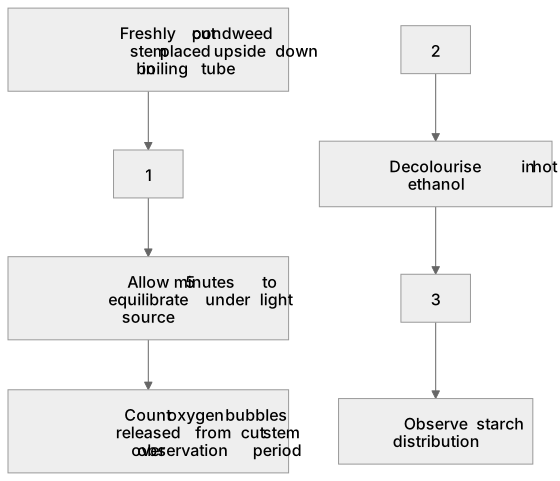
1Box 1
2Box 2
3Box 3
There is more to this lesson
The full lesson goes on to check your understanding and help you earn the marks. Create a free account to carry on, with your progress saved.
A week of Premium from your first lesson · Then the free plan continues · No card, no charge
Test your understanding of Photosynthesis: Use of appropriate apparatus and techniques for the observation and measurement of biological changes and/or processes
Active recall beats re-reading. Take an instant quiz now to test what you’ve learned and lock it into long-term memory.
A week of Premium from your first lesson · Then the free plan continues · No card, no charge