OCR · GCSE · Biology
Course version: J247 · Version from Sept 2018
Describe the process of mitosis in growth, including the cell cycle (to…
Full specification wording
Supplying the cell: describe the process of mitosis in growth, including the cell cycle (to include: the stages of the cell cycle as cell growth, DNA replication, more cell growth, movement of chromosomes)
The cell cycle is an ordered sequence of stages that produces new cells for growth, repair of damaged tissues and asexual reproduction.
- Point 3 of 7
- 4 key terms
Study notes
From the teaching notes for this specification point.
The idea
The cell cycle is an ordered sequence of stages that produces new cells for growth, repair of damaged tissues and asexual reproduction. In the first growth stage the cell enlarges and makes extra sub-cellular structures such as mitochondria and ribosomes. DNA replication then occurs, so each chromosome is copied to give two identical sister chromatids. A second growth stage and further protein synthesis prepare the cell for division. In mitosis the replicated chromosomes condense and line up at the cell equator; spindle fibres contract and pull the sister chromatids to opposite poles. Finally the cytoplasm and cell membrane divide (cytokinesis), giving two genetically identical diploid daughter cells.
What earns the marks
- Describing the interphase stages in order: cell growth and organelle synthesis, DNA replication, then further growth and protein synthesis.
- Describing mitosis: replicated chromosomes condense and line up at the cell equator, and spindle fibres pull the sister chromatids to opposite poles.
- Describing cytokinesis: the cytoplasm and cell membrane divide to form two genetically identical diploid daughter cells.
- Identifying growth, repair of damaged tissue and asexual reproduction as biological purposes of mitosis.
- Stating that the daughter cells have the same chromosome number as the parent cell because DNA was replicated before division.
Common mistakes and how to put them right
Confusing mitosis, which produces two genetically identical diploid cells, with meiosis, which produces genetically varied haploid gametes.
Put it right by comparing chromosome number and genetic identity of the products.
Omitting the interphase stages of cell growth and DNA replication that must precede chromosome separation.
Put it right by writing the full sequence: growth, DNA replication, more growth, mitosis, cytokinesis.
Saying chromosomes 'split' rather than that sister chromatids are pulled apart.
Put it right by using the term sister chromatids for the two copies joined at the centromere.
Exam tips
- Sequence the cell cycle as numbered steps: 1 cell growth and organelle multiplication; 2 DNA replication; 3 further growth; 4 mitosis (chromosome movement); 5 cytokinesis.
- When asked about growth, link the process to a concrete example, such as a root tip or shoot tip where mitosis adds new cells, and state that the daughter cells are genetically identical.
Try the lesson
The start of the Supplying the cell: describe the process of mitosis in growth, including the cell cycle (to include: the stages of the cell cycle as cell growth, DNA replication, more cell growth, movement of chromosomes) lesson, made from teaching notes for this specification point.
Have a go first
What is the main purpose of mitosis in a multicellular organism?
Listen
The cell cycle is an ordered sequence of stages that produces new cells for growth, repair of damaged tissues and asexual reproduction. In the first growth stage the cell enlarges and makes extra sub-cellular structures such as mitochondria and ribosomes. DNA replication then occurs, so each chromosome is copied to give two identical sister chromatids. A second growth stage and further protein synthesis prepare the cell for division. In mitosis the replicated chromosomes condense and line up at the cell equator; spindle fibres contract and pull the sister chromatids to opposite poles. Finally the cytoplasm and cell membrane divide (cytokinesis), giving two genetically identical diploid daughter cells. A strong answer earns marks for these points. Describing the interphase stages in order: cell growth and organelle synthesis, DNA replication, then further growth and protein synthesis. Describing mitosis: replicated chromosomes condense and line up at the cell equator, and spindle fibres pull the sister chromatids to opposite poles. Describing cytokinesis: the cytoplasm and cell membrane divide to form two genetically identical diploid daughter cells. Identifying growth, repair of damaged tissue and asexual reproduction as biological purposes of mitosis. A common slip: Confusing mitosis, which produces two genetically identical diploid cells, with meiosis, which produces genetically varied haploid gametes. Instead, comparing chromosome number and genetic identity of the products. Exam tip: Sequence the cell cycle as numbered steps: 1 cell growth and organelle multiplication; 2 DNA replication; 3 further growth; 4 mitosis (chromosome movement); 5 cytokinesis.
See it
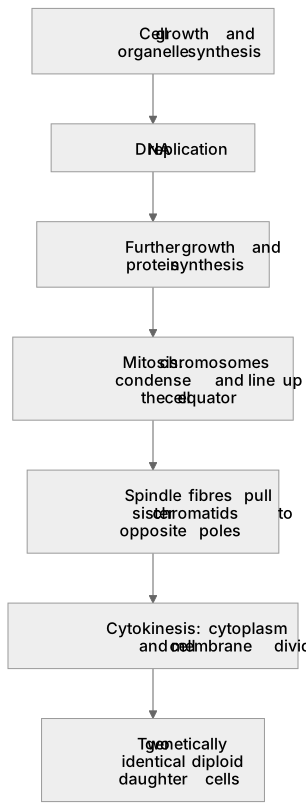
Put it in order
Put these steps in the order they happen.
- 1. Two genetically identical diploid daughter cells
- 2. Cytokinesis: cytoplasm and cell membrane divide
- 3. Further growth and protein synthesis
- 4. Spindle fibres pull sister chromatids to opposite poles
- 5. Cell growth and organelle synthesis
- 6. DNA replication
- 7. Mitosis: chromosomes condense and line up at the cell equator
Key words
Say what each word means before you turn the card.
cell cycle
Try answering aloud or in your head before turning the card.
DNA replication
Try answering aloud or in your head before turning the card.
mitosis
Try answering aloud or in your head before turning the card.
growth and repair
Try answering aloud or in your head before turning the card.
See every definition
- cell cycle
- An ordered sequence of stages that produces new cells for growth, repair of damaged tissues and asexual reproduction.
- DNA replication
- A stage in which each chromosome is copied to give two identical sister chromatids.
- mitosis
- The stage in which replicated chromosomes condense and line up at the cell equator, and spindle fibres pull the sister chromatids to opposite poles.
- growth and repair
- Biological purposes of mitosis, together with asexual reproduction, producing new cells for growth and repair of damaged tissues.
Label the diagram
Some boxes have lost their names. Pick the right name for each number.
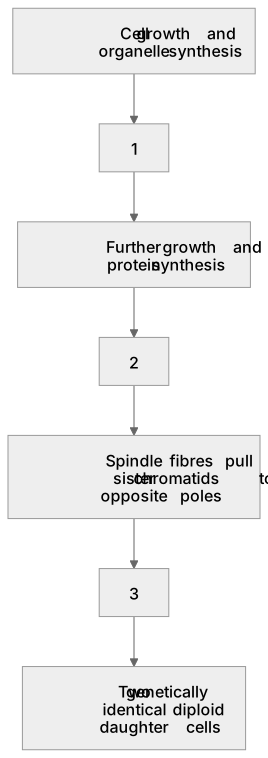
1Box 1
2Box 2
3Box 3
There is more to this lesson
The full lesson goes on to check your understanding and help you earn the marks. Create a free account to carry on, with your progress saved.
A week of Premium from your first lesson · Then the free plan continues · No card, no charge
Test your understanding of Supplying the cell: describe the process of mitosis in growth, including the cell cycle (to include: the stages of the cell cycle as cell growth, DNA replication, more cell growth, movement of chromosomes)
Active recall beats re-reading. Take an instant quiz now to test what you’ve learned and lock it into long-term memory.
A week of Premium from your first lesson · Then the free plan continues · No card, no charge