AQA · A-Level · Business
Course version: 7132 · Version from Sept 2023
Financial ratio analysis: The value of financial ratios when assessing…
Full specification wording
Analysing the existing internal position of a business to assess strengths and weaknesses: financial ratio analysis: The value of financial ratios when assessing performance (to include: Data may be analysed over time or in comparison with other businesses.)
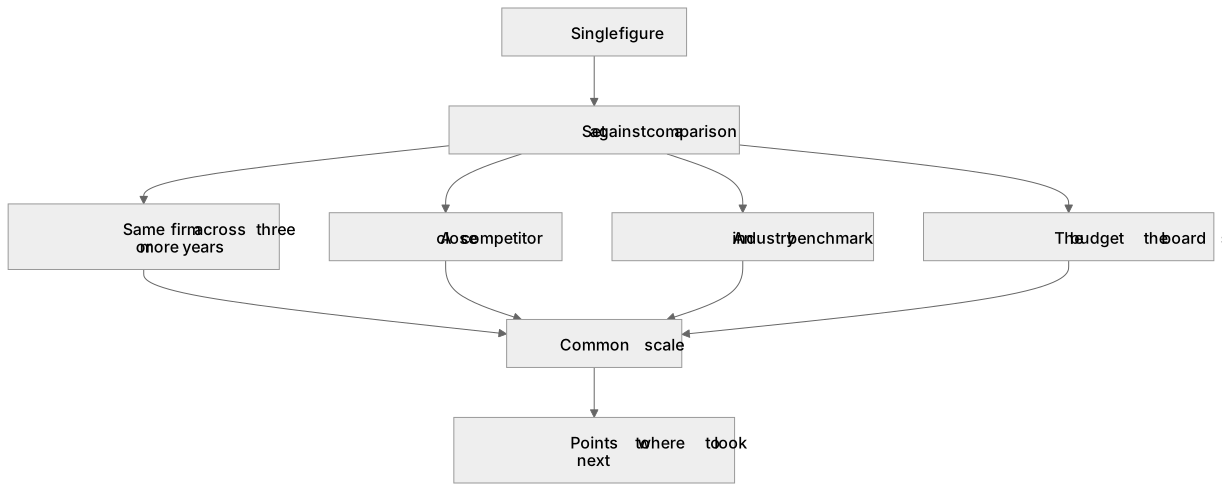
A single figure means almost nothing until it is set against something, which is why a marker looks for one of four comparisons: the same firm across three or more years, a close competitor, an…
- Point 2 of 2
- 4 key terms
Study notes
From the teaching notes for this specification point.
The idea
A single figure means almost nothing until it is set against something, which is why a marker looks for one of four comparisons: the same firm across three or more years, a close competitor, an industry benchmark, or the budget the board set. Done that way, the numbers turn absolute pounds into a common scale, so a small firm can be measured against a large one, and they point to where to look next rather than handing over an answer. The limits are where the evaluation marks live, since the figures are historic, drawn from accounts prepared under policies that differ between firms, easy to flatter by timing a year end, and silent about brand, staff, the order book and the quality of management. They describe a symptom and never the cause.
What earns the marks
- Naming the comparison being made and why it is fair, such as two firms in the same sector with the same year end rather than a retailer set against a manufacturer.
- Reading a trend rather than a point, so three years of falling return on capital employed is a different problem from one bad year caused by a fire or a strike.
- Attaching a limitation to the specific measure used rather than a general complaint, for example noting that a healthy current ratio can be built from inventory nobody is buying.
- Reaching a judgement that uses qualitative evidence from the case alongside the numbers, because no ratio can see the order book or the loss of a key customer.
Common mistakes and how to put them right
Listing limitations in general terms with no reference to the figures in the appendix, which reads as a memorised paragraph.
Comparing firms of different sizes on absolute profit, which is the very thing the calculation was done to avoid.
Treating an improvement as good news without asking how it was produced, when paying suppliers later improves cash while damaging supplier relations.
Exam tips
- This is where the top band is won on a finance essay, so leave room to say what the numbers cannot tell you about this business.
- If the appendix gives two years, structure the answer as what changed, why it changed and whether it will continue.
- Say explicitly what you are comparing against in your opening line, because mark schemes for value questions are built around that comparison.
Try the lesson
The start of the Analysing the existing internal position of a business to assess strengths and weaknesses: financial ratio analysis: The value of financial ratios when assessing performance (to include: Data may be analysed over time or in comparison with other businesses.) lesson, made from teaching notes for this specification point.
Have a go first
Which statement best describes the main purpose of calculating financial ratios when assessing a business?
Listen
A single figure means almost nothing until it is set against something, which is why a marker looks for one of four comparisons: the same firm across three or more years, a close competitor, an industry benchmark, or the budget the board set. Done that way, the numbers turn absolute pounds into a common scale, so a small firm can be measured against a large one, and they point to where to look next rather than handing over an answer. The limits are where the evaluation marks live, since the figures are historic, drawn from accounts prepared under policies that differ between firms, easy to flatter by timing a year end, and silent about brand, staff, the order book and the quality of management. They describe a symptom and never the cause. A strong answer earns marks for these points. Naming the comparison being made and why it is fair, such as two firms in the same sector with the same year end rather than a retailer set against a manufacturer. Reading a trend rather than a point, so three years of falling return on capital employed is a different problem from one bad year caused by a fire or a strike. Attaching a limitation to the specific measure used rather than a general complaint, for example noting that a healthy current ratio can be built from inventory nobody is buying. Reaching a judgement that uses qualitative evidence from the case alongside the numbers, because no ratio can see the order book or the loss of a key customer. Exam tip: This is where the top band is won on a finance essay, so leave room to say what the numbers cannot tell you about this business.
See it
Key words
Say what each word means before you turn the card.
comparison over time
Try answering aloud or in your head before turning the card.
benchmarking
Try answering aloud or in your head before turning the card.
limitations of ratios
Try answering aloud or in your head before turning the card.
qualitative evidence
Try answering aloud or in your head before turning the card.
See every definition
- comparison over time
- Analysing data by setting a figure against the same firm across three or more years, so a trend is read rather than a single point.
- benchmarking
- Setting a figure against an industry benchmark or a close competitor, so the numbers are measured on a common scale.
- limitations of ratios
- The figures are historic, drawn from accounts prepared under policies that differ between firms, easy to flatter by timing a year end, and silent about brand, staff, the order book and the quality of management.
- qualitative evidence
- Evidence from the case used alongside the numbers in reaching a judgement, because no ratio can see the order book or the loss of a key customer.
Label the diagram
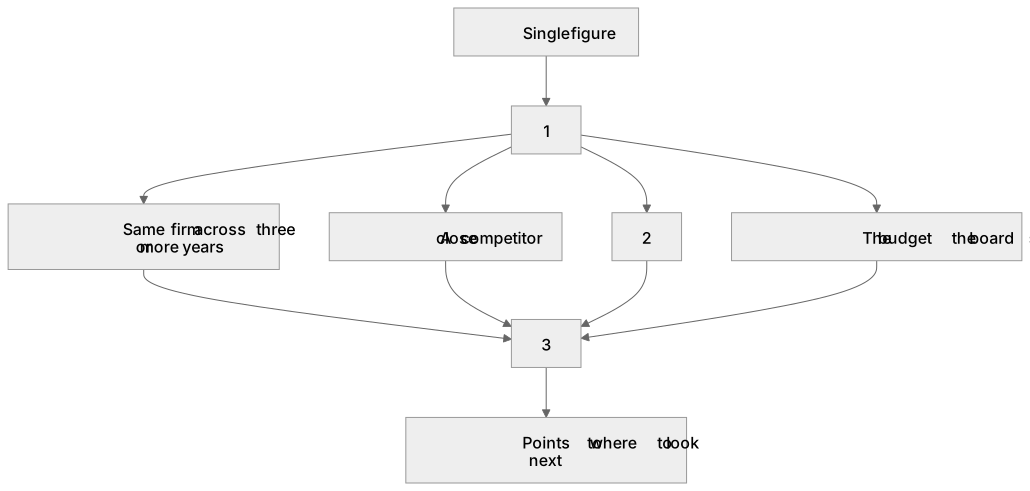
Some boxes have lost their names. Pick the right name for each number.
1Box 1
2Box 2
3Box 3
There is more to this lesson
The full lesson goes on to check your understanding and help you earn the marks. Create a free account to carry on, with your progress saved.
A week of Premium from your first lesson · Then the free plan continues · No card, no charge
Test your understanding of Analysing the existing internal position of a business to assess strengths and weaknesses: financial ratio analysis: The value of financial ratios when assessing performance (to include: Data may be analysed over time or in comparison with other businesses.)
Active recall beats re-reading. Take an instant quiz now to test what you’ve learned and lock it into long-term memory.
A week of Premium from your first lesson · Then the free plan continues · No card, no charge