AQA · A-Level · Business
Course version: 7132 · Version from Sept 2023
How developments in technology are affecting financial decision making and…
Full specification wording
Financial management: how developments in technology are affecting financial decision making and activities (eg crowd funding)
Technology changes both how a firm raises money and how quickly it knows where its money is.
- Point 2 of 6
- 2 key terms
Study notes
From the teaching notes for this specification point.
The idea
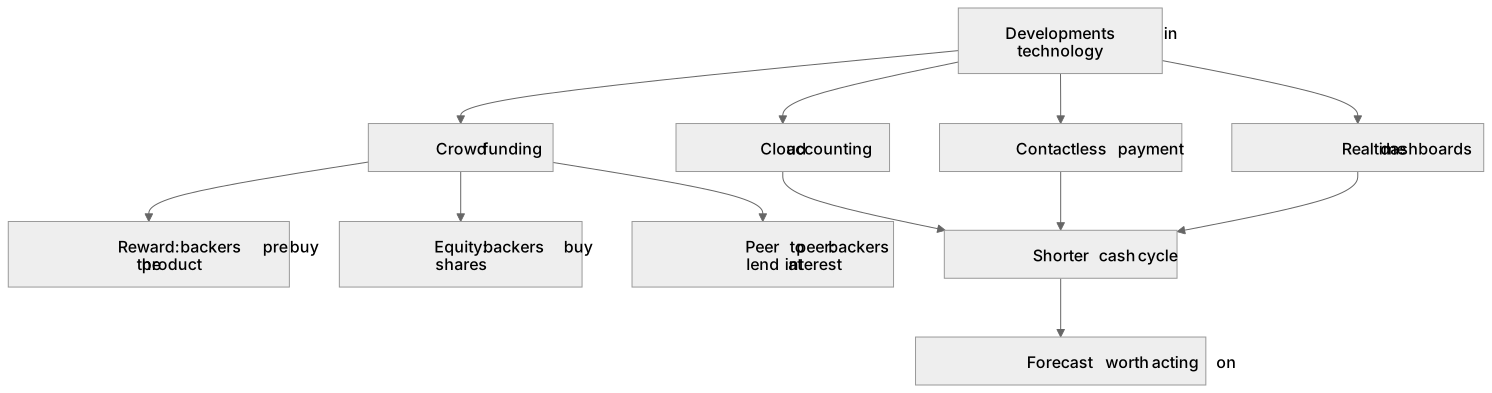
Technology changes both how a firm raises money and how quickly it knows where its money is. Crowd funding replaces one lender with many small backers: in reward form they pre buy the product, in equity form they buy shares, and in peer to peer form they lend at interest. It suits a firm a bank would refuse because there is no collateral test and the campaign doubles as marketing, but the equity version hands slices of ownership and voting rights to thousands of strangers, the campaign exposes the idea to imitators, and on most platforms missing the target returns every pledge. Cloud accounting, contactless payment and real time dashboards matter just as much, since they shorten the cash cycle and make a forecast worth acting on.
What earns the marks
- Naming the type of crowd funding that fits the firm, since a consumer product with a loyal following suits reward or equity funding while a firm with steady receipts may do better with peer to peer lending.
- Comparing cost and control against the realistic alternative, usually a bank loan with interest and security, or a share issue to a venture capitalist who will want a seat on the board.
- Explaining the effect on the timing of cash, because pledges arrive before the product is made while a loan arrives as a lump sum and leaves as monthly repayments.
- Using a real case, such as Brewdog raising many millions from small investors through its Equity for Punks rounds, to show the marketing value of a campaign alongside the money raised.
Common mistakes and how to put them right
Describing crowd funding as free money, when the equity version dilutes ownership permanently and peer to peer lending carries interest and a repayment schedule like any other debt.
Forgetting the all or nothing rule used by many platforms, so a campaign that raises most of its target raises nothing and the firm has paid campaign costs for no cash.
Listing technologies such as cloud accounting without saying what decision they change, when the credit is for explaining that daily sight of the bank balance lets the firm chase debtors earlier.
Exam tips
- This is usually examined as a choice, so set crowd funding against one named alternative source and judge it on cost, control, speed and risk instead of listing sources.
- If the stem gives a target sum and a platform fee, work out what the firm actually keeps before you judge whether the method is worth using.
- A recommendation scores best when it rests on something in the stem, such as whether the owners are willing to give up any control.
Try the lesson
The start of the Financial management: how developments in technology are affecting financial decision making and activities (eg crowd funding) lesson, made from teaching notes for this specification point.
Have a go first
Which development in technology allows a business to raise finance by collecting small amounts from a large number of people, usually through an online platform?
Listen
Technology changes both how a firm raises money and how quickly it knows where its money is. Crowd funding replaces one lender with many small backers: in reward form they pre buy the product, in equity form they buy shares, and in peer to peer form they lend at interest. It suits a firm a bank would refuse because there is no collateral test and the campaign doubles as marketing, but the equity version hands slices of ownership and voting rights to thousands of strangers, the campaign exposes the idea to imitators, and on most platforms missing the target returns every pledge. Cloud accounting, contactless payment and real time dashboards matter just as much, since they shorten the cash cycle and make a forecast worth acting on. A strong answer earns marks for these points. Naming the type of crowd funding that fits the firm, since a consumer product with a loyal following suits reward or equity funding while a firm with steady receipts may do better with peer to peer lending. Comparing cost and control against the realistic alternative, usually a bank loan with interest and security, or a share issue to a venture capitalist who will want a seat on the board. Explaining the effect on the timing of cash, because pledges arrive before the product is made while a loan arrives as a lump sum and leaves as monthly repayments. Using a real case, such as Brewdog raising many millions from small investors through its Equity for Punks rounds, to show the marketing value of a campaign alongside the money raised. Exam tip: This is usually examined as a choice, so set crowd funding against one named alternative source and judge it on cost, control, speed and risk instead of listing sources.
See it
Key words
Say what each word means before you turn the card.
crowd funding
Try answering aloud or in your head before turning the card.
equity crowd funding
Try answering aloud or in your head before turning the card.
See every definition
- crowd funding
- Replaces one lender with many small backers, who in reward form pre buy the product, in equity form buy shares, and in peer to peer form lend at interest.
- equity crowd funding
- Hands slices of ownership and voting rights to thousands of strangers, and the equity version dilutes ownership permanently rather than being free money.
Label the diagram
Some boxes have lost their names. Pick the right name for each number.
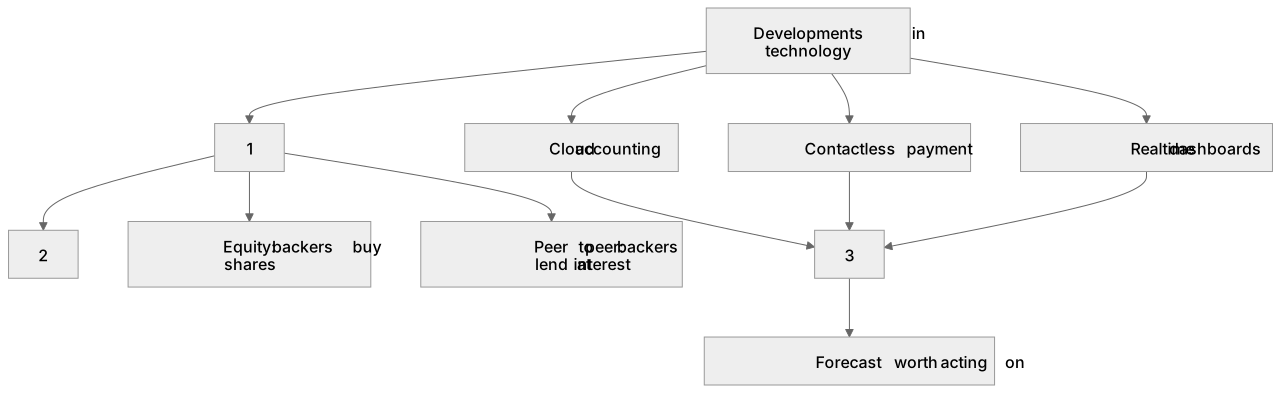
1Box 1
2Box 2
3Box 3
There is more to this lesson
The full lesson goes on to check your understanding and help you earn the marks. Create a free account to carry on, with your progress saved.
A week of Premium from your first lesson · Then the free plan continues · No card, no charge
Test your understanding of Financial management: how developments in technology are affecting financial decision making and activities (eg crowd funding)
Active recall beats re-reading. Take an instant quiz now to test what you’ve learned and lock it into long-term memory.
A week of Premium from your first lesson · Then the free plan continues · No card, no charge