AQA · A-Level · Business
Course version: 7132 · Version from Sept 2023
How developments in technology are affecting decision making and…
Full specification wording
Human resource management: how developments in technology are affecting decision making and activities in relation to human resources (eg changing the nature of work, the skills that are required and ways of working such as remote working)
Technology affects what a job consists of, who can do it, and where it is done.
- Point 2 of 6
- 4 key terms
Study notes
From the teaching notes for this specification point.
The idea
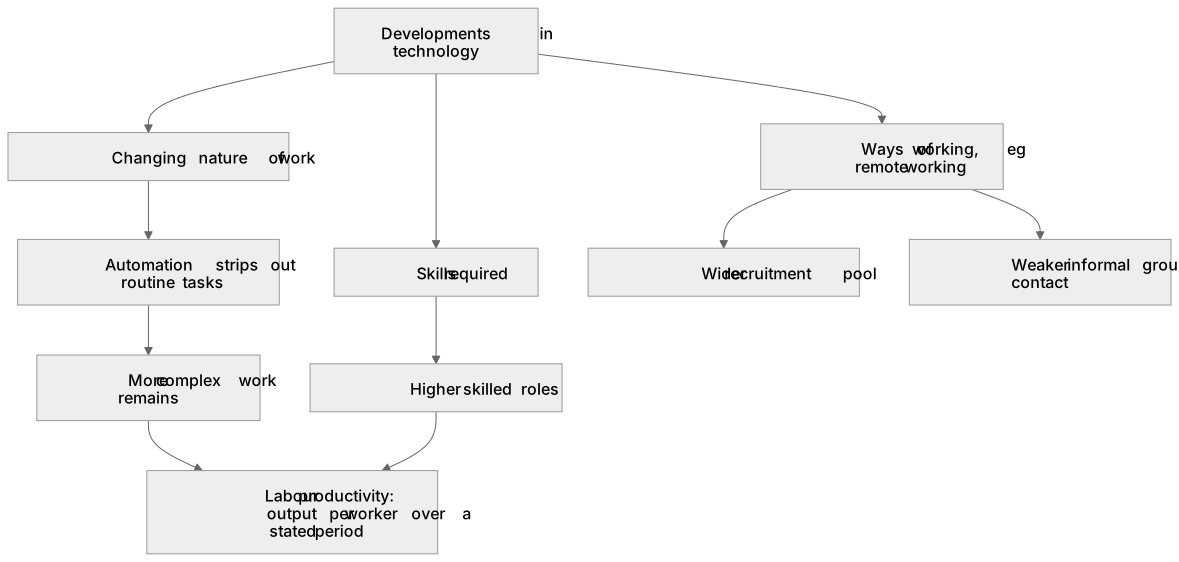
Technology affects what a job consists of, who can do it, and where it is done. Automation can strip out routine tasks, leaving more complex work. This shift can be analysed using motivational theories; for example, the remaining roles may offer greater scope for what Herzberg termed 'motivators' like responsibility, contrasting with Taylor's scientific management. HR activities also change: applicant tracking systems shorten hiring cycles but risk algorithmic bias if not managed. Remote and hybrid working widen the recruitment pool and can reduce office costs, but may weaken the informal group contact that Mayo's human relations theory links to motivation. A key performance indicator to measure the impact of these changes is labour productivity: output per worker over a stated period.
What earns the marks
- Naming the specific technology and the specific human resource activity it changes, such as video interviewing shortening selection for a firm recruiting across a whole region.
- Following the change into a workforce plan, for example that automation cuts the headcount needed while raising the skill level of the posts left, so training spend rises as the wage bill falls.
- Using labour productivity, output per worker over a stated period, as the evidence that the technology delivered what was promised for it.
- Saying what the model cannot see, for instance that Herzberg's motivators assume work with scope for achievement and recognition, which close remote monitoring can undermine.
- Treating algorithmic screening bias as a risk to be managed, for example by auditing the data or keeping a human check on rejections.
Common mistakes and how to put them right
Writing that technology simply destroys jobs, when in many firms it redistributes them towards higher skilled roles the employer then struggles to fill.
Treating remote working purely as a saving, and missing what it does to induction, to team cohesion and to how a manager judges performance.
Dropping in a theorist with no link to the technology described in the case, which earns knowledge credit and nothing above it.
Attributing task identity, the sense of completing a whole piece of work, to Herzberg.
Put it right: It belongs to Hackman and Oldham's job characteristics model.
Exam tips
- Case studies often plant a single sentence about new software or new machinery, and that sentence is the trigger for the workforce planning part of the answer.
- Where the stem gives output and headcount, work out labour productivity before and after, since the comparison is usually worth more than either figure on its own.
Try the lesson
The start of the Human resource management: how developments in technology are affecting decision making and activities in relation to human resources (eg changing the nature of work, the skills that are required and ways of working such as remote working) lesson, made from teaching notes for this specification point.
Have a go first
Which development in technology most directly allows an employee to work from home rather than at the employer's premises?
Listen
Technology affects what a job consists of, who can do it, and where it is done. Automation can strip out routine tasks, leaving more complex work. This shift can be analysed using motivational theories; for example, the remaining roles may offer greater scope for what Herzberg termed 'motivators' like responsibility, contrasting with Taylor's scientific management. HR activities also change: applicant tracking systems shorten hiring cycles but risk algorithmic bias if not managed. Remote and hybrid working widen the recruitment pool and can reduce office costs, but may weaken the informal group contact that Mayo's human relations theory links to motivation. A key performance indicator to measure the impact of these changes is labour productivity: output per worker over a stated period. A strong answer earns marks for these points. Naming the specific technology and the specific human resource activity it changes, such as video interviewing shortening selection for a firm recruiting across a whole region. Following the change into a workforce plan, for example that automation cuts the headcount needed while raising the skill level of the posts left, so training spend rises as the wage bill falls. Using labour productivity, output per worker over a stated period, as the evidence that the technology delivered what was promised for it. Saying what the model cannot see, for instance that Herzberg's motivators assume work with scope for achievement and recognition, which close remote monitoring can undermine. Exam tip: Case studies often plant a single sentence about new software or new machinery, and that sentence is the trigger for the workforce planning part of the answer.
See it
Key words
Say what each word means before you turn the card.
automation
Try answering aloud or in your head before turning the card.
remote and hybrid working
Try answering aloud or in your head before turning the card.
labour productivity
Try answering aloud or in your head before turning the card.
skills gaps and retraining
Try answering aloud or in your head before turning the card.
See every definition
- automation
- Strips out routine tasks, leaving more complex work, and can cut the headcount needed while raising the skill level of the posts left.
- remote and hybrid working
- Ways of working that widen the recruitment pool and can reduce office costs, but may weaken the informal group contact linked to motivation.
- labour productivity
- Output per worker over a stated period, used as a key performance indicator to measure the impact of these changes.
- skills gaps and retraining
- The struggle to fill higher skilled roles after technology redistributes jobs, so training spend rises as the wage bill falls.
Label the diagram
Some boxes have lost their names. Pick the right name for each number.
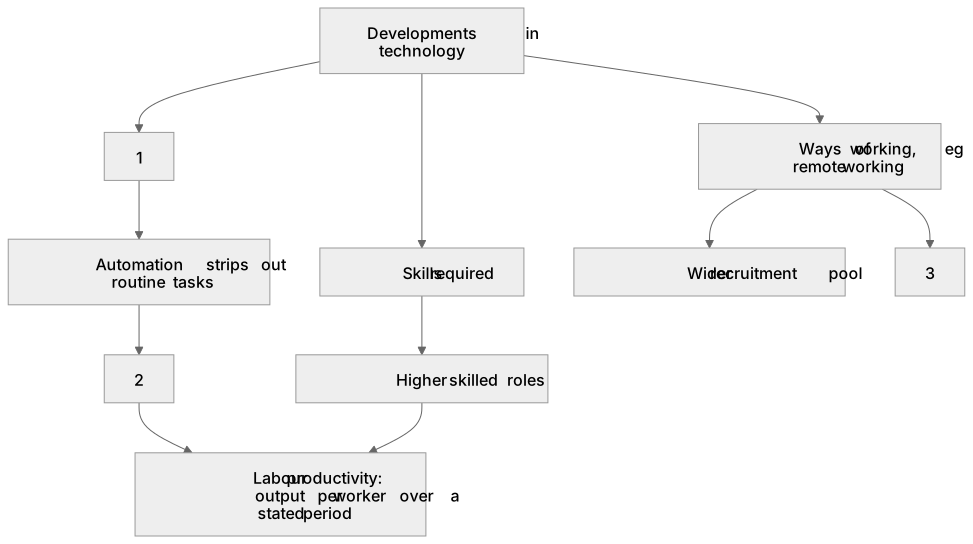
1Box 1
2Box 2
3Box 3
There is more to this lesson
The full lesson goes on to check your understanding and help you earn the marks. Create a free account to carry on, with your progress saved.
A week of Premium from your first lesson · Then the free plan continues · No card, no charge
Test your understanding of Human resource management: how developments in technology are affecting decision making and activities in relation to human resources (eg changing the nature of work, the skills that are required and ways of working such as remote working)
Active recall beats re-reading. Take an instant quiz now to test what you’ve learned and lock it into long-term memory.
A week of Premium from your first lesson · Then the free plan continues · No card, no charge