AQA · A-Level · Business
Course version: 7132 · Version from Sept 2023
Using the marketing mix: Decisions about the promotional mix (to include:…
Full specification wording
Making marketing decisions: using the marketing mix: Decisions about the promotional mix (to include: Promotional decisions should include: the value of branding, social media, viral marketing.)
Promotion is what a firm says and where it says it, running from advertising and sales promotion to public relations, personal selling, direct marketing and sponsorship.
- Point 5 of 9
- 4 key terms
Study notes
From the teaching notes for this specification point.
The idea
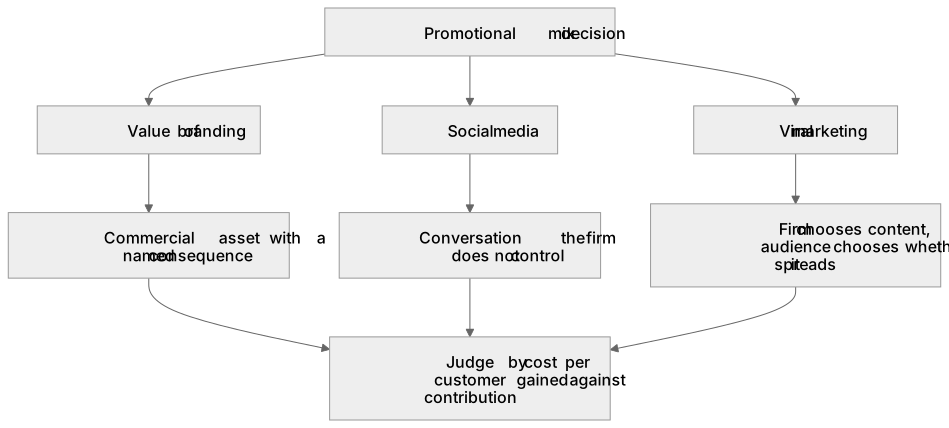
Promotion is what a firm says and where it says it, running from advertising and sales promotion to public relations, personal selling, direct marketing and sponsorship. A brand is the asset that the spending builds: it makes demand less price sensitive, supports a premium, makes shelf space easier to win and turns a search into a habit. Social media is cheap to enter and expensive to do well, because it is a conversation the firm does not control and a complaint travels faster than any campaign. Viral marketing costs very little per contact but cannot be commissioned to order, since the firm chooses the content and the audience chooses whether it spreads, so it belongs in a plan as an upside and never as the plan. Judge any campaign by cost per customer gained set against the contribution that customer brings.
What earns the marks
- Choosing a method that fits the target market named in the stem, so trade press and exhibitions for a business customer and short video for teenagers.
- Explaining branding as a commercial asset with a named consequence, such as lower price sensitivity, repeat purchase or easier access to shelf space, rather than as a logo.
- Weighing the cost of the campaign against the contribution earned from the extra sales it is expected to generate.
- Accepting that social media hands control to the audience, so the risk of a damaging response is part of the decision rather than an afterthought.
Common mistakes and how to put them right
Calling social media free, when content, moderation and paid reach all cost money and staff time.
Assuming a viral campaign can be planned and delivered on demand, which is the one thing about it that is outside the firm.
Listing promotional methods with no reference to who the customer is or what the campaign is supposed to achieve.
Exam tips
- Promotion is a favourite for assess the value of, so set a criterion first, usually sales gained for each pound spent, then judge against it.
- If the stem gives a promotional budget and a sales uplift, calculate the return before commenting, because unsupported praise of a campaign scores very little.
- Say what would have to be true for the campaign to work, since that conditional judgement is what separates the top band from a list of advantages.
Try the lesson
The start of the Making marketing decisions: using the marketing mix: Decisions about the promotional mix (to include: Promotional decisions should include: the value of branding, social media, viral marketing.) lesson, made from teaching notes for this specification point.
Have a go first
Which promotional method relies on customers sharing content with others online?
Listen
Promotion is what a firm says and where it says it, running from advertising and sales promotion to public relations, personal selling, direct marketing and sponsorship. A brand is the asset that the spending builds: it makes demand less price sensitive, supports a premium, makes shelf space easier to win and turns a search into a habit. Social media is cheap to enter and expensive to do well, because it is a conversation the firm does not control and a complaint travels faster than any campaign. Viral marketing costs very little per contact but cannot be commissioned to order, since the firm chooses the content and the audience chooses whether it spreads, so it belongs in a plan as an upside and never as the plan. Judge any campaign by cost per customer gained set against the contribution that customer brings. A strong answer earns marks for these points. Choosing a method that fits the target market named in the stem, so trade press and exhibitions for a business customer and short video for teenagers. Explaining branding as a commercial asset with a named consequence, such as lower price sensitivity, repeat purchase or easier access to shelf space, rather than as a logo. Weighing the cost of the campaign against the contribution earned from the extra sales it is expected to generate. Accepting that social media hands control to the audience, so the risk of a damaging response is part of the decision rather than an afterthought. Exam tip: Promotion is a favourite for assess the value of, so set a criterion first, usually sales gained for each pound spent, then judge against it.
See it
Key words
Say what each word means before you turn the card.
promotional mix
Try answering aloud or in your head before turning the card.
brand
Try answering aloud or in your head before turning the card.
social media
Try answering aloud or in your head before turning the card.
viral marketing
Try answering aloud or in your head before turning the card.
See every definition
- promotional mix
- The combination of methods a firm uses to say what it says and where it says it, running from advertising and sales promotion to public relations, personal selling, direct marketing and sponsorship.
- brand
- The asset that promotional spending builds, which makes demand less price sensitive, supports a premium, makes shelf space easier to win and turns a search into a habit.
- social media
- A cheap-to-enter promotional method that is expensive to do well, because it is a conversation the firm does not control and a complaint travels faster than any campaign.
- viral marketing
- A method that costs very little per contact but cannot be commissioned to order, since the firm chooses the content and the audience chooses whether it spreads.
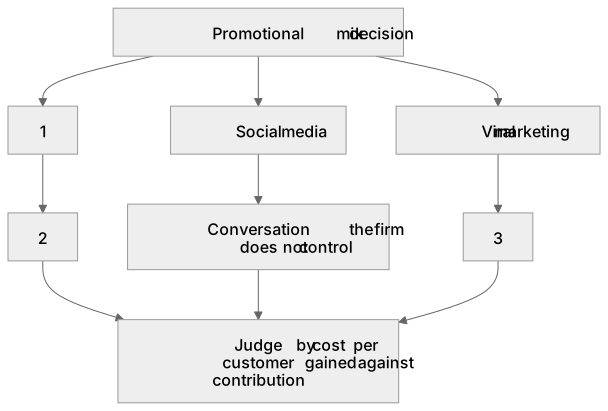
Label the diagram
Some boxes have lost their names. Pick the right name for each number.
1Box 1
2Box 2
3Box 3
There is more to this lesson
The full lesson goes on to check your understanding and help you earn the marks. Create a free account to carry on, with your progress saved.
A week of Premium from your first lesson · Then the free plan continues · No card, no charge
Test your understanding of Making marketing decisions: using the marketing mix: Decisions about the promotional mix (to include: Promotional decisions should include: the value of branding, social media, viral marketing.)
Active recall beats re-reading. Take an instant quiz now to test what you’ve learned and lock it into long-term memory.
A week of Premium from your first lesson · Then the free plan continues · No card, no charge