AQA · A-Level · Business
Course version: 7132 · Version from Sept 2023
Using the marketing mix: Distribution (place) decisions (to include:…
Full specification wording
Making marketing decisions: using the marketing mix: Distribution (place) decisions (to include: Distribution decisions should include multi-channel distribution.)
Place is how the product reaches the buyer, and the real decision is how many intermediaries to allow and how much margin to hand them.
- Point 6 of 9
- 4 key terms
Study notes
From the teaching notes for this specification point.
The idea
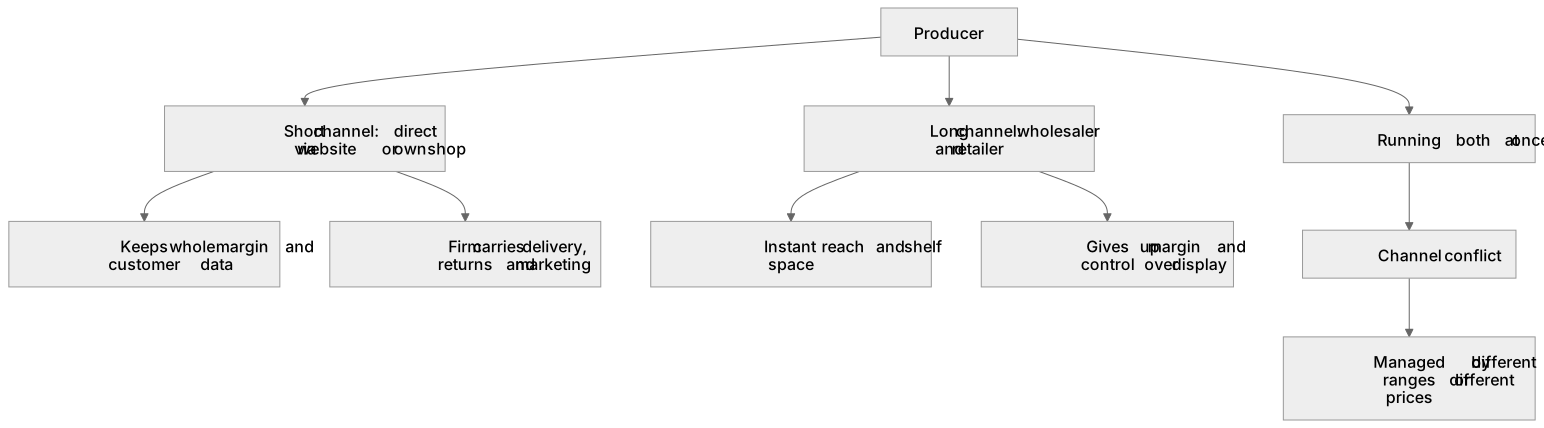
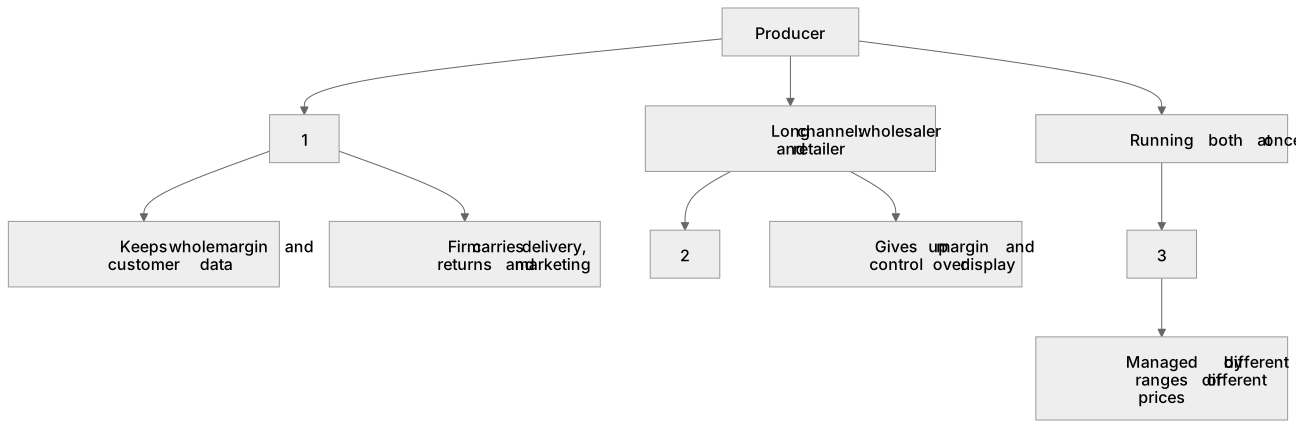
Place is how the product reaches the buyer, and the real decision is how many intermediaries to allow and how much margin to hand them. A short channel, selling direct from a website or an own shop, keeps the whole margin and the customer data but leaves the firm carrying delivery, returns and all the marketing; a long channel through wholesaler and retailer buys instant reach and shelf space at the cost of perhaps forty per cent of the selling price and of control over how the product is displayed. Running both at once creates channel conflict, because the retailer who built the demand watches the customer buy on the maker own site instead. Intensive, selective and exclusive coverage each match a different positioning, so an exclusive watch sold in a discount shed loses the premium the rest of the mix paid for.
What earns the marks
- Naming the channel structure and counting the intermediaries, then saying what margin each takes and what the producer is left with.
- Matching the intensity of distribution to the positioning, so a mass convenience good goes intensive while a luxury one goes exclusive.
- Identifying channel conflict where a firm sells direct and through retailers, and explaining how it could be managed, for example by different ranges or different prices.
- Bringing operations into the answer, because selling direct means warehousing, picking and returns the business did not previously handle.
Common mistakes and how to put them right
Treating a website as a costless extra channel, ignoring fulfilment, returns and the working capital tied up in stock.
Writing about place as though it only means the location of a shop, when for most firms it means the whole route to market.
Recommending that retailers be cut out without asking whether the firm can reach and supply those customers on its own.
Exam tips
- Questions on place often hide a margin calculation, so work out what the producer actually receives after the retailer mark up before judging the channel.
- Use the phrase route to market and name the intermediaries given in the stem, because that naming is the application the marker is hunting for.
- When asked to recommend, compare two channel options on reach, margin and control, choose one, and say what evidence would change your mind.
Try the lesson
The start of the Making marketing decisions: using the marketing mix: Distribution (place) decisions (to include: Distribution decisions should include multi-channel distribution.) lesson, made from teaching notes for this specification point.
Have a go first
What is meant by multi-channel distribution?
Listen
Place is how the product reaches the buyer, and the real decision is how many intermediaries to allow and how much margin to hand them. A short channel, selling direct from a website or an own shop, keeps the whole margin and the customer data but leaves the firm carrying delivery, returns and all the marketing; a long channel through wholesaler and retailer buys instant reach and shelf space at the cost of perhaps forty per cent of the selling price and of control over how the product is displayed. Running both at once creates channel conflict, because the retailer who built the demand watches the customer buy on the maker own site instead. Intensive, selective and exclusive coverage each match a different positioning, so an exclusive watch sold in a discount shed loses the premium the rest of the mix paid for. A strong answer earns marks for these points. Naming the channel structure and counting the intermediaries, then saying what margin each takes and what the producer is left with. Matching the intensity of distribution to the positioning, so a mass convenience good goes intensive while a luxury one goes exclusive. Identifying channel conflict where a firm sells direct and through retailers, and explaining how it could be managed, for example by different ranges or different prices. Bringing operations into the answer, because selling direct means warehousing, picking and returns the business did not previously handle. Exam tip: Questions on place often hide a margin calculation, so work out what the producer actually receives after the retailer mark up before judging the channel.
See it
Key words
Say what each word means before you turn the card.
channel of distribution
Try answering aloud or in your head before turning the card.
intermediary margin
Try answering aloud or in your head before turning the card.
multi-channel distribution
Try answering aloud or in your head before turning the card.
channel conflict
Try answering aloud or in your head before turning the card.
See every definition
- channel of distribution
- The route to market through which the product reaches the buyer, involving a number of intermediaries.
- intermediary margin
- The share of the selling price taken by each intermediary in the channel, leaving the producer the rest.
- multi-channel distribution
- Running both a short channel, selling direct, and a long channel through retailers at the same time.
- channel conflict
- Arises where a firm sells direct and through retailers, because the retailer who built the demand watches the customer buy on the maker's own site instead.
Label the diagram
Some boxes have lost their names. Pick the right name for each number.
1Box 1
2Box 2
3Box 3
There is more to this lesson
The full lesson goes on to check your understanding and help you earn the marks. Create a free account to carry on, with your progress saved.
A week of Premium from your first lesson · Then the free plan continues · No card, no charge
Test your understanding of Making marketing decisions: using the marketing mix: Distribution (place) decisions (to include: Distribution decisions should include multi-channel distribution.)
Active recall beats re-reading. Take an instant quiz now to test what you’ve learned and lock it into long-term memory.
A week of Premium from your first lesson · Then the free plan continues · No card, no charge