AQA · A-Level · Business
Course version: 7132 · Version from Sept 2023
The value of setting financial objectives (to include: Financial…
Full specification wording
Setting financial objectives: The value of setting financial objectives (to include: Financial objectives to include: the concept of a return on investment, revenue, costs and profit objectives, cash flow objectives.)
A target only works if it is measurable, owned and time bound, and finance provides the cleanest targets a business has.
- Point 1 of 3
- 4 key terms
Study notes
From the teaching notes for this specification point.
The idea
A target only works if it is measurable, owned and time bound, and finance provides the cleanest targets a business has. Return on investment, the return earned divided by the capital put in and shown as a percentage, lets a board rank a new machine against a new store against simply leaving the money on deposit. Sales targets drive the sales force, cost targets discipline overheads, profit targets reassure shareholders, and cash targets keep the firm solvent while all of that happens. The value is in coordination, motivation and control, because each target becomes a budget and every budget throws up a variance somebody has to explain. The danger is that people hit the target and miss the point, since sales can be bought with discounts and costs cut by starving quality.
What earns the marks
- Writing the objective in a form that can be checked, with a figure and a deadline, such as lifting operating profit margin by three percentage points within two years.
- Calculating return on investment from the figures given and comparing it with the interest rate or with a competing project, since the percentage means nothing standing alone.
- Explaining why the objective chosen suits this firm's stage, because a young business chases cash and survival while an established one chases return on investment.
- Recognising conflict between objectives, for instance that a sales target met by extending credit terms damages the cash objective in the same period.
Common mistakes and how to put them right
Confusing a financial objective with a corporate aim, so the answer offers growth or market leadership where the question wants a figure and a date.
Treating profit and cash targets as the same thing, and so never noticing that the two can move in opposite directions in the same quarter.
Dividing an annual return by a lifetime cost when calculating return on investment, so the percentage compares figures covering different periods.
Exam tips
- Calculation tasks often form the first part of a question, providing the basis for subsequent analysis or judgement. Ensure accuracy with units and percentages before moving on to the main task.
- When asked to assess the value of setting objectives, argue both that they focus effort and that they distort behaviour, then decide which matters more for this firm.
- Quote the objective back in your conclusion, because a recommendation is judged against the target the business itself has set.
Try the lesson
The start of the Setting financial objectives: The value of setting financial objectives (to include: Financial objectives to include: the concept of a return on investment, revenue, costs and profit objectives, cash flow objectives.) lesson, made from teaching notes for this specification point.
Have a go first
Which financial objective states the minimum acceptable profit a business aims to achieve over a period?
Listen
A target only works if it is measurable, owned and time bound, and finance provides the cleanest targets a business has. Return on investment, the return earned divided by the capital put in and shown as a percentage, lets a board rank a new machine against a new store against simply leaving the money on deposit. Sales targets drive the sales force, cost targets discipline overheads, profit targets reassure shareholders, and cash targets keep the firm solvent while all of that happens. The value is in coordination, motivation and control, because each target becomes a budget and every budget throws up a variance somebody has to explain. The danger is that people hit the target and miss the point, since sales can be bought with discounts and costs cut by starving quality. A strong answer earns marks for these points. Writing the objective in a form that can be checked, with a figure and a deadline, such as lifting operating profit margin by three percentage points within two years. Calculating return on investment from the figures given and comparing it with the interest rate or with a competing project, since the percentage means nothing standing alone. Explaining why the objective chosen suits this firm's stage, because a young business chases cash and survival while an established one chases return on investment. Recognising conflict between objectives, for instance that a sales target met by extending credit terms damages the cash objective in the same period. Exam tip: Calculation tasks often form the first part of a question, providing the basis for subsequent analysis or judgement. Ensure accuracy with units and percentages before moving on to the main task.
See it
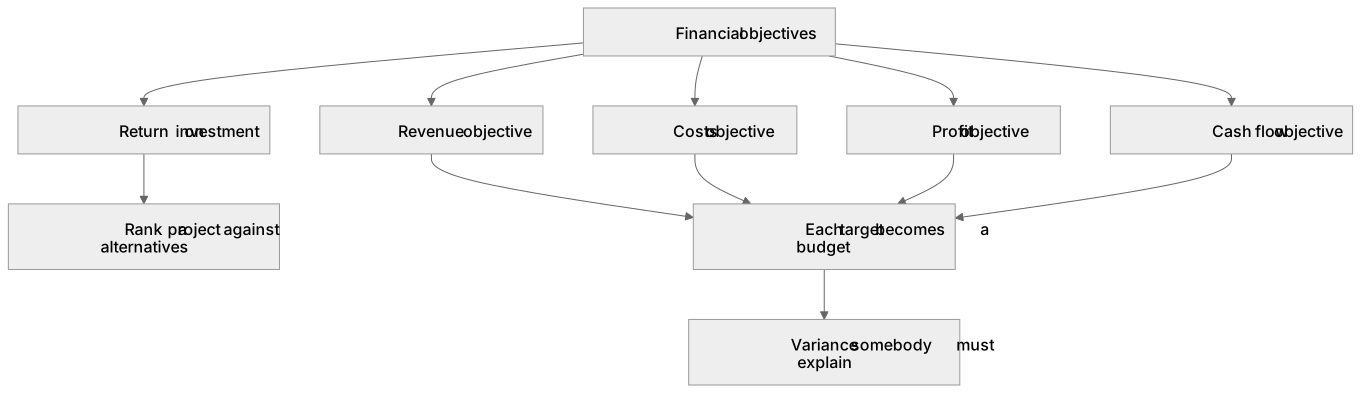
Key words
Say what each word means before you turn the card.
return on investment
Try answering aloud or in your head before turning the card.
revenue, cost and profit targets
Try answering aloud or in your head before turning the card.
cash flow objectives
Try answering aloud or in your head before turning the card.
control and motivation
Try answering aloud or in your head before turning the card.
See every definition
- return on investment
- The return earned divided by the capital put in and shown as a percentage, letting a board rank a new machine against a new store against leaving the money on deposit.
- revenue, cost and profit targets
- Sales targets drive the sales force, cost targets discipline overheads and profit targets reassure shareholders.
- cash flow objectives
- Cash targets keep the firm solvent while sales, cost and profit targets are pursued.
- control and motivation
- The value of financial objectives lies in coordination, motivation and control, because each target becomes a budget and every budget throws up a variance somebody has to explain.
Label the diagram
Some boxes have lost their names. Pick the right name for each number.
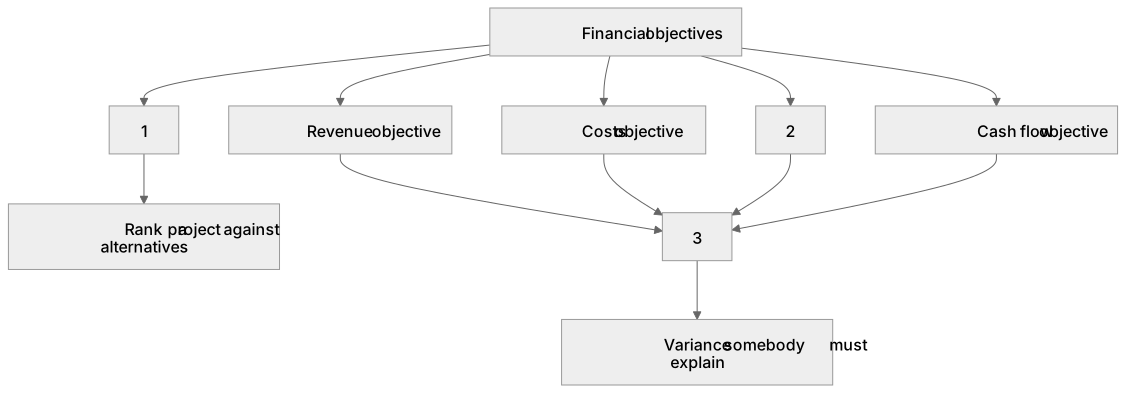
1Box 1
2Box 2
3Box 3
There is more to this lesson
The full lesson goes on to check your understanding and help you earn the marks. Create a free account to carry on, with your progress saved.
A week of Premium from your first lesson · Then the free plan continues · No card, no charge
Test your understanding of Setting financial objectives: The value of setting financial objectives (to include: Financial objectives to include: the concept of a return on investment, revenue, costs and profit objectives, cash flow objectives.)
Active recall beats re-reading. Take an instant quiz now to test what you’ve learned and lock it into long-term memory.
A week of Premium from your first lesson · Then the free plan continues · No card, no charge